
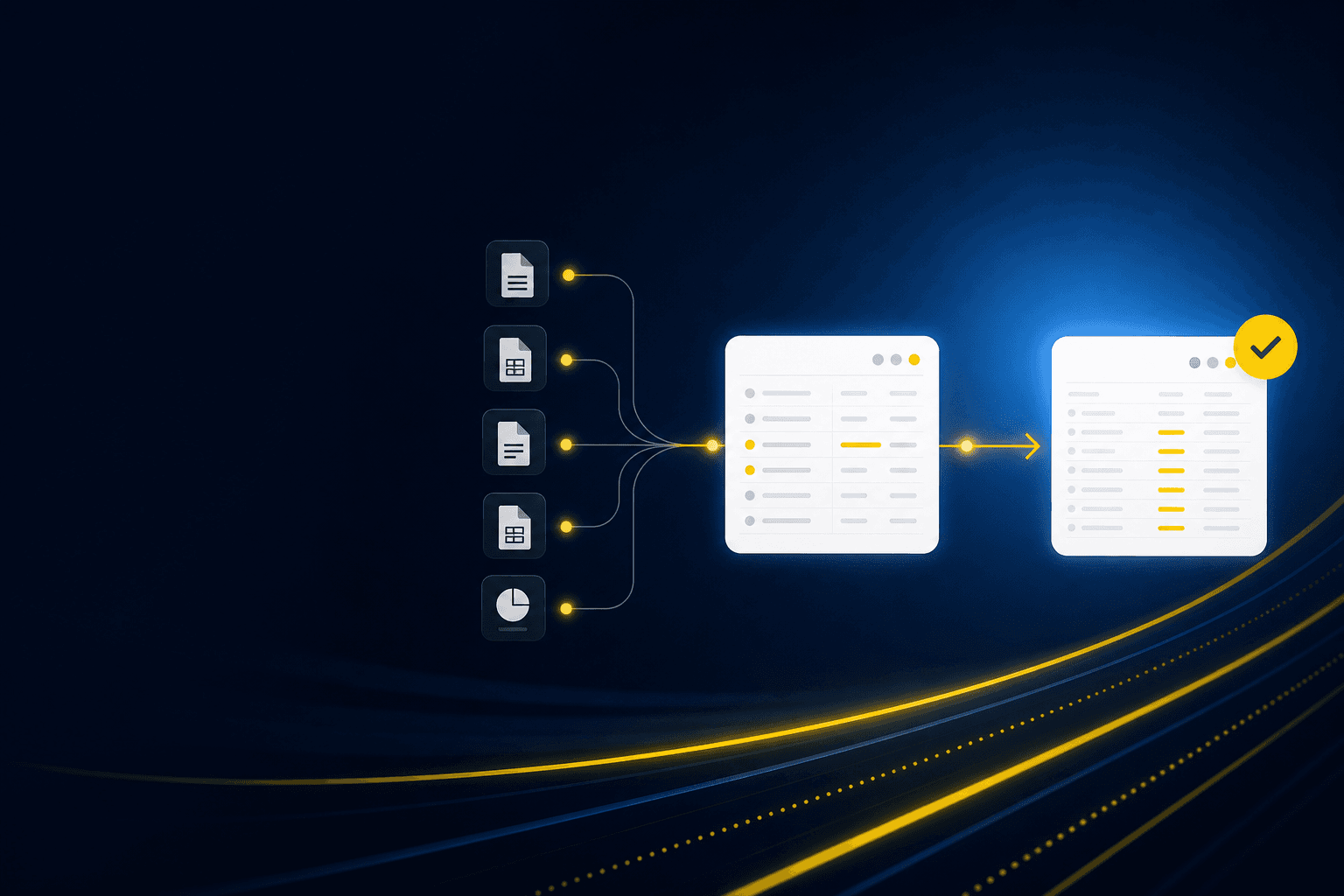
A Sage Intacct AI evaluation should start with one closed-period workflow, not a tour of every task an agent might eventually perform. As of August 2026, the useful question in sage AI accounting is whether a product can prepare reviewable work while preserving dimensions, source evidence, and approval ownership. Basis takes a broad agent-platform approach spanning accounting practice areas.
Broad coverage can be valuable. It doesn't establish Sage Intacct fit on its own. Controllers still need to verify how source files become reconciliations, workpapers, and journal-entry drafts, plus what stops unapproved work from reaching the GL.
Quick Reference for Evaluating Sage AI Accounting
| Evaluation Area | Why It Matters | Evidence to Request |
|---|---|---|
| Documented Sage Intacct connectivity | Compatibility shouldn't be inferred from support for another ledger | Current integration documentation, marketplace listing, and a live connection demonstration |
| Source-to-GL traceability | Reviewers need to follow amounts from source files through accounting treatment | A completed workpaper with source links, calculations, exceptions, and approval history |
| Dimensional coding preservation | Funds, programs, departments, locations, and projects affect reporting | A test using the buyer's real dimension structure and allocation rules |
| Human review before downstream use | Preparation and approval are separate control points | Role permissions, reviewer actions, edit history, and posting safeguards |
| Workflow breadth and implementation scope | A broad platform can require more change than one recurring close process | A written scope naming the first workflow, inputs, outputs, owners, and exclusions |
| Pricing and onboarding requirements | Quote-based software can hide implementation and support differences | Workflow-specific pricing, usage limits, implementation services, and renewal terms |
Key Takeaways
- Sage Intacct buyers should verify native connectivity directly rather than infer it from another accounting-platform integration.
- Basis offers broad agent-based workflow coverage that may suit CAS firms standardizing work across several service lines.
- Controllers should test source evidence, dimensions, exceptions, and approvals using one previously closed period.
- Public pricing details are limited, so a useful comparison requires workflow-specific quotes and implementation scopes.
What Sage Intacct Teams Need From AI Accounting
Sage Intacct teams need AI accounting that preserves the GL's structure while making preparation work inspectable. That means retaining dimensions, connecting calculations to source files, and separating preparation from approval. For a nonprofit controller, a balanced reconciliation without fund and program treatment is incomplete.
The Evaluation Criteria That Matter Most
A product demo should behave like a workpaper. You should be able to identify the source, follow the calculation, inspect the accounting treatment, review exceptions, and see who approved the output. A polished answer without that chain creates more review work, not less.
Sage Intacct adds another test because dimensions categorize activity beyond the chart of accounts. A coding workflow that handles the natural account but drops the fund, program, department, location, or project can produce an entry that looks complete while weakening downstream reporting.
Before evaluating sage AI accounting, ask:
- Can the vendor reproduce a known workpaper from one closed period?
- Does every prepared amount retain its supporting source?
- Are dimensions and allocation rules visible before approval?
- Can reviewers correct the work without losing history?
- What prevents an unapproved journal-entry draft from reaching Sage Intacct?
If a vendor can't answer those questions with a working artifact, feature breadth won't resolve the control gap.
Why Sage AI Accounting Fit Depends on the Workflow
Sage AI accounting fit depends on the recurring workflow being automated, not the number of agents shown in a demo. A controller reconciling donation platforms has different inputs and review rules from a CAS partner coordinating tax, audit, and advisory work. The operating model determines which breadth is useful.
The Gap Between Workflow Breadth and ERP Fit
Platform breadth and ERP fit solve different problems. Broad agentic AI accounting may standardize execution across multiple service lines, while Sage Intacct AI automation must also respect a specific ledger configuration, entity structure, dimensions, and approval path. One doesn't prove the other.
This is a fair tradeoff. A CAS practice serving many clients may accept a larger implementation because cross-practice consistency has real value. An in-house controller testing one reconciliation may prefer a narrower scope with documented Sage behavior. The deciding question is simple: are you changing the firm's operating model or preparing one recurring close artifact?
The Cost of Fragmented Source-to-GL Preparation
Picture a nonprofit accounting manager starting review at 3:15 p.m. The donation-platform export, bank activity, restriction schedule, and prior workpaper each use different labels. The totals tie only after mappings and dimensions are applied, while two exceptions still need judgment. A bank feed alone can't prepare that reconciliation.
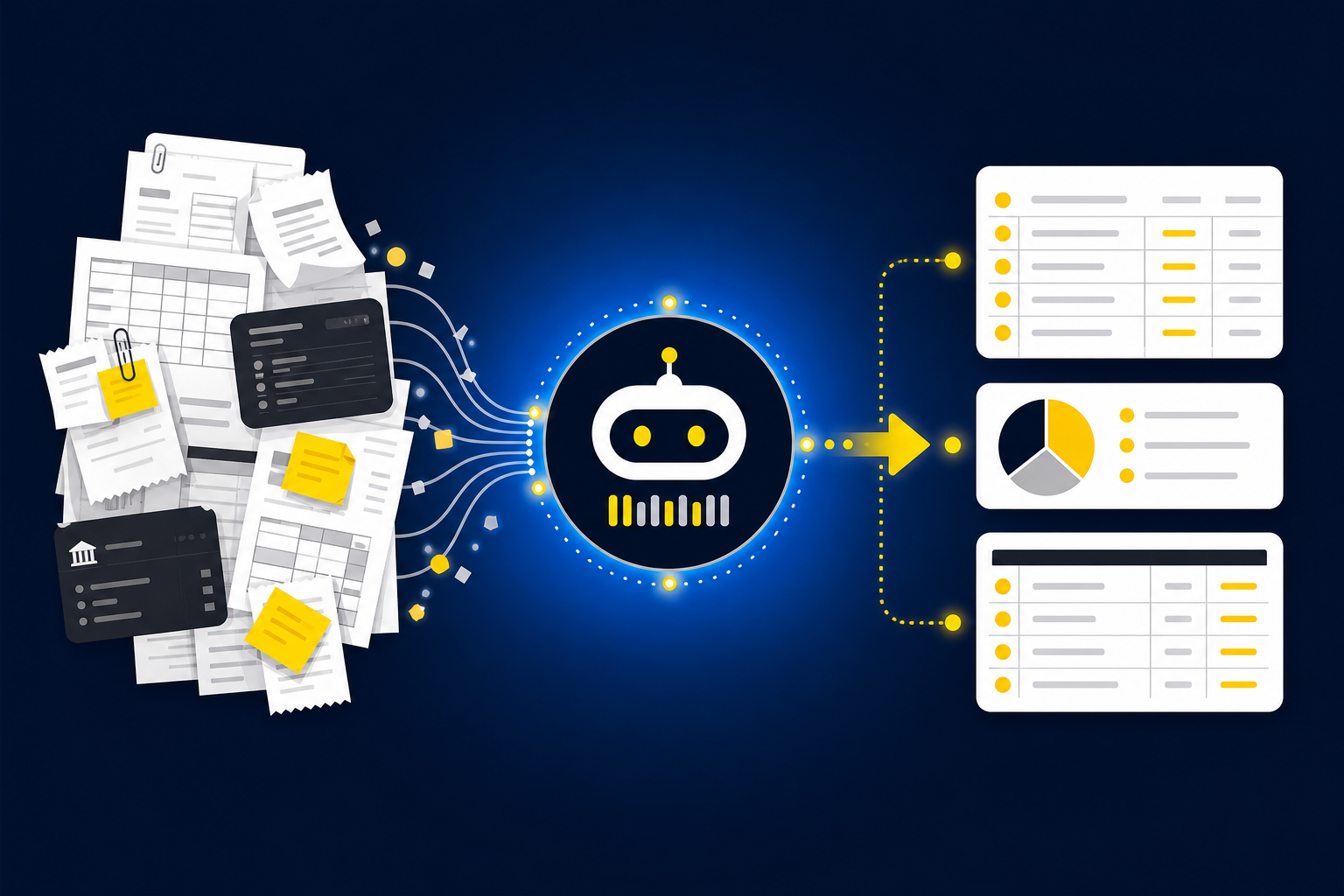
Source-to-GL automation must handle the work between files and the ledger: determine what each document represents, combine the relevant activity, apply mappings, check totals, surface differences, and produce the artifact the reviewer expects. Source-file work isn't a loading dock where documents are dropped off. It's the preparation bench where accounting meaning gets applied.
That distinction gives us a practical way to assess Basis.
How Basis Approaches AI Accounting Automation
Basis describes an agent-based platform in which digital agents execute accounting work and professionals remain responsible for review. Its public positioning is broader than a single Sage Intacct close workflow, with coverage discussed across accounting practice areas. That breadth deserves evaluation alongside ERP-specific evidence and implementation scope.
Agentic Workflows Across Accounting Practice Areas
Basis positions its agents as working alongside accounting professionals to execute repeatable work while retaining human review (Basis platform). A third-party analysis characterizes the scope as extending across accounting, tax, and audit, though current coverage should be checked against the vendor's first-party materials (Digital Applied analysis).
That reach may suit CAS partners and engagement managers trying to standardize execution across clients and service lines. It can be more scope than a lean Sage Intacct team needs when the immediate target is one recurring reconciliation or support schedule. Breadth is an advantage only when the buyer intends to use it.
Reviewer Controls and Structured Outputs
Basis's reviewer-in-control model separates agent preparation from professional oversight. That category boundary matters: autonomous preparation shouldn't be read as autonomous approval, accounting judgment, or posting. Buyers should watch an actual reviewer inspect sources, change treatment, resolve an exception, and approve the final artifact.
What should you request? Use a sample containing an ambiguous classification, a missing document, and a prior-period difference. Then observe whether the system exposes those issues or produces a clean-looking result that hides the judgment required. Frankly, the exception path says more about control than the happy path.
Pricing, Implementation, and Sage Intacct Questions
Public pricing wasn't listed in the supplied product materials reviewed for this comparison. Sage Intacct connectivity was also not established by the supplied first-party evidence, so buyers shouldn't infer native support from other accounting integrations. The Sage Intacct Marketplace gives buyers another place to validate documented applications.
Ask for a quote tied to a named workflow rather than a general platform package. The scope should identify source types, expected outputs, reviewer roles, implementation services, usage assumptions, support, and integration responsibilities. Unknowns aren't automatic weaknesses. They are due-diligence items that belong in writing.
Basis Capability and Due-Diligence Summary
| Capability | Documented Basis Approach | Question for Sage Intacct Buyers |
|---|---|---|
| Agent-based workflow execution | Digital agents execute accounting work for professional review | Which Intacct workflows are currently implemented in production? |
| Document ingestion and extraction | Part of the broader agent workflow | Which PDFs, spreadsheets, exports, and statements are supported for the proposed use case? |
| Transaction classification | Included in public accounting-workflow positioning | Can coding retain the buyer's required Intacct dimensions? |
| Bank and account reconciliation | Discussed within accounting automation coverage | Can a completed reconciliation be traced to every source input? |
| Workpaper generation | Structured work products support professional review | Can reviewers re-perform the calculation from the workpaper? |
| Anomaly and variance detection | Public materials describe agents handling accounting analysis | How are anomalies presented, assigned, cleared, and retained? |
| Human reviewer controls | Professionals remain responsible for review | Which actions require explicit reviewer approval? |
| Structured firm templates | Outputs can follow defined accounting processes | How are client-specific rules separated and maintained? |
| Sage Intacct integration evidence | Not established in the supplied first-party materials | Is there current native documentation or a marketplace listing? |
| Pricing | Public amount unavailable in supplied materials | What do implementation, support, usage, and renewal cost for the named workflow? |
The unanswered Sage questions create the opening for a more focused source-to-Intacct approach.
How Truewind Is Different for Sage Intacct Teams
Truewind focuses on preparation upstream of Sage Intacct: reading source material, applying the accounting team's existing process, producing review-ready workpapers, and routing exceptions to accountants. Sage Intacct remains the system of record. Approved output moves downstream only after the reviewer has examined the work.
Source-Linked Preparation Before the General Ledger
The preparation layer begins with the files the accounting team already receives, including statements, spreadsheets, processor reports, and prior workpapers. It determines what those materials represent, applies established mappings and cutoff logic, checks the resulting work, and leaves a source-linked artifact for review.
That boundary matters. The product isn't presented as a replacement ledger or a generic prompt sitting beside Sage. Buyers can inspect the documented Sage Intacct connection process and test it using their own entity, book, and workflow configuration.
If you want to watch one source file become a review surface rather than a detached output, See Truewind in action.
Dimensional Reconciliation and Accountant Review
Dimension handling belongs inside preparation, not after the journal-entry draft has already been assembled. The workflow applies the team's account mappings, classifications, and review conventions, then surfaces missing support, unexpected changes, or inconsistent treatment for an accountant to resolve.
Review stays explicit. The accountant sees the source, calculation, treatment, exceptions, and sign-off state before approved output reaches Intacct. Teams evaluating nonprofit or multi-entity work can also inspect how Sage dimensions are managed instead of accepting a generic promise about dimensional accounting automation.
How Truewind is different: The documented approach centers on source-linked preparation for Sage Intacct rather than broad practice-area coverage. Multi-source activity becomes a reviewable workpaper with preserved dimensions, visible exceptions, and a reviewed journal-entry draft while the accountant keeps approval authority.
A Focused Path From One Workflow to Broader Adoption
A controlled rollout starts with one recurring, example-rich workflow and a known answer. The team supplies prior source files, workpapers, entries, and reviewer corrections. The system reproduces the expected artifact, the accountant examines differences, and accepted corrections become context for later periods.
Focused adoption has a real limitation. It won't satisfy a buyer seeking one platform for firm-wide tax, audit, CAS, and advisory execution from the outset. For a Sage Intacct controller, though, proving one reconciliation before expanding limits the number of assumptions being tested at once. The Sage workpaper automation guide shows the type of review surface to bring into that evaluation.
The remaining choice is about operating model, not an abstract contest between two AI products.
Choosing the Right Sage AI Accounting Approach
Choose according to buyer type, workflow scope, and the evidence each vendor can produce for Sage Intacct. Basis may fit firms pursuing broad agent execution across service lines, while a source-linked preparation layer fits controllers preserving Intacct as the GL. Neither category removes professional judgment.
Comprehensive Sage AI Accounting Decision Grid
| Decision Criterion | Basis | Truewind | What the Buyer Should Verify |
|---|---|---|---|
| Primary buyer and operating model | Accounting firms and finance teams seeking broad agent execution | Nonprofit controllers and lean mid-market Intacct teams | Which operating model matches the next 12 months of planned adoption? |
| Sage Intacct integration | Not established in supplied public evidence | Documented Sage Intacct connection | Validate the live connection using a test environment |
| Role of the existing general ledger | Confirm during scoping | Intacct remains the system of record | Identify exactly where preparation ends and posting begins |
| Multi-source data ingestion | Document ingestion is part of the platform approach | Source files become accounting inputs for defined workflows | Test the buyer's least consistent source format |
| Multi-source reconciliation | Accounting reconciliation is within the stated scope | Sources are combined, mapped, checked, and compared with the GL | Request a reconciliation with missing and conflicting items |
| Transaction coding | Classification is included in accounting workflows | Coding applies existing account mappings and classifications | Test vendor, account, entity, and dimension variations |
| Dimensional and allocation handling | Verify for Sage Intacct | Dimensions and team-specific treatment remain visible in review | Reproduce a real fund, program, or department allocation |
| Workpaper generation and rollforward | Structured work products support review | Review-ready workpapers use source and prior-period context | Confirm visible formulas, changes, and reviewer notes |
| Anomaly and exception handling | Verify presentation and resolution controls | Exceptions are routed to the accountant | Test unexpected balances and missing statements |
| Human review workflow | Reviewer-in-control model | Accountant reviews, corrects, and signs off | Inspect permissions, approval gates, and edit history |
| Source-linked audit trail | Confirm source-level depth | Source, calculation, treatment, and sign-off are reviewable | Ask a reviewer to re-perform a selected item |
| Journal-entry draft preparation | Verify Intacct-specific behavior | Reviewed drafts flow to Intacct after approval | Confirm batch structure, dimensions, and posting controls |
| Tax and audit practice-area breadth | Broad practice-area positioning | Focused on recurring accounting preparation | Decide whether cross-practice breadth is required |
| Implementation starting point | Scope may span several workflows | Starts with one known, recurring workflow | Put the first workflow and exclusions in the statement of work |
| Pricing transparency | Public amount unavailable | Contact required for workflow-specific pricing | Compare implementation, usage, support, and renewal terms |
If your evaluation has reached the point where source files, dimensions, and review gates need to be tested together, Book a Truewind demo.
Decision Scenarios for Controllers and CAS Leaders
A CAS partner seeking consistent agent execution across accounting, tax, audit, and advisory should place Basis on the shortlist. Its breadth aligns with a firm-wide operating change, provided the team verifies current integrations, reviewer controls, implementation demands, and the commercial model.
A nonprofit controller using Sage Intacct should use a different decision test. If the work begins with fragmented donation, bank, grant, or processor activity and ends with dimensioned workpapers and approved entries, prioritize documented source-to-GL behavior. A lean corporate team can use the same test for brokerage rollforwards, settlement reconciliations, or recurring schedules.
Choose the smallest workflow that still exposes the hard parts:
- Use one closed period with a known answer.
- Include inconsistent source files and at least one exception.
- Preserve the actual account and dimension structure.
- Require a reviewer to trace and correct the output.
- Confirm what reaches Intacct, who approves it, and what history remains.
The product that reproduces the accounting process with visible evidence has earned the next workflow.
Sage AI Accounting FAQs for Intacct Buyers
Sage AI accounting buyers usually need clear answers about integration evidence, ledger boundaries, and pilot design before comparing feature volume. The safest answers come from a live workflow, current documentation, and written controls. Three questions expose most gaps before implementation begins.
Is Basis Natively Integrated With Sage Intacct?
A native Basis integration with Sage Intacct wasn't established in the supplied first-party evidence reviewed on August 17, 2026. That doesn't prove incompatibility. It means buyers should request current documentation, an integration architecture, and a live demonstration before treating Sage support as confirmed.
Compatibility deserves a precise definition. Ask whether the connection imports data, preserves dimensions, creates drafts, supports approvals, posts approved entries, or relies on file transfer. Those are different capabilities with different control implications.
Should AI Replace Sage Intacct as the General Ledger?
AI accounting for Sage Intacct doesn't require replacing the ledger. For preparation-layer use cases, Sage remains the source of truth while another system assembles source evidence, applies accounting logic, prepares workpapers, and hands approved output downstream.
A replacement-ledger project has a different risk and implementation profile. If keeping Intacct is non-negotiable, put that boundary in the evaluation requirements before reviewing workflow features.
What Should a Sage Intacct Pilot Include?
A useful pilot should include one recurring workflow, one closed period, the original source files, the accepted workpaper, and reviewer corrections. Include at least one missing item or ambiguous classification so the team can observe the exception process rather than only clean matches.
Don't score the pilot on output appearance alone. Score traceability, dimensional treatment, correction handling, approval ownership, and the exact artifact returned to Intacct. To test those controls against your own close process, Get a Truewind demo.
The right choice should leave your accountant with clearer evidence and firmer control, not a larger stack of unexplained answers.
Turn this into a close-ready workpaper
Start with sample files or upload your own statements to see how Truewind prepares review-ready workpapers and journal entries.