
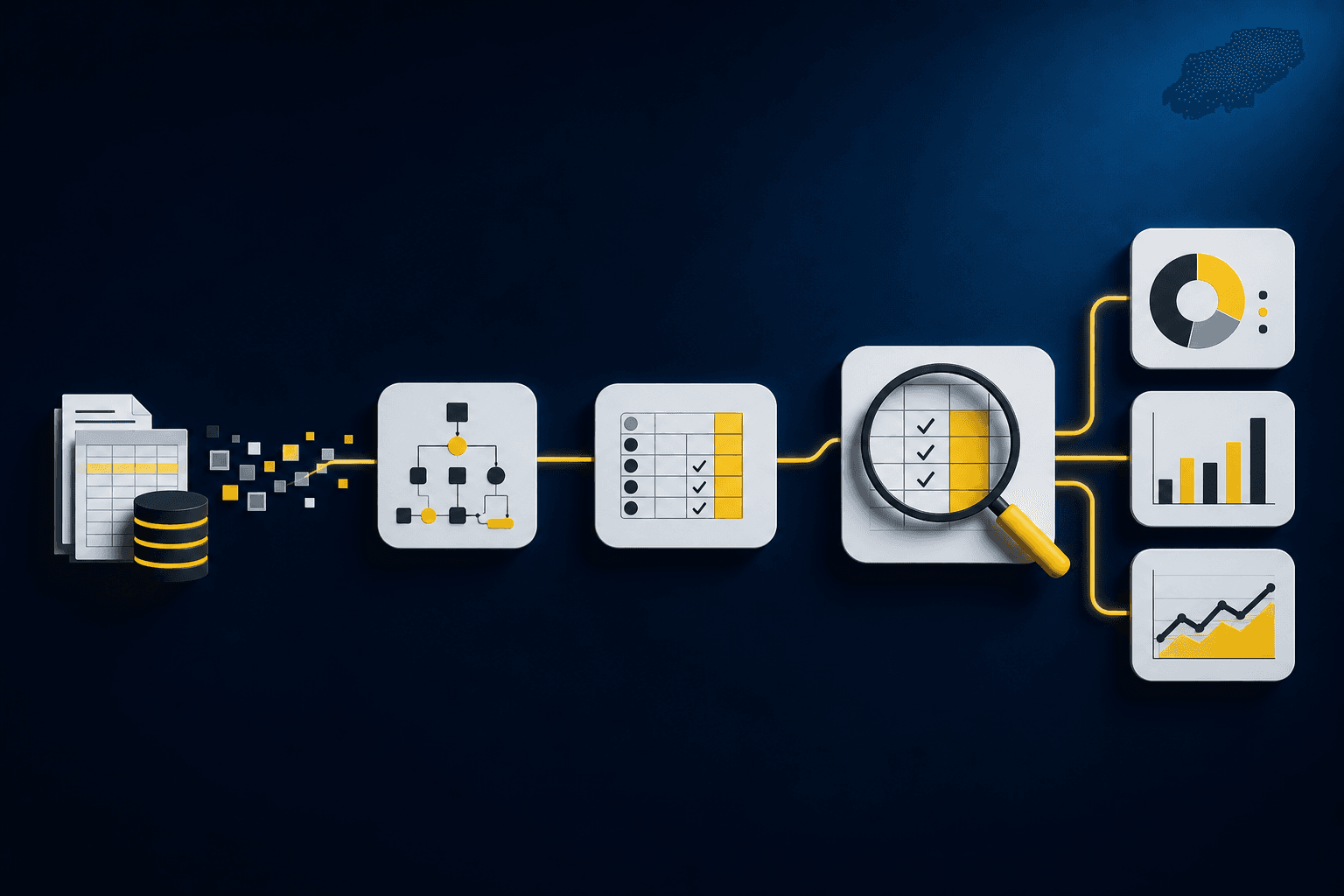
Sage Intacct shows one cash balance. The donor platform shows gross gifts by campaign, the processor separates fees and refunds, and the bank records the net deposits that cleared. Before the account can be reconciled, someone has to decide which records describe the same activity, preserve the fund and program detail, explain timing differences, and prepare the support a reviewer expects. The ledger is waiting at the end of that process. It is not causing the delay.
The same pattern appears outside nonprofit accounting. A family office receives custodian statements in different layouts across entities. A software company rolls prepaid and accrual schedules forward from spreadsheets. A CAS practice applies different mappings and review conventions for each client. The source material changes, but the preparation problem stays recognizable.
Month-end close delays usually accumulate across that preparation layer. Files arrive late or in inconsistent formats. Prior-period treatment lives in a workbook, a reviewer note, or someone’s memory. Reconciliations begin only after the inputs have been organized, and reviewers spend time reconstructing how the preparer reached the answer. By the time a journal entry reaches the GL, much of the close window is already gone.
Month-end close delays begin upstream
A close checklist can show every task as assigned and still leave the accounting team exposed to delay. Ownership does not make the underlying work repeatable. If each preparer has to collect files, reshape exports, find last month’s workbook, apply dimensions, and investigate differences before review can begin, the schedule depends on how quickly that person can rebuild the process.
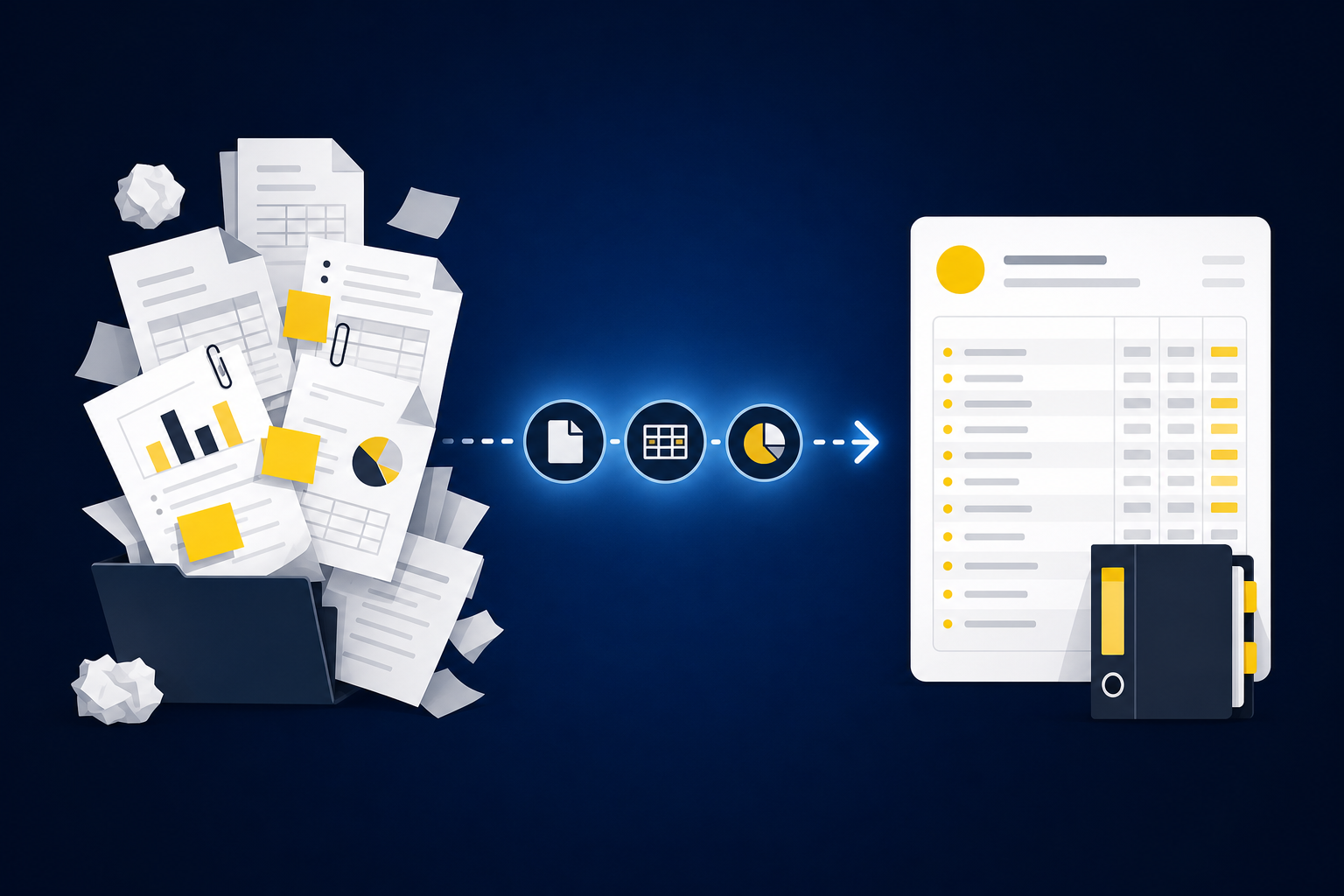
Nonprofit accounting makes the problem especially visible. The complexity is operational, not merely regulatory. Donation activity may cross a donor platform, one or more processors, the bank, grant records, and internal fund schedules before it reaches the GL. The accounting team has to preserve restrictions, program coding, campaign detail, and allocation logic while proving that the totals reconcile across systems.
A bank feed cannot carry all of that context. It can show the deposit, but not necessarily the gifts inside it, the processing fees withheld, the restrictions attached to the contributions, or the timing difference between the donor record and settlement. The preparer has to combine the sources and apply the organization’s accounting treatment. When that logic is rebuilt by hand each month, the close remains vulnerable even if the final posting takes seconds.
The same issue appears in recurring processor reconciliations, brokerage rollforwards, fixed-asset schedules, and multi-entity workpapers. The difficult part is not entering the final balance. It is assembling the evidence, carrying forward the right treatment, and showing the reviewer what changed. If you want to inspect how that upstream preparation can become a defined workflow, See Truewind in action with one of the recurring accounts your team already prepares.
Manual preparation often feels controlled because every file has an owner and every step has a person attached. Yet control weakens when mappings are copied between spreadsheets, reviewer corrections disappear into email, or an unexplained difference is forced into a workbook so the total ties. A visible process is not automatically a reviewable one. The stronger test is whether another accountant can trace the result to source, understand the treatment, and reproduce the important calculations.
The reviewer should receive a workpaper, not an answer
A journal-entry draft by itself does not tell the reviewer enough. The reviewer needs the source, the calculation, the accounting treatment, the exceptions, and the sign-off history that sits behind it. Without that context, a polished output can create more work because the accountant has to reopen the source files and rebuild the reasoning before approving anything.
That distinction matters when AI enters the close. Generating a classification or reconciliation total is only one part of the job. The useful output is a workpaper that keeps the underlying documents attached to the accounting logic, makes changes visible, and separates prepared items from judgment items. Review begins from the evidence instead of beginning from suspicion.
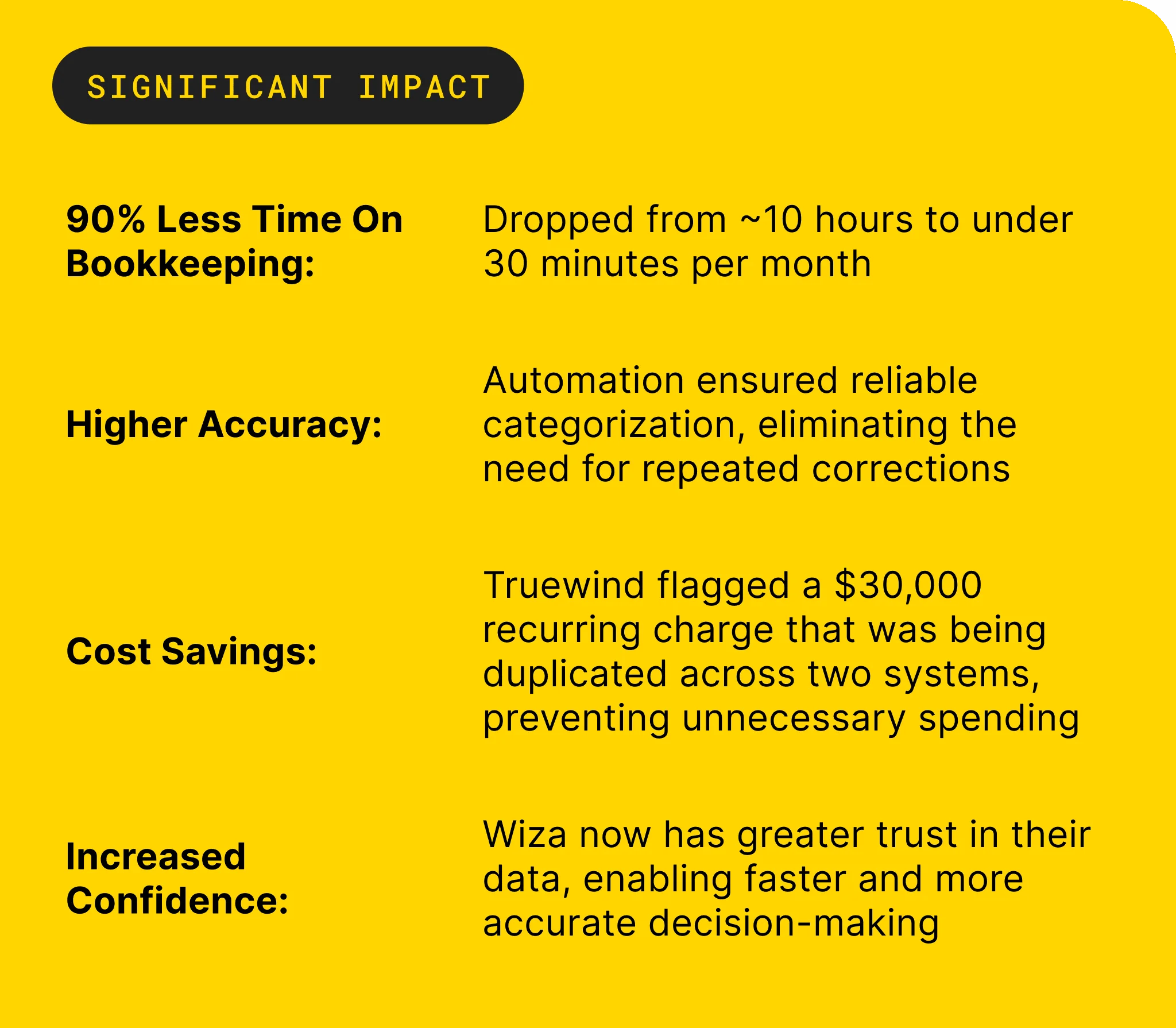
In one customer conversation, a marketplace team reported saving more than ten hours each month and reducing its month-end close by four days after adopting Truewind. That is one customer example, not a general benchmark. The more revealing comment was about the experience of moving from fragmented finance work to a structured process: “If I had to describe Truewind in one word: Lifechanging”. The reported outcome came with a concrete change in how the work was prepared and reviewed, not from removing the accountant.
Reviewability also changes what the team can automate responsibly. Repeated classifications can be prepared from established rules. Prior workpapers can supply the known structure for the next period. Differences that fall outside the expected pattern can be surfaced with their source context. The accountant still decides how a novel item should be treated and whether the prepared output is ready for the ledger.
The goal is not to shorten judgment. It is to prevent experienced staff from spending the first part of review locating files, checking whether every source arrived, and reconstructing routine calculations. Judgment stays where it belongs. Preparation becomes easier to inspect.
Make recurring preparation repeatable before expanding automation
A broad close transformation is difficult to evaluate because too many variables change at once. A better starting point is a recurring workflow with known inputs, an approved prior result, and a reviewer who understands the accounting treatment. The team can compare the prepared output against the workpaper it already trusts, inspect the differences, and correct the workflow before adding more accounts.
Start with a bounded workflow
A donation reconciliation is a useful starting point when the same donor, processor, and bank sources arrive each period. A brokerage rollforward can work for the same reason when prior workpapers show how activity should be classified by entity. Prepaid and fixed-asset schedules are also bounded because the prior schedule and current-period source documents establish a recognizable preparation path.
The first workflow should not be selected because it makes the most impressive demonstration. It should be selected because the inputs are available, the treatment is established, and the reviewer can tell whether the prepared result is right. Controlled iteration produces evidence the accounting team can use. Turnkey autonomy does not.
Implementation then becomes a comparison against a known answer. The team loads the prior workpaper and current sources, reviews the proposed treatment, records corrections, and checks whether those decisions carry into the next period. Each expansion follows the same pattern. The workflow earns a broader role by reproducing the team’s process in a form the reviewer can inspect.
Preserve dimensions and historical treatment
Recurring accounting work is specific to the organization running it. Two nonprofits can reconcile donations from similar platforms while using different fund structures, cutoff policies, and allocation rules. Two family offices can receive statements from the same custodian while applying different entity treatment. A generic template cannot decide those differences for the team.
Historical workpapers and reviewer corrections provide the operating context. They show how an account was mapped, which dimensions were preserved, where activity was split, and how prior exceptions were resolved. Applying that context to the current period makes preparation more consistent without turning past treatment into permanent policy. The reviewer still owns rule changes and new accounting decisions.
One software customer described the result in direct terms: “It's essentially perfect.” The customer then explained what mattered operationally: “Categorization is accurate, and we stopped having to double-check everything.” Those comments describe that customer’s experience, not a promise that every item will be correct. The mechanism remains bounded by established rules, prior corrections, and human review.
When your team wants to test whether its own mappings and prior workpapers can support that kind of recurring preparation, Book a Truewind demo around a specific account rather than an abstract AI use case.
Route exceptions instead of hiding them
A reliable workflow does not force every item through the same treatment. Missing statements, unexpected balance changes, mixed activity, and inconsistent classifications require attention because they do not fit the learned process. They should arrive in front of the accountant with the source records and prior treatment needed to make a decision.
Exception routing gives the reviewer a different starting point. Instead of rechecking every prepared line, the reviewer can inspect the items that changed, confirm the routine work, and spend time where judgment is necessary. Corrections become part of the workflow context for later periods, while novel items remain visible rather than being resolved without approval.
The practical point is captured in buyer language: “Truewind automates a huge chunk of that busywork.” Here, the busywork is the repetitive assembly around accounting judgment, not the accounting itself. The mappings, classifications, review standards, and final approval still belong to the accounting team.
Capacity is the useful outcome. “It's not just about making bookkeeping simpler; it's about freeing up teams, and helping them focus on higher-value projects.” For a controller, that can mean more time for discrepancy investigation, audit support, control improvement, and explaining results to the business. It does not mean removing the reviewer from the close.
How Truewind prepares recurring work for review
Truewind sits between the source files and the GL. It ingests recurring materials such as bank activity, processor and donor-platform exports, custodian statements, prior workpapers, payroll registers, and operational-system exports. Those inputs become structured accounting workflows that feed coding, reconciliation, schedule preparation, and workpaper generation.
Historical-example learning applies the team’s prior coding decisions, allocation choices, classification splits, and reviewer corrections to the current period. Dimensional and allocation preparation preserves relevant fund, program, department, purpose, location, or entity detail when the rules are explicit. Rule changes and edge cases are surfaced for reviewer judgment rather than applied without review.
Multi-source reconciliation then aligns systems that describe the same activity differently. For a nonprofit, that can mean matching donor-platform activity to processor settlements and bank deposits while accounting for fees, refunds, and timing differences. For a family office, it can mean reconciling a custodian statement, investment-vehicle support, and an ERP balance. Unreconciled items remain visible. Truewind does not force totals to agree.
Workpaper generation and rollforward bring the prior workpaper, current-period sources, and ERP balances into the current period. Supporting schedules update, required journal-entry drafts are prepared with source-linked support, and exceptions are handed to the reviewer. The workpaper keeps the source, calculation, treatment, and reviewer actions together so another accountant can follow how the result was produced.
Review happens before anything reaches the ledger. Accountants can confirm prepared items, adjust them, or return them for further preparation. Truewind captures those decisions against the workflow so later periods can reflect the team’s approved treatment. It does not resolve exceptions autonomously, decide accounting policy, or post without accountant confirmation.
After sign-off, approved structured output can move to Sage Intacct or QuickBooks Online with coding, dimensions, and source references preserved. Those systems remain the system of record. Truewind prepares the work upstream; the accountant approves it; the ERP records it.
The approach has prerequisites. It fits accounting teams with an established close, recurring source flows, prior examples, and a reviewer who owns the result. It is not designed for a buyer seeking autonomous posting, a replacement for the GL, or a personal bookkeeping product. Teams without a defined reviewer or repeatable workflow need to establish those controls before preparation automation can reproduce them.
A useful evaluation should therefore begin with the source files and workpaper your reviewer already knows. To see how Truewind would ingest those inputs, apply the existing treatment, and present the result for sign-off, Get a Truewind demo using a recurring workflow from your close.
A shorter close starts with a better first workflow
Month-end close delays rarely come from one dramatic failure. They build as source files are collected, exports are normalized, dimensions are reconstructed, schedules are rolled forward, and reviewer questions send the team back into the support. Improving the final posting step leaves most of that work untouched.
The first decision is not whether to automate the whole close. It is which recurring workflow gives your team the clearest controlled test. Look for an account with stable ownership, available source files, a prior approved workpaper, and a reviewer who can inspect the differences. Reproduce the known result first. Expand after the preparation is understandable and repeatable.
A strong preparation layer does not ask the controller to surrender judgment. It gives the controller a better review surface. Routine work arrives tied to source, exceptions arrive with context, and corrections remain attached to the process that produced them. Sage Intacct or QuickBooks Online keeps the books, while the accounting team keeps ownership of treatment and approval.
The close gets better when accountants can begin with prepared evidence instead of rebuilding it. That is the work worth moving upstream.
Frequently Asked Questions
How do I prevent month-end close delays?
To prevent delays, start by organizing your source materials ahead of time. Ensure that all necessary documents, like bank statements and processor reports, are collected and formatted consistently. Using a checklist can help assign tasks and track progress. Additionally, consider implementing a structured workflow for recurring tasks, which can streamline the preparation process and reduce the time spent on manual reconciliation.
What if my source documents are in different formats?
If your source documents come in various formats, it's crucial to standardize them before you begin the accounting process. You can create a template or use software that can help convert these documents into a structured format. This way, your team can focus on the actual accounting work instead of spending time normalizing data, which can lead to errors and delays.
Can I automate my month-end close process?
While you can automate parts of the month-end close process, it's essential to maintain human oversight. Start by identifying repetitive tasks that can be streamlined. For instance, automating the ingestion of source documents can save time. However, remember that all outputs should still go through a review process to ensure accuracy and compliance with your accounting standards.
When should I route exceptions for review?
You should route exceptions for review whenever there are discrepancies or unusual items that don't fit the standard process. This includes missing statements or unexpected balance changes. By surfacing these items to a reviewer with the necessary context, you can ensure that they are addressed appropriately without slowing down the overall close process.
Turn this into a close-ready workpaper
Start with sample files or upload your own statements to see how Truewind prepares review-ready workpapers and journal entries.