

A reviewer opens a reconciliation that ties to the bank and still cannot approve it. The processor total is there, but the fees sit in a separate export. One deposit includes activity from several programs, and the workpaper does not show how the preparer allocated it. The numbers agree. The accounting support does not.
That is how reconciliation bottlenecks survive inside a modern finance stack. Sage Intacct or QuickBooks Online can hold the final entry, while the preparation behind that entry still depends on downloaded files, spreadsheet formulas, prior-period notes, and a reviewer who knows where the exceptions tend to hide. The delay is not one calculation. It is the repeated work required to turn several versions of the same activity into something an accountant can inspect.
Adding another preparer may move more files, but it does not make the process more repeatable. The better approach is to separate recurring preparation from accounting judgment, apply the team's established rules to the recurring work, and send only the differences back to the reviewer. That is how you reduce reconciliation bottlenecks without removing the accountant who owns the result.
The bottleneck sits between the source and the ledger
A bank feed tells you that cash moved. It does not always tell you which transactions made up a processor settlement, which fees were withheld, whether a refund crossed the cutoff, or how the deposit should be split across funds or entities. The missing context lives in processor reports, donor exports, custodian statements, prior workpapers, and reviewer notes. Someone has to combine those sources before the reconciliation is ready.
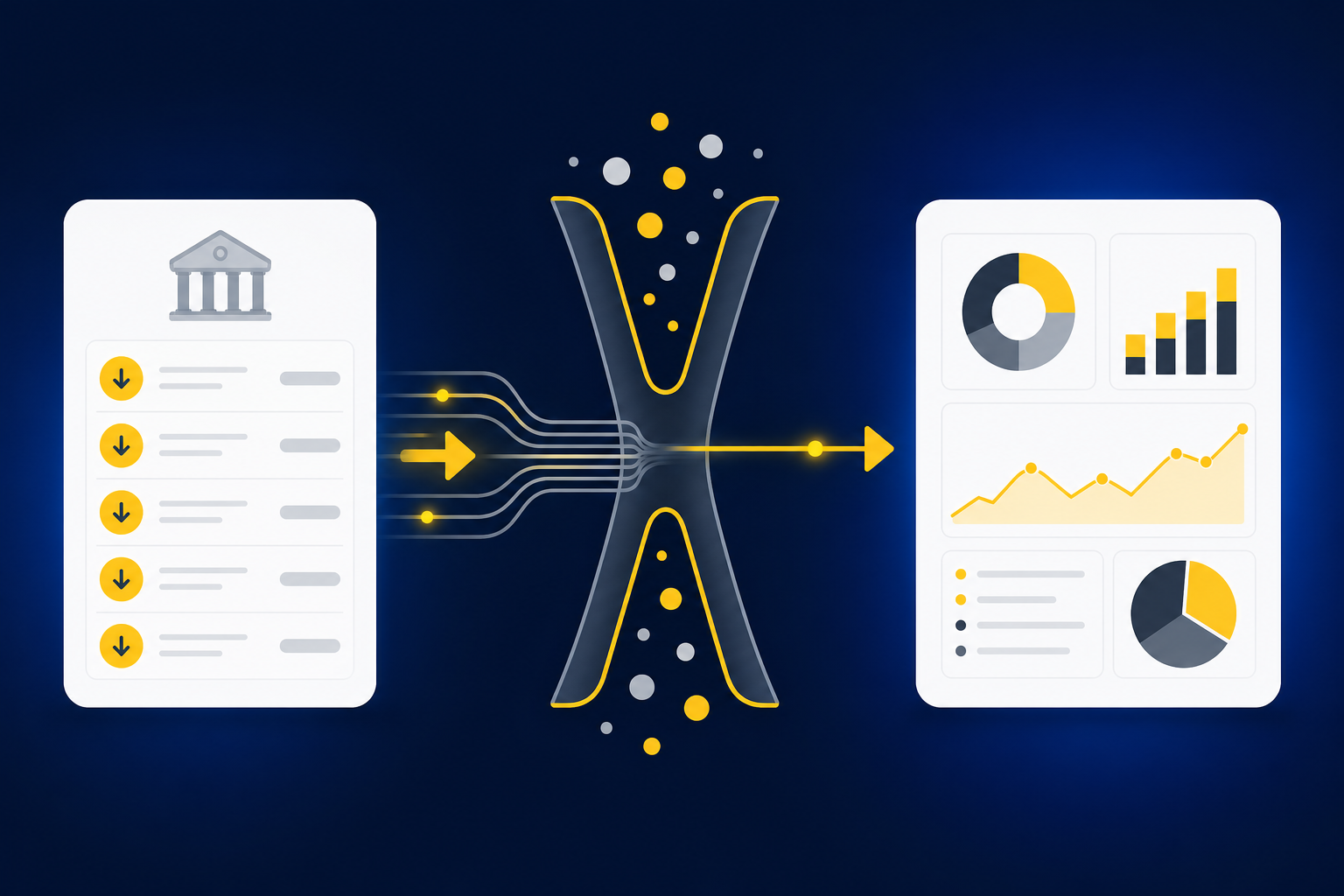
Most teams already have a process for doing that. They know which report should tie to the bank, which clearing account to use, how to treat timing differences, and which dimensions belong on the entry. The problem is that much of that process lives inside a prior workbook or in the memory of the person who prepared it last month. When another preparer takes over, the work has to be reconstructed.
Generic automation does not solve that handoff. Two organizations can run the same type of reconciliation while using different account mappings, cutoffs, allocation rules, and review conventions. A useful workflow needs operating context from prior workpapers, approved entries, SOPs, and reviewer corrections. Otherwise, the reviewer receives a clean-looking output that still has to be checked line by line.
Truewind is built for that preparation layer. It reads the recurring source files, applies the team's historical treatment, prepares the reconciliation and supporting workpaper, and surfaces items that do not fit the learned process. If you want to inspect that path from source document to reviewer sign-off, you can See Truewind in action while keeping Sage Intacct or QuickBooks Online as the system of record. The walkthrough matters because the preparation and review steps, not a generic AI answer, determine whether the output can move downstream.
Reduce the checking, not the judgment
Reconciliation review often becomes a second preparation pass. The reviewer checks the source, repeats the matching, tests the coding, and follows the same formulas because the workpaper does not make the preparer's reasoning visible. That may catch issues, but it also means experienced accountants spend their time re-performing routine work instead of investigating the items that actually changed.
Exception-based review changes the allocation of effort. Recurring activity that follows the approved process can arrive prepared with its source and treatment attached. Missing statements, unexpected balance changes, mixed personal and business activity, inconsistent classifications, and unresolved timing differences stay visible. The reviewer still decides what to do with them.
That distinction matters because accounting automation should not force every item through the same path. A processor fee that follows the same established mapping each month is different from an unexplained balance movement. A familiar allocation based on an approved rule is different from a new transaction with no precedent. Treating both as judgment items creates unnecessary review work, while treating both as routine creates control risk.
Approved customer examples show what can happen when recurring categorization moves out of the manual queue, but they should not be read as universal benchmarks. One customer described the prepared output by saying, “It's essentially perfect.” The same customer added, “Categorization is accurate, and we stopped having to double-check everything.” The useful point is not the strength of the quote. It is the mechanism behind it: recurring treatment was prepared consistently, while the customer retained the ability to review the result.
Make the workpaper the review surface
A journal-entry draft is not enough. A reviewer needs to see which source produced the number, how the calculation was made, what treatment was applied, which items did not fit, and who approved the result. Put those elements together and the workpaper becomes the interface between preparation and judgment.
For a multi-source reconciliation, that means the support cannot end with a total. The workpaper should connect the bank deposit to the related processor or donor activity, preserve fees and timing differences, and show any dimensional coding or allocation applied to the entry. An unreconciled item should remain an open review item rather than being forced into agreement. The reviewer needs the difference, not a hidden plug.
Prior-period context belongs in the same workflow. The prior workpaper establishes the known process, current-period source files supply the new activity, and the ERP balance provides the ledger side of the reconciliation. From there, balances can roll forward, support schedules can update, and a journal-entry draft can be prepared with links back to source. Reviewer corrections should be captured against the workflow so later periods reflect the team's decisions without changing accounting policy on their behalf.
Another accounting customer summarized the value in practical terms: “Truewind automates a huge chunk of that busywork.” The same customer explained, “It's not just about making bookkeeping simpler; it's about freeing up teams, and helping them focus on higher-value projects.” Those statements came from a specific customer experience, not a promised result for every team. They still point to the right goal: reduce repetitive preparation so accountants can spend more time on review, investigation, and decisions.
A workpaper-centered workflow is easier to assess because you can inspect the actual artifact your reviewer will use. To see how source links, prepared work, and exception review sit together, Book a Truewind demo and bring a recurring reconciliation your team already understands. A known workflow gives you something concrete to compare against the last approved result.
Route exceptions to the accountant
Exceptions are not evidence that the workflow failed. They are the items that should not be resolved without an accountant. A missing statement may indicate incomplete support. An unexpected balance change may need investigation, while a classification that conflicts with prior periods may reflect a valid policy change or a preparation error.
Truewind compares current-period preparation with the learned process and prior workpapers. Items outside that pattern are presented with source context for the reviewer. The accountant can confirm the treatment, adjust it, or send the item back for preparation, and the decision can inform how similar activity is handled later. Novel items still return to the person responsible for judgment.
The same boundary applies to posting. Truewind prepares workpapers, reconciliations, schedules, and journal-entry drafts, but nothing moves to the GL without accountant sign-off. After approval, structured output can be pushed to Sage Intacct or QuickBooks Online with coding, dimensions, and source references preserved. The ledger remains the system of record.
Clear limits make the workflow more useful. Truewind does not force unmatched totals to agree, invent allocation rules, or decide accounting policy. Native ERP integration is limited to Sage Intacct and QuickBooks Online, and the platform is not intended to replace either one. Teams seeking unsupervised posting are looking for a different operating model.
The customer's earlier phrasing is worth repeating: “Truewind automates a huge chunk of that busywork.” Preparation is the chunk that can follow established rules. Exceptions, policy changes, and approval remain with the accounting team.
Start with one bounded reconciliation
A broad automation project is difficult to review because too many variables change at once. Start with a recurring workflow that has known source files, a prior approved workpaper, established accounting treatment, and a reviewer who understands the expected result. A donation reconciliation, processor settlement, brokerage rollforward, or recurring account reconciliation can provide that boundary.
Run the current-period sources through the workflow and compare the prepared result with the known process. Check whether account mappings, cutoff treatment, dimensions, allocations, and support match the team's conventions. Review what was flagged and what was not. Differences tell you whether the workflow needs another example, a clearer rule, or reviewer correction.
Expansion should follow evidence from that first workflow. Once the reviewer can trace the source, understand the preparation, and see that corrections carry into the next period, the team can add another account or entity. Controlled iteration is slower than promising immediate autonomy, but it gives the accounting team a result it can inspect before widening the scope.
The fit also depends on the operating environment. Truewind is designed for teams with a recurring close, prior workpapers or examples, a reviewer in the loop, and Sage Intacct or QuickBooks Online as the system of record. A solo owner without a defined close or a buyer seeking autonomous posting will not have the same workflow to build from.
A useful evaluation should use your source files and your review conventions, not a generic sample that avoids the hard parts. To test a bounded reconciliation against a result your team already trusts, Get a Truewind demo and bring the prior workpaper, current source files, and the exceptions your reviewer normally checks. Those artifacts show whether the preparation can follow your process without hiding where judgment belongs.
Capacity is the more credible outcome
The accounting case for AI does not depend on removing accountants from the close. It depends on moving their effort downstream. When recurring files are structured, historical treatment is applied, and a review-ready workpaper arrives with exceptions identified, experienced staff can spend less time assembling support and more time investigating changes.
That capacity does not come from skipping review. It comes from giving the reviewer a better surface: source, calculation, accounting treatment, exceptions, and sign-off in one workflow. Sage Intacct or QuickBooks Online still records the approved result. The accountant still owns the treatment and the posting decision.
Reconciliation bottlenecks shrink when preparation becomes repeatable and judgment becomes easier to locate. The goal is not fewer controls or less accounting involvement. It is a close where accountants review what changed instead of rebuilding what did not.
Frequently Asked Questions
How do I reduce reconciliation bottlenecks?
To reduce reconciliation bottlenecks, start by separating recurring preparation tasks from accounting judgment. Use established rules for recurring work and only send the differences to your reviewer. This way, you minimize repetitive checks and allow accountants to focus on exceptions. Truewind can help automate this preparation layer, ensuring that workpapers are ready for review without unnecessary delays.
What if my reconciliation involves multiple sources?
If your reconciliation involves multiple sources, ensure you have a clear understanding of how each source describes the same activity. Truewind can help align these activities, allocate fees, and prepare a review-ready reconciliation tied back to each source. This approach helps you manage discrepancies effectively and provides a comprehensive view for your reviewer.
Can I automate the preparation of workpapers?
Yes, you can automate the preparation of workpapers by using tools like Truewind. It organizes your source files and prepares workpapers based on historical treatment and established rules. This automation reduces the time spent on manual preparation and allows your team to focus on higher-value review tasks, ensuring that the output is consistent and ready for scrutiny.
When should I involve an accountant in the review process?
You should involve an accountant in the review process whenever there are exceptions or items that do not fit the established pattern. Truewind surfaces these anomalies with full source context, allowing the accountant to make informed decisions. This ensures that all judgment items are properly addressed without overwhelming the reviewer with routine checks.
Why does my team need to maintain control over accounting judgments?
Maintaining control over accounting judgments is crucial because it ensures that exceptions and policy changes are handled appropriately. Truewind allows your team to retain ownership of judgment while automating repetitive tasks. This balance helps prevent errors and ensures that the accounting process remains reliable and transparent.
Turn this into a close-ready workpaper
Start with sample files or upload your own statements to see how Truewind prepares review-ready workpapers and journal entries.