

A manager opens a client reconciliation that looks complete. The totals tie, the formatting is familiar, and the journal-entry draft is ready. But the processor changed its export, the allocation logic lives in the preparer’s notes, and no one can tell which exceptions were reviewed. The manager cannot approve the work without rebuilding part of it.
Across a CAS practice, that problem repeats with different files and different rules. One client sends custodian statements by email. Another uses a donor platform, two payment processors, and QuickBooks Online. A third keeps entity-specific mappings that only one senior accountant understands. The work may recur every month, but it is not generic.
For a CAS partner, the useful question is how finance leaders should apply AI without flattening every client into the same template. The answer starts upstream of the ledger, where staff combine source files, apply client-specific treatment, check completeness, prepare workpapers, and surface exceptions for review. AI can prepare that work. The accountant still owns the accounting policy, the exceptions, and the final sign-off.
Generic automation breaks at the client file
Two clients can ask for the same reconciliation and mean different things. Their charts of accounts differ. Their cutoffs differ. One preserves department and location dimensions, while another allocates activity by fund or entity. A reusable workflow has to preserve those differences rather than treat them as implementation noise.
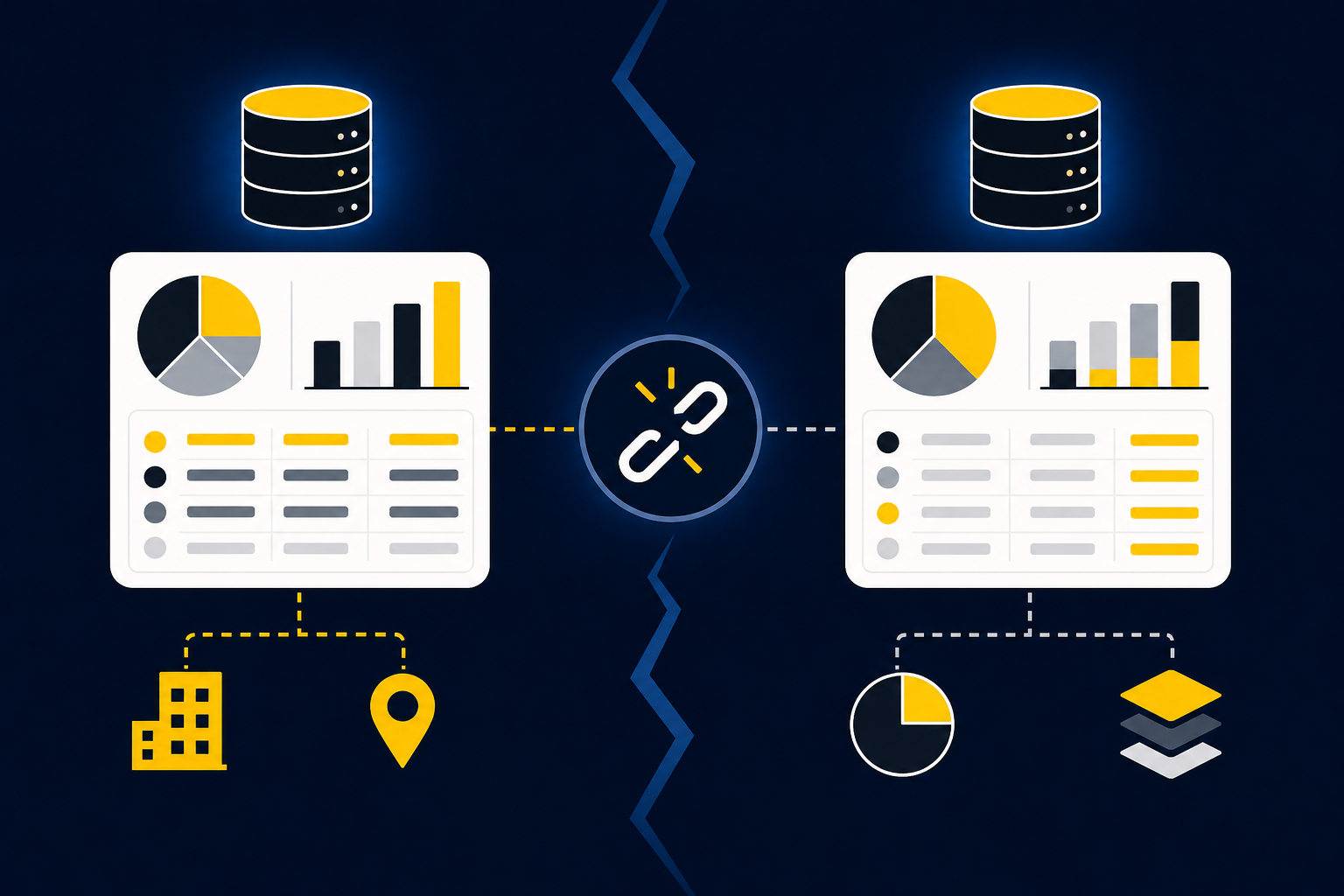
Source files make the problem harder. A bank feed may land in a consistent structure, but a processor report, capital statement, donor export, or scanned PDF often does not. Reading the document is only the first move. The accountant still has to determine what the activity represents, whether the file is complete, how it ties to another source, and which client rule applies.
Open-ended AI is a poor fit for that work because the desired result is not an answer in a chat window. It is a prepared reconciliation, support schedule, workpaper, or journal-entry draft that follows a known process. The reviewer needs to see the source behind each number, the treatment applied, the unresolved items, and the person who approved the result. Without that surface, polished output creates more review work, not less.
Truewind is built around that preparation layer. It ingests the recurring source files a practice already receives, applies the client’s historical accounting treatment, and presents the prepared output for accountant review. If you want to inspect how that source-to-workpaper workflow operates, you can See Truewind in action using one of your recurring client processes as the reference point. Sage Intacct or QuickBooks Online remains the system of record after the reviewer approves the work.
Standardize the workflow, not the accounting policy
CAS practices need standardization, but the object of standardization matters. Forcing every client into one account map or workpaper format removes context the reviewer needs. Leaving every engagement fully bespoke makes knowledge difficult to reuse and keeps the practice dependent on individual preparers. The better unit of standardization is the workflow: inputs, preparation steps, expected output, exception rules, and review actions.
Consider a recurring processor reconciliation. The workflow may always require a processor export, bank activity, fee detail, refund activity, and the prior-period workpaper. One client may code fees by department, while another splits them by entity. The common workflow can preserve both treatments because the structure is shared even when the accounting rules are not.
Prior workpapers matter here because they show more than a final balance. They show how the team mapped activity, which cutoff it used, how it handled timing differences, and where the reviewer corrected the original preparation. SOPs add the stated process. Reviewer corrections add the decisions that were too specific to fit neatly into the SOP.
Truewind’s Historical-Example Learning captures confirmed treatment and reviewer corrections against the workflow, then uses that history when preparing the next period. The product does not change accounting policy on its own. Novel items still go to the accountant, and rule changes remain explicit. Reuse comes from applying the team’s known process again, not from imposing a universal answer.
That distinction also protects client service. Staff can begin from a prepared workpaper that reflects the client’s existing conventions, while managers review through a more consistent surface across the practice. The practice captures how work gets done without pretending every client should be accounted for in the same way.
Reviewability is the real control surface
A clean journal-entry draft is not enough. A reviewer needs to know which source produced it, how the calculation was performed, what accounting treatment was applied, and whether any items remain unresolved. If the reviewer has to search email, reopen the original exports, and reconstruct the preparer’s logic, the work was not actually prepared for review.
An anonymized Sage Intacct team made that requirement concrete during an evaluation. The team wanted explicit preparer and reviewer actions, source-level support, visible dimensional treatment, and a control that prevented unapproved work from reaching Sage. Model confidence was not the deciding issue. The question was whether the accounting team could inspect and re-perform the important steps.
That is why the workpaper matters. It places the source, calculation, accounting treatment, exceptions, and reviewer decision in the artifact the manager already knows how to inspect. Review becomes a decision about prepared work rather than another round of file assembly. The accountant remains accountable for the result because approval never moves outside the accounting team.
Exceptions belong in that review surface as well. A missing statement, unexpected balance change, mixed activity, or inconsistent classification should not be forced through the workflow just to produce a clean total. It should arrive with the relevant source context and a clear request for judgment. The system prepares what follows the learned process and separates what does not.
Truewind’s Human-in-the-Loop Review Workflow presents workpapers, reconciliations, schedules, journal-entry drafts, source links, and exception queues for accountant action. Reviewers can confirm, adjust, or return prepared items, and nothing leaves review without sign-off. To evaluate that control with a workflow your managers already review, you can Book a Truewind demo and bring a prior approved workpaper into the discussion. The comparison should be against the known result, not against a generic product demonstration.
Start with a bounded workflow and a known answer
The first AI workflow should not be the largest close problem on the client roster. It should be a recurring process with available source files, a prior approved result, and a reviewer who understands the treatment. A bounded starting point gives the practice something concrete to compare. It also makes implementation gaps visible before the workflow expands across clients or account types.
A useful first workflow usually has four properties:
- Known inputs. The practice can identify the source files, ERP balances, and prior workpaper required to begin preparation.
- Stable ownership. A preparer and reviewer already own the process, even if the preparation still depends on spreadsheets.
- Inspectable output. The reviewer knows what a complete reconciliation, schedule, or workpaper should contain.
- Visible exceptions. The team can distinguish ordinary recurring treatment from items that require accounting judgment.
A donation reconciliation, brokerage rollforward, prepaid schedule, or processor settlement workflow can meet those conditions when the supporting material is available. The point is not that one workflow type is always the right place to start. The point is that the team can compare prepared output to an approved answer, document differences, capture corrections, and decide whether the process is ready to repeat.
One buyer described the preparation burden in direct terms: “Truewind automates a huge chunk of that busywork.” Here, busywork means collecting files, carrying balances forward, repeating known coding, checking totals, and assembling support. It does not mean the accounting treatment or reviewer judgment lacks value. Those are precisely the parts the workflow keeps with the accountant.
Controlled iteration also changes implementation from a software handoff into an accounting exercise. The team tests one process, inspects the support, corrects the treatment, and confirms what should carry into the next period. Expansion follows evidence from the workflow itself. A practice can then reuse the operating shape while preserving the next client’s rules.
Measure capacity at preparation and review
CAS partners often evaluate automation through hours saved or clients served. Those measures matter, but they appear after a more useful operational change: less preparation has to be rebuilt during review. The first measure should be whether the work arrives with the expected support, treatment, dimensions, and exception context.
Review effort also needs to be interpreted carefully. A reviewer who still opens every source file and rechecks every prepared line has not gained much capacity, even if the first draft appears faster. The workflow needs to separate prepared items that follow the known process from items that require attention. That is how staff effort can move from assembly toward investigation and client explanation without removing managerial control.
Customer outcomes can illustrate what that shift looks like, but they should not be treated as a practice-wide benchmark. In one customer conversation, a marketplace company reported saving more than 10 hours per month and reducing its month-end close by four days after adopting Truewind. The customer summarized the experience by saying, “If I had to describe Truewind in one word: Lifechanging.” That result belongs to that customer’s process and should not be projected onto a different firm without examining its workflows.
Another customer described the review experience this way: “It's essentially perfect. Categorization is accurate, and we stopped having to double-check everything.” The useful detail is not the praise by itself. It is the change in what the reviewer felt required rechecking after the workflow learned the company’s treatment. A CAS practice should validate the same question against its own clients, source files, and review standards.
The broader point was captured in another buyer phrase: “It's not just about making bookkeeping simpler; it's about freeing up teams, and helping them focus on higher-value projects.” For a practice, those projects may include discrepancy investigation, client communication, control improvement, or analysis that had been deferred during close. Capacity becomes credible when you can name which preparation tasks moved into the workflow and which judgment tasks stayed with the team.
How Truewind fits into a CAS close
Truewind sits between recurring source files and the general ledger. Multi-Source Ingestion accepts bank activity, credit-card statements, processor exports, donor-platform files, custodian statements, capital statements, payroll registers, prior workpapers, and operational-system exports when those sources are connected to the workflow. The files are structured for downstream coding, reconciliation, workpaper preparation, and review, while the source material remains attached to the workflow.
Multi-Source Reconciliation then aligns systems that describe the same activity differently. A nonprofit workflow may need to tie a donor platform and processor activity to the bank. A family-office workflow may need to compare a custodian statement, investment-vehicle support, and an ERP balance. Fees, refunds, and timing differences are prepared in the reconciliation, while unreconciled items remain visible for reviewer judgment.
Workpaper Generation and Rollforward uses the prior workpaper, current-period source documents, and ERP balances to prepare current support. Balances roll forward, supporting schedules update, journal-entry drafts are prepared when required, and exceptions move to the reviewer. The workflow follows the team’s existing treatment and does not create accounting policy.
Dimensional and Allocation Preparation preserves client-specific dimensions when the rules are explicit and reviewable. Depending on the engagement, those dimensions may include program, fund, department, location, purpose, or entity. Edge cases and rule changes go to the accountant instead of being applied without review. The prepared output still ties back to source.
After sign-off, Truewind can push structured output to Sage Intacct or QuickBooks Online, the two documented ERP targets. Coding, dimensions, and source references are preserved on the push. Truewind does not replace either ledger, and it does not post without accountant confirmation. Firms evaluating that preparation-to-ledger handoff can Get a Truewind demo.
Keep the accountant at the decision point
A scalable CAS practice does not need every task to remain manual. It does need clear ownership of accounting treatment, exceptions, review, and posting. Removing repetitive preparation is useful only when the prepared work gives the reviewer enough evidence to approve it responsibly.
The fit is strongest when a practice has recurring workflows, prior examples, identifiable source files, and reviewers who own the result. A firm looking for autonomous posting without accountant approval is evaluating a different operating model. So is a firm looking to replace its GL or force every client into one accounting template.
For the right practice, the opportunity is specific. Capture how each client’s recurring work is performed. Prepare the next period from the prior approved result. Route differences to the accountant with source context, and keep the ledger downstream of sign-off.
Growth then depends less on who remembers the workbook and more on whether the workflow preserves the firm’s process. The manager still decides. The partner still owns quality. AI takes on preparation in a form the accounting team can actually review.
Frequently Asked Questions
How do I ensure my team follows the correct accounting policies?
To ensure your team adheres to the correct accounting policies, start by documenting your existing procedures and standards. Regularly review these documents with your team to reinforce their importance. When using Truewind, the platform applies your team's historical accounting treatment, which helps maintain consistency. Additionally, encourage open communication about any changes or exceptions, so everyone is on the same page.
What if my client has unique accounting needs?
If your client has unique accounting needs, focus on customizing the workflow rather than forcing a generic solution. Truewind allows you to preserve client-specific dimensions and treatment, ensuring that each client's requirements are met. Document any specific rules or exceptions that apply to that client, and involve your team in discussions about how to best implement these unique needs in the workflow.
Can I automate the reconciliation process?
Yes, you can automate parts of the reconciliation process with Truewind. The platform ingests various source files, like bank statements and processor reports, and prepares them for review. However, remember that while automation can streamline the process, human review is essential before anything is posted to the general ledger. This ensures that all exceptions and unique cases are properly handled.
When should I start using AI for accounting tasks?
You should start using AI for accounting tasks when you have a recurring process that has known inputs and outputs. This allows you to test the AI against a familiar workflow, ensuring that it can effectively handle the tasks. Truewind is designed to support these types of workflows by automating repetitive preparation work while still requiring your team's review and approval.
Turn this into a close-ready workpaper
Start with sample files or upload your own statements to see how Truewind prepares review-ready workpapers and journal entries.