

When you add up accounting manual data entry hours in Sage Intacct, the first-pass coding time is just the starting point. The real cost multiplier comes later: GL reviews to track down mismatches, journal entry corrections that require voiding and reposting with full documentation, and the senior accountant time spent matching dimensional tags instead of analyzing what the numbers actually mean. Each miscoded transaction creates work that ripples through your entire close cycle.
TLDR:
- Manual coding in Sage Intacct costs 7-15% of total finance team time annually
- Error rates hit 1-5% for manual entry, with each fix taking 20-45 minutes of senior staff time
- Multi-entity orgs see error impact multiply across consolidations and intercompany eliminations
- Sage Intacct lacks native bank feeds for transaction coding, creating classification bottlenecks
- Truewind automates Sage Intacct transaction coding with AI that learns from your historical GL data
The Real Cost of Manual Transaction Coding
Most accounting teams track labor hours. Few track the compounding cost of coding errors, delayed closes, and audit prep time that manual transaction entry quietly accumulates.
The numbers tell a straightforward story. Manual data entry errors affect roughly 88% of spreadsheets, according to research cited by FP&A Trends. Each misclassified transaction in Sage Intacct goes beyond a one-time correction. It triggers downstream reconciliation work, dimensional reporting mismatches, and potential restatements.
Consider where time actually goes in a typical close cycle:
- Reviewing and reclassifying transactions that were coded to the wrong account or department requires pulling original source documents and tracing the entry back through approval workflows.
- Investigating variance reports that flag anomalies forces accountants to determine whether a discrepancy reflects an actual business event or simply a coding mistake.
- Preparing audit support for manual entries demands additional documentation that automated workflows would have captured at the point of transaction.
The cost compounds when you factor in senior accountant time. When your most experienced staff spend hours on transaction classification, that time comes directly out of analysis, forecasting, and close quality work.
How Much Time Accountants Actually Spend Coding Transactions
Research from the American Productivity & Quality Center found that top-performing finance teams spend 8% of their time on transaction coding, while median performers spend closer to 15%. For a three-person accounting team, that gap represents hundreds of hours annually.
The breakdown of where that time goes is telling:
- Reviewing imported transactions to determine the correct GL account, department, and project allocation before any entry can be made
- Cross-referencing vendor records, prior period entries, and approval hierarchies to confirm coding decisions
- Correcting miscoded entries flagged during review, which often requires tracing the original transaction back through supporting documentation
- Re-running reports after corrections to verify that period totals balance properly
In Sage Intacct, every transaction that lacks a matching rule or smart rule configuration falls to manual review. For companies with high transaction volume or complex multi-entity structures, that queue rarely stays empty.
The Error Rate Nobody Talks About
Manual transaction coding carries an error rate that accounting teams rarely track formally. According to IBM research, the average data entry error rate falls between 1% and 5%. Separate studies suggest roughly 1 in 300 keystrokes results in a mistake.
In a Sage Intacct environment processing thousands of transactions monthly, those numbers accumulate fast.
What Error Correction Actually Costs
The problem with coding errors isn't the mistake itself. It's the downstream work:
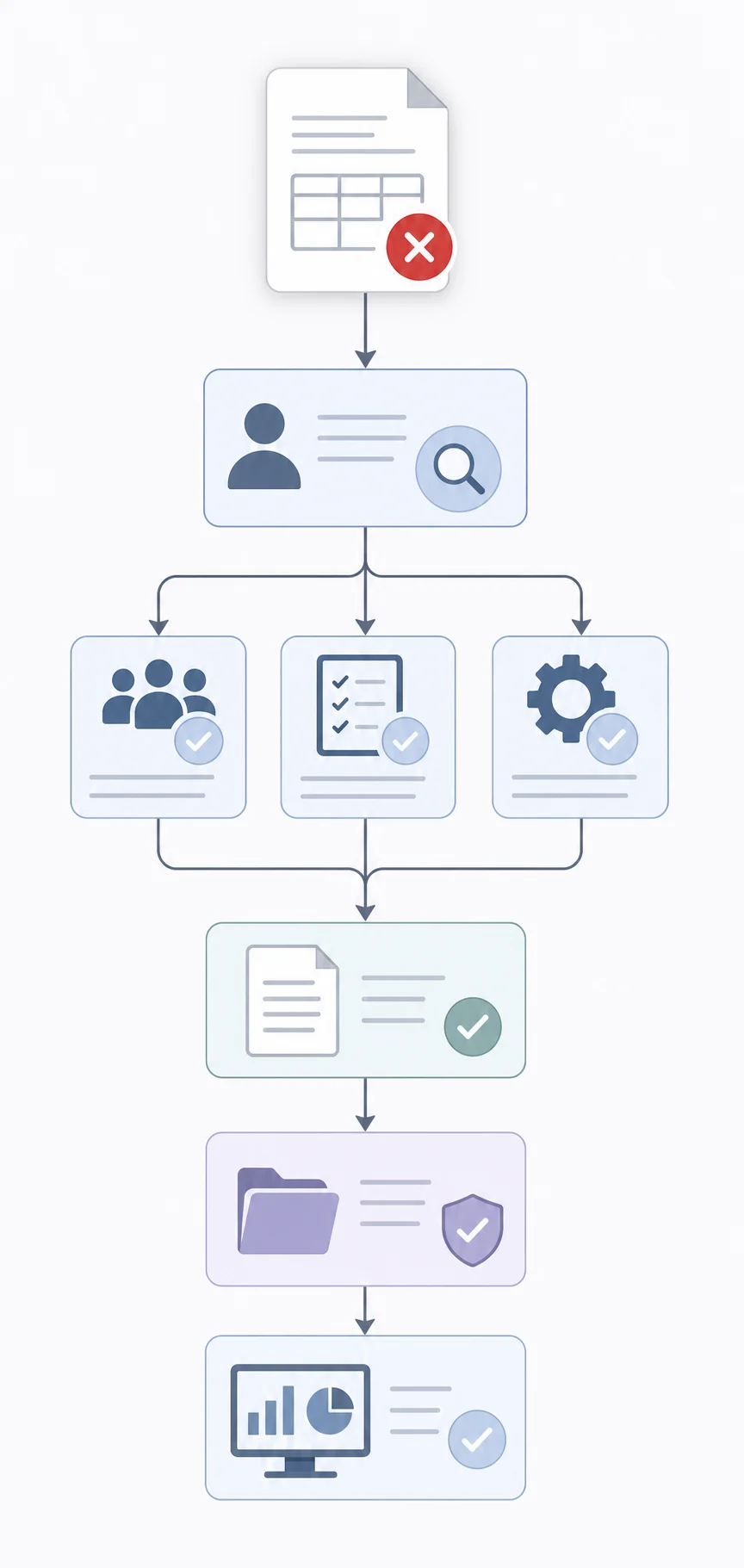
- Identifying the mismatch often requires a full GL review, which pulls senior staff away from close activities at the worst possible time.
- Correcting a miscoded transaction in Sage Intacct means voiding entries, tracing the original source document, and re-posting, which can take 20 to 45 minutes per incident.
- Errors that survive into a closed period require formal journal entry adjustments and auditor explanations.
The hidden multiplier here is audit trail management. Every correction generates documentation requirements that compound the original time cost well beyond what most teams budget for.
Why Sage Intacct Users Face a Unique Challenge
Sage Intacct attracts companies that have outgrown basic bookkeeping software. That means your team is likely handling a higher transaction volume, more complex entity structures, and stricter reporting requirements than the average small business. The same sophistication that makes Sage Intacct appealing also means there are more transaction types to classify, more dimensions to tag, and more rules to apply manually.
Unlike simpler tools, Sage Intacct's multi-dimensional chart of accounts gives finance teams granular control over reporting, a capability that informed Truewind's Sage Intacct marketplace partnership and the depth of its integration. But that granularity comes with a cost: every transaction may require tagging across departments, locations, projects, and funds. When that process is manual, the time compounds fast.
Who Feels This Most
Some teams absorb this burden more than others:
- Nonprofits managing grant restrictions across multiple funds find that each transaction requires careful dimension assignment to stay compliant with reporting requirements.
- Multi-entity businesses processing intercompany transactions face classification decisions that touch several ledgers simultaneously.
- Professional services firms tracking project-level profitability need consistent coding across every billable entry, leaving little room for shortcut or inconsistency.
The Opportunity Cost Hiding in Your Close Cycle
When close cycles stretch to 15 or 18 days, the cause is rarely one broken process. It's the accumulation of manual tasks at every stage, and transaction coding sits near the top of that list.
Every hour spent classifying entries is an hour not spent on variance analysis, budget-to-actual reviews, or financial reporting that leadership actually acts on. Senior accountants get pulled into prep work at the exact moment their judgment is most needed elsewhere.
The tradeoff is real. Teams that reclaim coding time consistently shift toward higher-value work:
- Reviewing business performance against plan, instead of assembling the numbers to do so.
- Catching budget overruns early enough to course-correct, instead of documenting them after the period closes.
- Delivering financial insights that influence decisions in real time, instead of arriving too late to matter.
Where does your team's close time actually go? Mapping that split between prep work and analysis is often the first step toward a meaningfully shorter cycle.
Manual Coding's Multiplier Effect Across Multi-Entity Organizations
The compounding burden of manual transaction coding grows proportionally with organizational complexity. For multi-entity companies running consolidated books in Sage Intacct, every manual coding decision gets replicated across each entity, each intercompany transaction, and each consolidation cycle.
Consider a company managing five entities with shared vendor relationships. A single miscoded expense category requires correction in the originating entity, an intercompany elimination adjustment, and a consolidated reporting fix. What started as one error becomes three.
How Error Propagation Scales
The math compounds quickly across reporting layers:
EntitiesAvg Monthly TransactionsManual Coding RatePotential Error Touch Points15005%2552,5005%125105,0005%1,500
- Intercompany eliminations require matching entries across entities, so a single upstream coding error can block consolidation entirely until resolved.
- Chart of accounts inconsistencies across entities multiply reconciliation time at period close, when your team has the least capacity to absorb rework.
- Audit trails fragment when manual corrections span multiple entities, making it harder to reconstruct the original coding logic for reviewers or auditors.
How much of your close timeline is actually spent chasing multi-entity coding discrepancies?
What AI Classification Actually Replaces
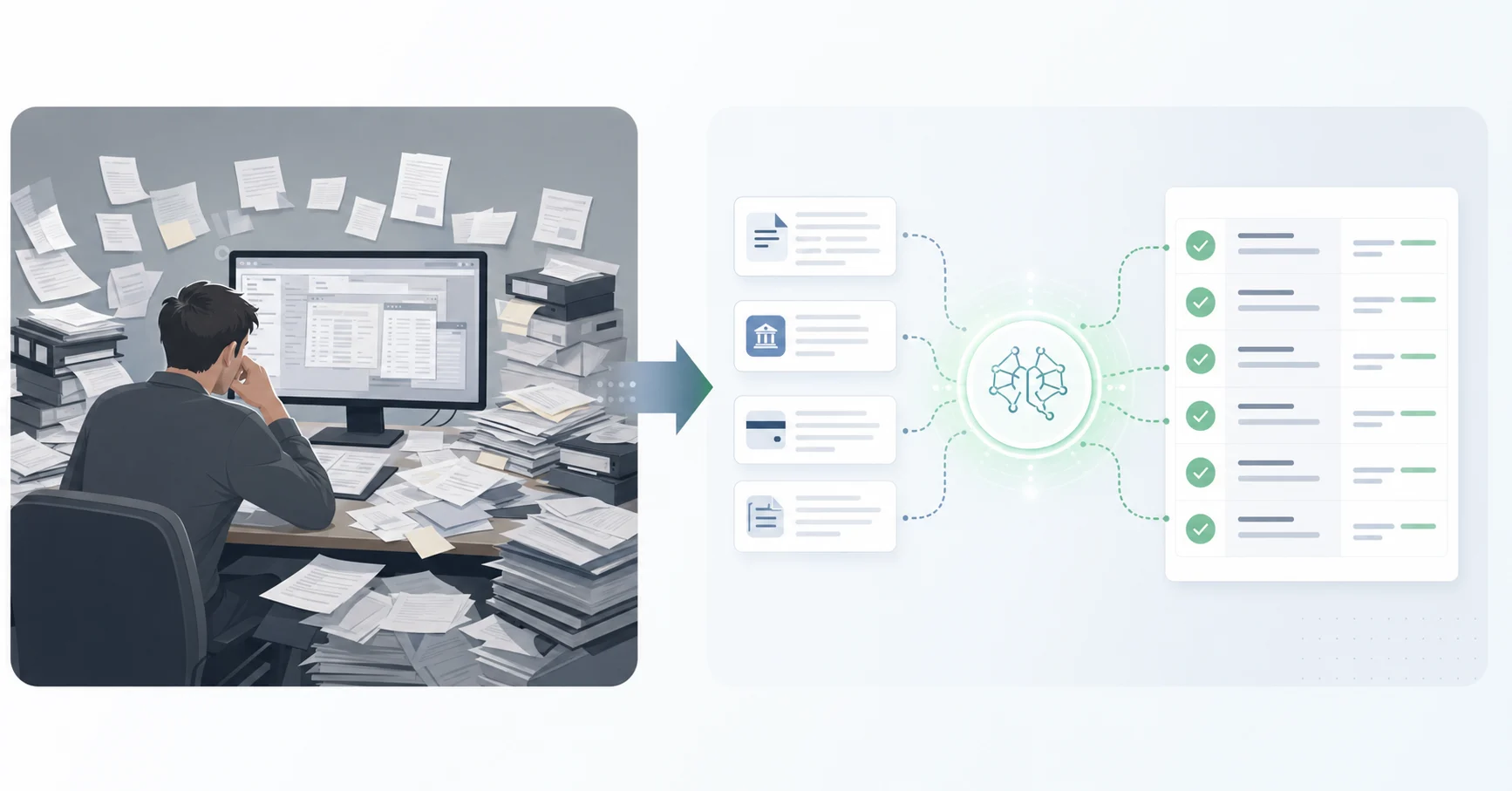
AI classification in Sage Intacct works by reading your historical GL data to seed its classification model. Past coding decisions do the heavy lifting: a recurring vendor charge gets classified with account, class, department, location, and payee tags already assigned, based on how your team has coded it before.
What changes for your reviewers is the queue structure itself. High-confidence matches sync automatically. Anything below the confidence threshold gets routed for human judgment, flagged with an explanation of what triggered the uncertainty.
What Gets Removed From the Manual Workflow
This replaces several discrete steps your team currently owns:
- Pulling up vendor history to check how a charge was coded last quarter
- Deciding which department or location tag applies when a charge spans multiple cost centers
- Keying account codes, class tags, and payee fields one transaction at a time
- Returning to flagged items after an interrupt breaks the coding rhythm
The reviewer role moves from data entry to exception handling, which is a meaningfully different cognitive load.
Final Thoughts on the Hidden Cost of Manual Entry
The compounding effects of accounting manual data entry show up in close timelines, error correction cycles, and the work your most experienced staff don't get to. Multi-entity structures multiply the burden, and dimensional tagging in Sage Intacct adds friction at every transaction. Schedule a walkthrough to see how classification automation removes the queue. Your team's capacity matters more than your current workflow suggests.
FAQ
Can I automate transaction coding in Sage Intacct without losing dimensional control?
Yes. AI classification in Sage Intacct applies account codes, class, department, location, project, and custom dimensions automatically based on historical patterns, while routing low-confidence matches to reviewers for final approval. Your team maintains control over every posting decision through exception queues.
Sage Intacct transaction coding vs QuickBooks Online: which takes more manual time?
Sage Intacct typically requires more manual coding time because it lacks the native bank feed experience that QBO provides. Each transaction without a matching rule falls to manual review, and multi-dimensional tagging across departments, locations, and projects multiplies the data entry burden per transaction.
What's the actual error rate for manual transaction coding in accounting?
Research suggests manual data entry produces errors at a rate of 1 in 300 keystrokes, with general data entry error rates between 1% and 5%. For accounting teams processing thousands of monthly transactions, that translates to dozens of miscoded entries that require correction, reconciliation work, and audit trail documentation.
How much time does correcting a single miscoded transaction in Sage Intacct actually take?
Correcting a miscoded transaction takes 20 to 45 minutes per incident. The process requires voiding the entry, tracing back to the original source document, determining the correct dimensional tags, re-posting, and updating documentation for the audit trail.
Best way to reduce sage intacct manual coding cost across multiple entities?
AI classification that learns from historical GL data cuts manual coding time by routing only low-confidence transactions to reviewers. For multi-entity organizations, automated dimensional tagging prevents coding errors from propagating across intercompany eliminations and consolidated reporting, which removes the multiplier effect that stretches close cycles.
Turn this into a close-ready workpaper
Start with sample files or upload your own statements to see how Truewind prepares review-ready workpapers and journal entries.