

A processor payout reaches the bank as one deposit, while the settlement report separates gross sales, refunds, fees, and timing differences. The ledger has the deposit. It does not have the accounting treatment. Before anyone can review an entry, someone has to combine the files, reconcile the totals, preserve the dimensions, and explain the difference. The close has already started, even if the checklist still says day zero.
That pattern repeats across donor platforms, custodian statements, credit cards, prepaid schedules, and intercompany accounts. Each source describes the activity in its own structure. Each workpaper expects it in another. The accounting team carries the logic between them, often through spreadsheets, prior-period files, and reviewer notes that were never designed to operate as one workflow.
When month-end close feels broken, the GL is usually not the only problem. The failure starts upstream, where raw source material becomes accounting work that a reviewer can understand and approve. Adding another checklist does not change that preparation burden. The team needs a repeatable way to apply its existing process before the work reaches Sage Intacct or QuickBooks Online.
The close starts breaking before review
Most close improvement projects begin with the final stages: entry approval, consolidation, reporting, and checklist management. Those stages matter, but they assume the underlying work has already been prepared. A checklist can show that a processor reconciliation is late. It cannot combine the processor export with the bank activity, allocate the fees, identify timing differences, and produce the support schedule the reviewer expects.
The same limit applies to the ERP. Sage Intacct and QuickBooks Online record approved accounting activity and preserve the books. They do not interpret every emailed statement, portal download, or changing spreadsheet layout that arrives upstream. They also do not know why your team uses a particular cutoff, splits a deposit across dimensions, or treats one exception differently from another. That logic sits with the accounting team and its historical work.
The recurring burden is not simply data entry. Someone must determine what each file represents, whether the source set is complete, how activity maps to the chart of accounts, and what changed from the prior period. A clean bank feed can still be missing the processor detail needed to separate revenue from fees. A custodian statement can contain the right totals while requiring entity-specific treatment that does not appear anywhere in the transaction description.
Preparation becomes the bottleneck because those decisions happen before a workpaper is ready for review. The preparer gathers support, applies mappings, rolls forward schedules, checks totals, and documents anything unusual. The reviewer then repeats enough of that work to understand whether the result can be accepted. If the reasoning is scattered across files and inboxes, review becomes reconstruction.
A better workflow starts with the materials the team already uses and the process it already follows. Prior workpapers, previous entries, SOPs, and reviewer corrections provide the operating context for the next period. If you want to inspect how those inputs become prepared work without replacing the GL, See Truewind in action through a recurring workflow your team already owns.
More software does not fix missing preparation
A finance team can have modern systems for AP, payroll, expenses, billing, and close management while recurring preparation still begins in Excel. That is not a contradiction. Most finance software handles a defined transaction or stores the final accounting result. The work between operational sources and the ledger remains fragmented because it crosses systems, file types, and accounting judgments.
Point tools can address parts of the process. An ingestion tool can structure a document. A coding tool can propose an account. A reconciliation tool can compare two totals. The close still depends on someone carrying context from one step to the next, preserving dimensions, applying prior treatment, and producing the exact artifact the reviewer knows how to inspect.
Recurring work also resists generic templates. Two teams may both prepare a prepaid schedule or donation reconciliation while using different mappings, cutoffs, classification rules, and review conventions. Even within one company, the same vendor may require different treatment by entity or purpose. Standardization matters, but it has to preserve the accounting process the team has already approved.
An accounting-firm customer described the preparation burden in a customer conversation: "Truewind automates a huge chunk of that busywork." The point was not that the accounting stopped mattering. The customer continued, "It's not just about making bookkeeping simpler; it's about freeing up teams, and helping them focus on higher-value projects." In that example, the value came from moving staff effort away from repeated categorization and toward work that required their experience.
That distinction matters because accounting work cannot be divided into important judgment and disposable clerical effort as neatly as software marketing often suggests. Preparation carries accounting logic. The useful change is to capture that logic in a recurring workflow, apply it to new source files, and leave the accountant responsible for corrections and approval. Capacity comes from making preparation repeatable, not from pretending it requires no judgment.
Reviewability is the control surface
A prepared journal entry is not enough. The reviewer needs to know which source produced each line, which calculation was applied, what accounting treatment the workflow followed, and whether anything fell outside the expected pattern. Without that context, a polished entry can create more review work because the accountant has to rebuild the reasoning before approving it.
A workpaper brings the source and the accounting together. The current-period support sits with the calculation, proposed treatment, exceptions, and reviewer actions. When a balance changes, the reviewer can inspect the underlying statement and see how the schedule rolled forward. When coding differs from the prior period, the change is visible rather than buried inside a final entry.
Reviewability also changes what the team means by control. Manual effort feels controlled because a person touched every file, but touch alone does not create a durable record of what happened. A controlled workflow shows the inputs, the rule that was applied, the correction a reviewer made, and the person who approved the result. The next preparer should not have to search an inbox to recover that history.
One customer conversation captured the practical effect after recurring categorization became consistent: "Categorization is accurate, and we stopped having to double-check everything." The same customer summarized the experience more bluntly: "It's essentially perfect." Those statements describe one customer's experience, not a result every team should assume. What matters for the broader close process is the mechanism behind confidence: proposed work remains visible, corrections are captured, and the accountant still confirms the output.
Truewind presents prepared workpapers, reconciliations, schedules, journal-entry drafts, source links, and exceptions inside a human review workflow. Accountants can confirm the work, adjust it, or send it back before anything moves downstream. To examine how those review controls fit around one of your existing workpapers, Book a Truewind demo and use the source files and prior result your reviewer already knows.
Exceptions are where judgment belongs
The goal of accounting automation should not be to make every item look routine. Missing statements, unexpected balance changes, mixed personal and business activity, and inconsistent classifications are not processing failures to hide. They are the points where the current period no longer fits the process the team has already approved. Those items belong in front of an accountant.
Silent resolution creates the wrong kind of efficiency. A reconciliation can be forced to agree while leaving the underlying timing difference unexplained. A transaction can inherit last period’s coding even though its purpose changed. A workpaper can roll forward correctly at the formula level while relying on an incomplete source set. Clean totals do not settle those questions.
A stronger workflow prepares what follows the known process and separates what requires review. Truewind compares current-period preparation with prior workpapers and captured treatment, then surfaces items that fall outside the pattern with their source context. It does not resolve those exceptions autonomously or change accounting policy on its own. The reviewer makes the call, and the decision can inform later periods.
Exceptions are therefore a feature of controlled automation. They let experienced accountants spend less time rechecking work that follows established rules and more time investigating the items that do not. The accountant remains responsible for the accounting treatment, materiality assessment, rule change, and final sign-off. Automation narrows the review surface; it does not remove the reviewer.
What a preparation layer changes
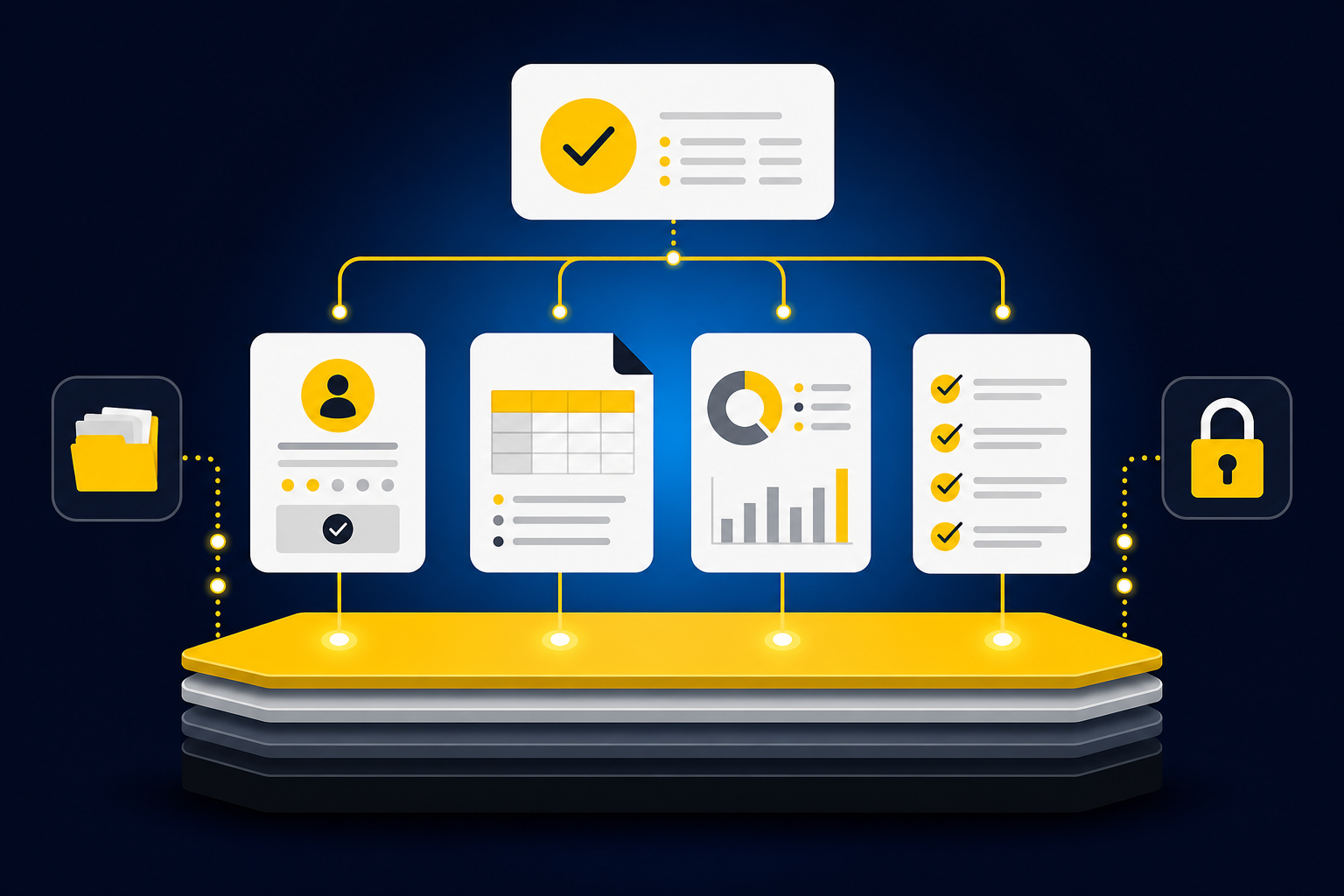
A preparation layer sits between the files the team receives and the GL where approved accounting is recorded. Truewind ingests recurring source materials such as bank statements, credit-card activity, processor reports, donor-platform exports, custodian statements, prior workpapers, and operational exports. It structures those inputs for coding, reconciliation, schedule preparation, workpaper generation, and exception review. The source remains attached to the work so the reviewer can trace the result.
Historical treatment provides the next layer of context. Truewind applies the team’s captured account mappings, allocation choices, classification splits, and reviewer corrections when preparing a new period. Rule changes stay explicit, and novel items still go to the reviewer. The platform does not impose a generic accounting policy or assume that two organizations prepare the same recurring workpaper in the same way.
For multi-source reconciliations, the workflow aligns systems that describe the same activity differently. A nonprofit reconciliation may combine donor activity, processor settlements, and bank deposits while preserving fund or program dimensions. A family-office workflow may combine custodian activity, an investment-vehicle statement, and an ERP balance while keeping entity boundaries intact. Fees, refunds, timing differences, and unreconciled items remain visible in the support schedule rather than being forced into agreement.
Workpaper generation follows the same model. The prior workpaper, current-period source documents, and ERP balances feed a new period with updated schedules and source-linked support. Any required journal-entry draft is prepared for review, while exceptions remain with the accountant. Prepaid and fixed-asset schedules can also roll forward from source files and prior schedules using the team’s existing amortization or depreciation treatment.
The final handoff preserves the boundary between preparation and recordkeeping. After reviewer confirmation, approved output can move to Sage Intacct or QuickBooks Online with coding, dimensions, and source references preserved. Native ERP coverage is limited to those two documented systems. Truewind does not replace the GL, and it does not post without accountant confirmation.
Adoption works better when the first workflow is recurring, bounded, and supported by a prior approved result. A brokerage rollforward, processor settlement reconciliation, or prepaid schedule gives the team something concrete to compare against known work. Reviewers can inspect the differences, correct the treatment, and decide whether the workflow is ready to expand. If your team has that kind of example-rich process, Get a Truewind demo and bring the prior workpaper that defines the expected result.
Capacity, not replacement, is the point
Accounting teams do not gain much from an AI answer they have to rebuild before review. They gain capacity when recurring preparation arrives in the form they already use: tied to source, calculated according to their rules, separated from exceptions, and ready for an accountant to inspect. The judgment remains with the person accountable for the books.
That makes the future of the close less dramatic than autonomous accounting, and more useful. Sage Intacct or QuickBooks Online remains the system of record. The reviewer continues to own accounting treatment and approval. The preparation layer takes on the repeated work of combining files, applying established mappings, rolling schedules forward, checking totals, and presenting exceptions with context.
When that layer is missing, the close feels broken because experienced staff spend their time assembling the conditions for judgment instead of exercising it. Fixing the close means moving their effort downstream. The work still gets reviewed. The accountant stays in control, but review begins with prepared evidence instead of a pile of source files.
Frequently Asked Questions
How do I prepare for month-end close efficiently?
To prepare for month-end close efficiently, start by organizing your source materials like bank statements, credit card activity, and prior workpapers. Make sure to align these documents with your existing accounting rules. Next, use a structured workflow to categorize transactions and generate supporting schedules. This way, you can reduce manual data entry and ensure everything is ready for review. Finally, ensure that any exceptions or unusual items are flagged for your accountant to review, maintaining clarity and control throughout the process.
What if my financial data is inconsistent?
If your financial data is inconsistent, first identify the sources of discrepancies. Gather all relevant documents and compare them to your ledger. Use a structured approach to reconcile these differences, ensuring that you preserve the context of each transaction. It’s crucial to involve your accounting team in reviewing these inconsistencies, as they can provide insights based on historical treatment and ensure that any exceptions are addressed appropriately.
Can I automate my month-end close process?
You can automate parts of your month-end close process by using tools that ingest and structure your source documents, like bank statements and processor reports. By setting up a workflow that applies your accounting rules and generates review-ready workpapers, you can streamline the preparation phase. However, remember that human review is essential before anything is posted to your general ledger, so ensure that your team is involved in the final approval process.
When should I flag exceptions during the close?
You should flag exceptions during the close whenever you encounter discrepancies, such as missing statements or unexpected balance changes. These items should be surfaced for review, as they require the judgment of an experienced accountant. It’s important to keep a clear record of these exceptions along with their source context, so the reviewer can make informed decisions and ensure compliance with your established accounting practices.
Turn this into a close-ready workpaper
Start with sample files or upload your own statements to see how Truewind prepares review-ready workpapers and journal entries.