
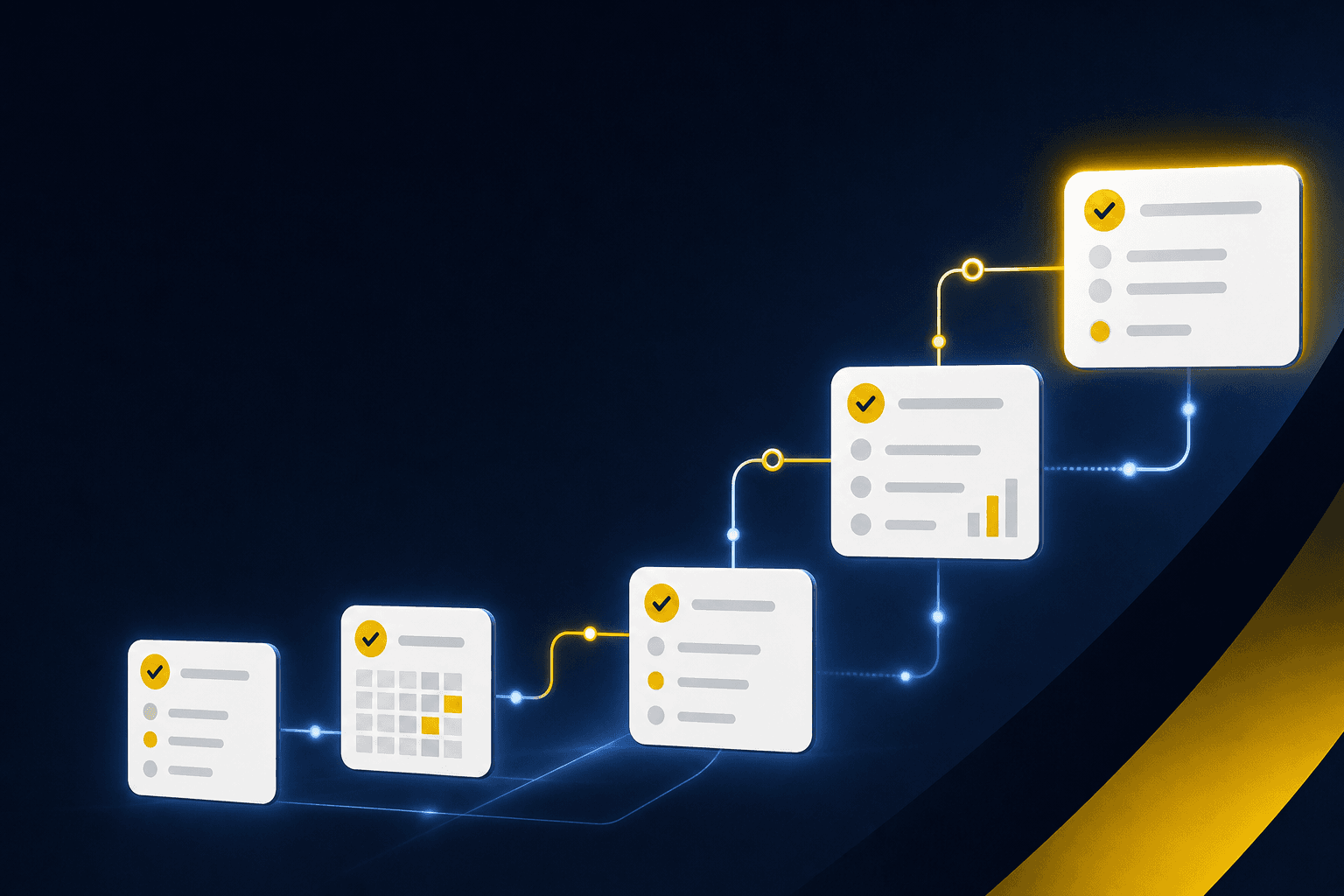
The entity workpapers are assigned. The reviewers are named. The close checklist shows a due date against every line. Yet the team still waits because one shared allocation is incomplete, an intercompany balance has not been confirmed, or a source file needed across several entities has not arrived. Most multi-entity close delays are caused less by the number of tasks than by sequencing errors between entities, reviewers, and shared inputs.
A checklist can tell you who owns a task. It rarely tells you which other tasks depend on it, which work can proceed without it, or when a reviewer will receive enough support to begin. That distinction matters in a lean accounting team, where the same manager may prepare one entity, review another, and resolve the exceptions that affect the consolidated result.
A useful multi-entity close calendar has to show more than dates. It needs to show dependency, source readiness, reviewer gates, and the specific exception that is holding a workpaper open. Once those relationships are visible, the team can complete more preparation in parallel without weakening control.
Organize the calendar around dependencies, not departments
Most close calendars group tasks by entity, account, or preparer. That structure is familiar, but it can hide the order in which the work actually becomes possible. A cash reconciliation may belong to one entity, while the processor report or allocation rule it depends on is shared across several. The calendar shows separate tasks, but the source dependency is the same.
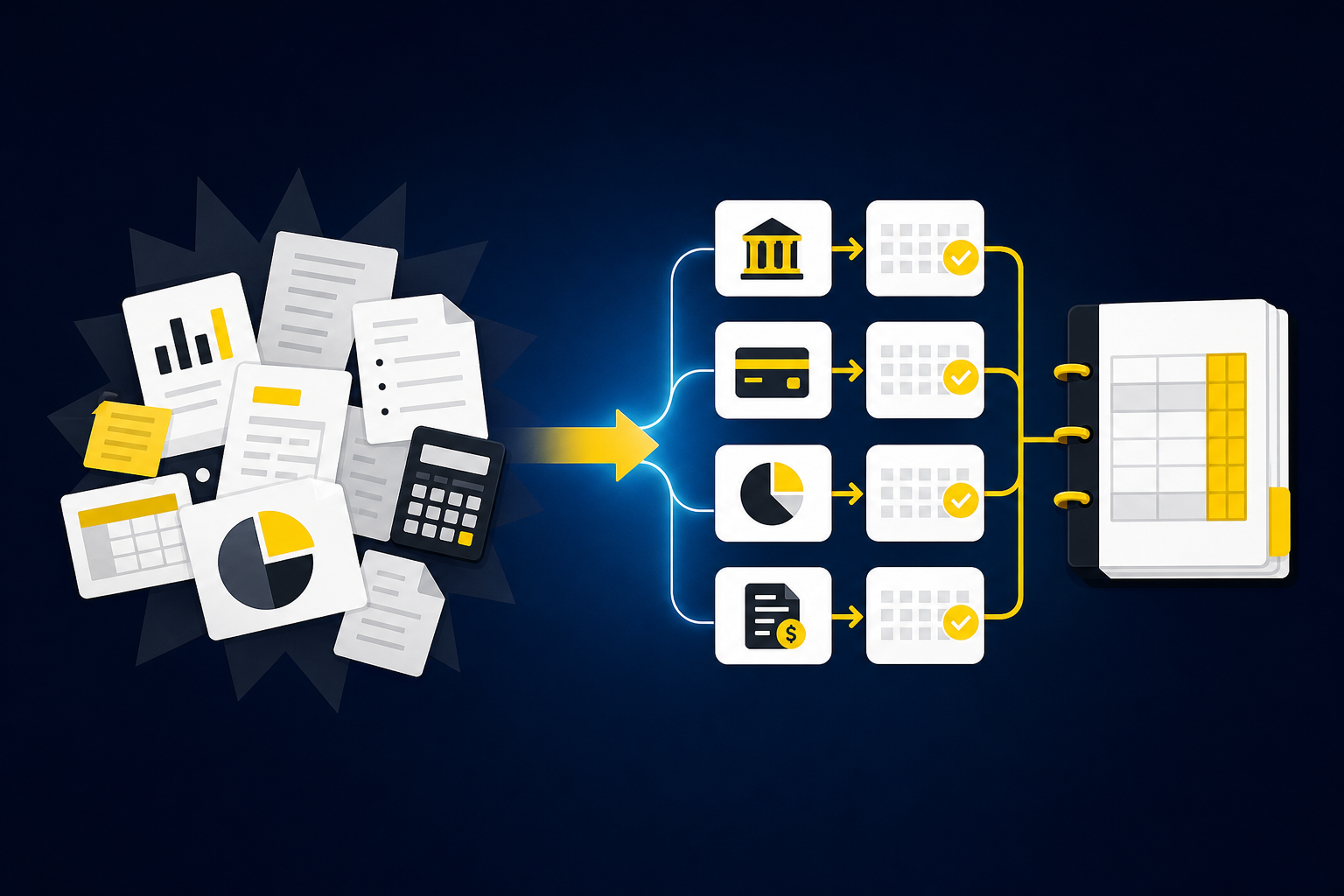
Start by classifying recurring work according to what must happen before preparation can begin. Four practical categories cover much of a multi-entity close:
- Independent tasks: Work that can begin when the entity-specific source and prior workpaper are available. Bank reconciliations, card coding, and some entity-level rollforwards may fit here.
- Shared-input tasks: Work that depends on one source used across multiple entities, such as a payroll register, processor report, custodian statement, or allocation file.
- Cross-entity tasks: Intercompany reconciliations, shared-cost allocations, and consolidation support that require activity from more than one entity.
- Review-gated tasks: Journal-entry drafts, workpapers, or schedules that cannot move downstream until an accountant confirms the treatment and signs off.
The classification changes how you schedule the close. Independent tasks can move as soon as their own inputs are complete. Shared-input tasks need one visible source owner rather than several preparers chasing the same file. Cross-entity work needs a defined handoff between entity preparation and consolidated review. Review-gated work needs a reviewer reservation, not just a preparer due date.
The source record should travel with the workpaper through each handoff. A reviewer needs to see what produced the balance, which calculation was applied, how the accounting treatment follows prior periods, and what remains unresolved. A calendar that says “ready for review” without that support simply moves the bottleneck from preparation to the reviewer.
Truewind structures recurring source files into source-linked preparation workflows and presents the resulting work alongside exceptions for accountant review. If that review surface is relevant to the dependencies you are mapping, See Truewind in action and compare it with the handoffs in your current close.
Decide which work should run in parallel
Parallel work does not mean opening every workpaper on day one. It means allowing each task to begin as soon as its required inputs and prior decisions are available, without waiting for unrelated entities to reach the same point. The calendar should make that start condition explicit.
Entity-level preparation is often the first place to look. If one entity has its bank activity, card statements, prior workpapers, and ERP balances, its preparer should not have to wait for a shared allocation that affects a different schedule. The workpaper can be prepared, tied to source, and routed for review while the dependent item remains open elsewhere.
Shared sources require a different pattern. Instead of listing the same processor report or payroll register under every entity, place the source collection and validation step ahead of the entity workflows that consume it. One owner confirms that the file is present and usable. Preparers can then apply the relevant entity and dimensional treatment from a common input rather than creating separate versions of the same source.
Cross-entity work belongs later in the sequence, but not necessarily at the end of the close. Intercompany balances can be compared when both sides are prepared, even if unrelated workpapers remain open. Shared-cost allocations can move once the approved inputs and allocation rules are available. Consolidated review can begin on completed sections while specific exceptions remain assigned to their owners.
Reviewer time also needs to be sequenced. A lean team should not send every workpaper to the same manager at once and call that parallel execution. Review packets should arrive in useful units, with source support attached and exceptions separated from prepared items that follow the established process. Otherwise, the reviewer becomes the queue.
A practical review design uses three checkpoints:
- Source readiness: The preparer confirms that required source files and prior-period context are available, or identifies the exact missing input.
- Workpaper readiness: The prepared balance, calculation, accounting treatment, supporting schedule, and exceptions are visible for review.
- Cross-entity readiness: Intercompany differences, shared allocations, and consolidation effects are resolved or presented as explicit judgment items.
Truewind’s workpaper generation and rollforward capability loads prior workpapers, current-period source documents, and ERP balances into the recurring preparation process. For teams deciding where those checkpoints should sit, Book a Truewind demo to examine how preparation, exceptions, and reviewer actions stay connected.
Keep one missing source from blocking the full close
A missing statement is not just an incomplete task. It is a dependency that needs a defined boundary. If the calendar treats every open source as a general close blocker, one unavailable file can stop work across entities that do not depend on it. If the team ignores the missing file, the close can appear further along than the evidence supports.
The better approach is to mark the affected workpaper, its downstream tasks, and the person responsible for resolving the exception. Unrelated work continues. The affected reconciliation stays open, any journal-entry draft remains unapproved, and the consolidated checkpoint reflects the unresolved item. The team gets parallel progress without hiding the gap.
Status language matters here. “In progress” is too broad for a multi-entity close because it does not explain whether the preparer is working, waiting for a source, waiting for another entity, or waiting for review. Use statuses that expose the reason work cannot move, such as:
- Ready for preparation
- Waiting for source
- Waiting for another entity
- Ready for review
- Returned with exception
- Approved for downstream use
Those labels are useful only if they connect to evidence. “Waiting for source” should name the missing statement or export and identify which workpapers depend on it. “Returned with exception” should show the reviewer note and the source context behind the question. “Approved” should mean an accountant has inspected the work, not that a preparer finished it.
Some missing inputs do need to stop a broader checkpoint. A shared source that affects several entities, an unresolved intercompany difference, or an allocation question with consolidated impact cannot be treated as an isolated task. The calendar should show that consequence directly. Parallel execution works when dependencies are bounded accurately, not when the team lowers the standard for completion.
Exceptions are part of the control design. Missing statements, unexpected balance changes, and inconsistent classifications belong in front of the accountant because they require context and judgment. The goal is not to eliminate every exception. The goal is to prevent an exception in one lane from obscuring completed work in another.
Put reviewer checkpoints where judgment begins
Reviewer control weakens when the calendar waits until every preparer marks every task complete. By that point, the reviewer receives a large package with little indication of which items follow known treatment and which ones require a decision. The result is another full pass through work that could have been reviewed earlier.
A reviewer checkpoint should begin when a coherent workpaper is ready. Coherent means the source is attached, the calculation can be followed, the accounting treatment is visible, and unresolved items are separated from prepared output. The reviewer can confirm the routine work, correct the exceptions, and leave the remaining entity preparation in motion.
Prior-period treatment also belongs at the checkpoint. Multi-entity accounting repeats many of the same classifications, dimensions, and allocation choices, but the rules are not generic across every entity. A reviewer needs to see whether the current preparation follows the last approved result and where a new fact caused the treatment to change.
In an anonymized field observation, a lean Sage Intacct team broke its close down by entity, account, workflow, source availability, preparer, reviewer, and implementation dependency. The exercise made one point clear: choosing and sequencing work required more than identifying a large task. The team needed recurring inputs, a prior approved result, and a review path that made the output easy to inspect.
Reviewer coverage matters when the team is lean. If a manager prepares work for one entity and reviews another, the calendar should avoid stacking both responsibilities into the same window. Reassigning the preparer does not solve the problem if the same reviewer still receives every completed workpaper at once. Sequencing has to account for the people who approve the work, not only the people who assemble it.
How Truewind supports a dependency-based close
Truewind sits between recurring source files and Sage Intacct or QuickBooks Online. It does not replace the calendar, the GL, or the accountant. It prepares the work that moves through the calendar so each handoff carries the source, calculation, accounting treatment, exceptions, and reviewer action the next person needs.
Multi-source ingestion accepts recurring inputs such as bank activity, card statements, processor exports, custodian statements, payroll registers, prior workpapers, and operational exports. Those files become structured inputs for coding, reconciliation, schedule preparation, and workpaper generation. Source files remain attached to the workflow, which gives the reviewer a trace back to the underlying support.
Multi-source reconciliation then aligns systems that describe the same activity differently. A donor platform, payment processor, and bank may each present a different view of the same deposit. A custodian statement, investment-vehicle statement, and ERP balance may need to be tied together across entities. Truewind prepares the reconciliation and support schedule, while timing differences and unreconciled items remain visible for accountant judgment.
Historical-example learning applies the team’s prior coding decisions, classifications, allocation choices, and reviewer corrections to the current period. It does not change accounting policy on its own. Novel items, changed rules, and exceptions still go to the reviewer, and nothing posts without accountant confirmation.
The human-in-the-loop review workflow keeps prepared work beside source links and exception queues. Accountants can confirm, adjust, or return an item, and their decisions remain part of the recurring workflow. After sign-off, approved output can move to Sage Intacct or QuickBooks Online with coding, dimensions, and source references preserved.
One accounting-firm customer reported that Truewind reduced credit-card transaction categorization time by approximately 75 percent. That is a single customer example, not a general result, but it shows the practical role of prepared upstream work. When recurring categorization takes less preparer attention, the calendar can reserve more of the team’s capacity for exceptions and review.
If your current close still depends on reviewers reconstructing source support across files and inboxes, Get a Truewind demo to assess how source-linked preparation could fit into the calendar you already run.
Redesign the calendar around the work that can move
A better multi-entity close calendar does not add another layer of task detail. It makes the order of work visible. Each task shows the source it needs, the entity or entities it affects, the reviewer gate it must pass, and the downstream work that cannot proceed until it does.
Start with one recurring workflow that has known inputs and a prior approved result. Map its independent steps, shared dependencies, cross-entity effects, and review point. Then compare the designed sequence with what actually happens during the close. Reviewer corrections and exception patterns will show where the calendar needs to change.
The result is not an autonomous close. Accountants still own policy, treatment, exception resolution, and posting. What changes is the amount of work forced into a single sequence when it could have moved in parallel.
Close bottlenecks shrink when entity sequencing, handoffs, and exception escalation reflect the accounting work itself. That is the purpose of the calendar: not to prove that every task has an owner, but to let completed work move without losing the review controls that make it usable.
Frequently Asked Questions
How do I organize my multi-entity close calendar?
Start by classifying tasks based on dependencies. Identify independent tasks that can begin as soon as their inputs are ready, shared-input tasks that rely on common sources, cross-entity tasks needing collaboration, and review-gated tasks that require confirmation before moving forward. This way, you can schedule work in a way that allows parallel execution without bottlenecks.
What if a source file is missing during the close?
Mark the affected workpaper and identify which tasks depend on it. Keep unrelated work moving forward while addressing the missing source. Use specific status labels like 'Waiting for source' to clarify the situation and ensure that the team knows which work is blocked and which can proceed.
Can I streamline the review process for my close?
Yes, you can streamline the review process by setting clear checkpoints. Ensure that each workpaper is coherent and includes all necessary supporting documents before sending it for review. This allows reviewers to focus on exceptions and necessary judgments rather than re-checking completed work.
When should I allow parallel work during the close?
You should allow parallel work when tasks are independent or when their required inputs are ready. For instance, if one entity has completed its bank reconciliation, it shouldn't wait for unrelated tasks to finish. This approach helps maximize efficiency and reduces delays.
Turn this into a close-ready workpaper
Start with sample files or upload your own statements to see how Truewind prepares review-ready workpapers and journal entries.