
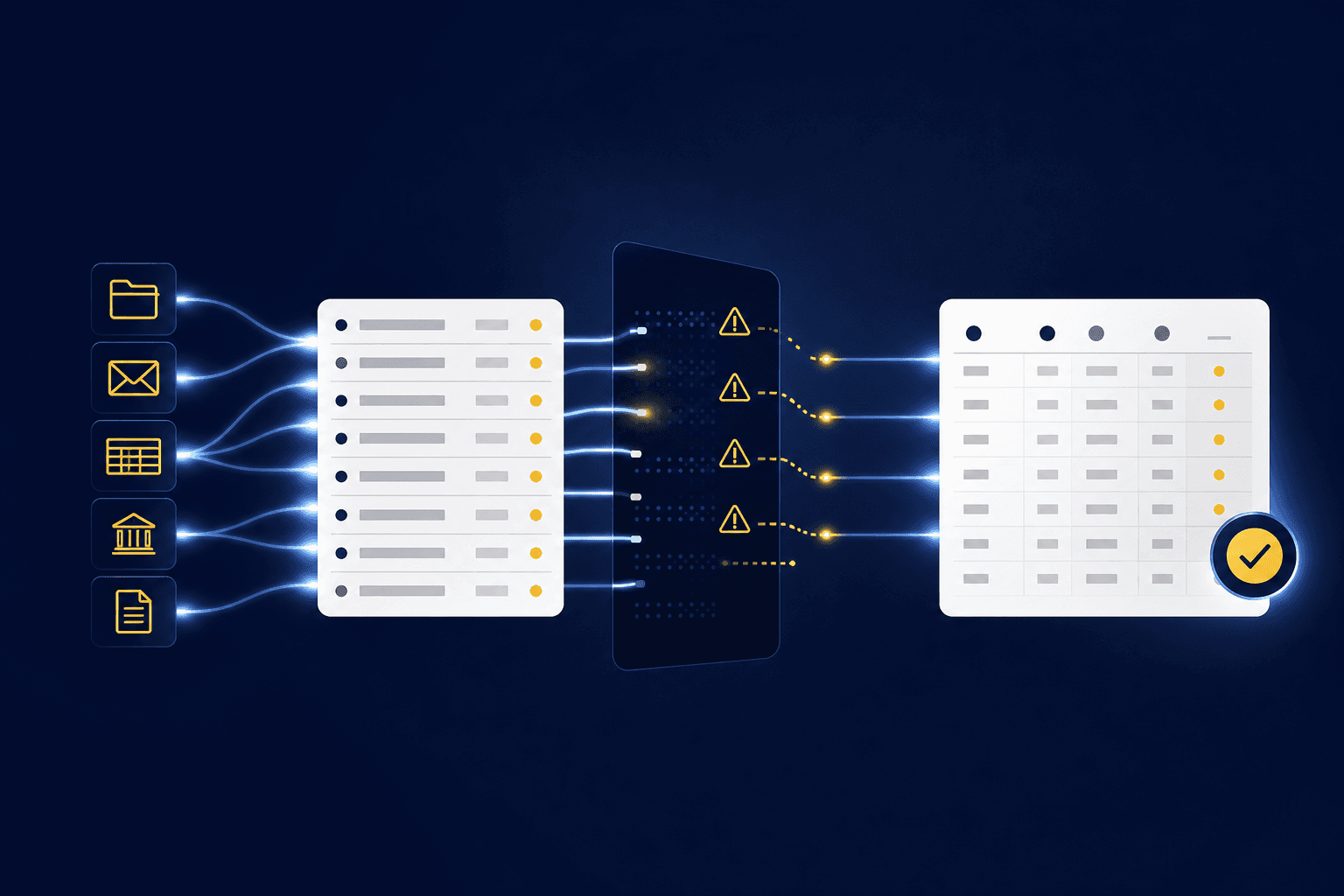
The bank balance is in Sage Intacct, but the support is still spread across a donor export, a processor report, and an emailed PDF. One file carries the gross activity. Another carries the fees. The bank only shows the net deposit, and the fund or program coding lives in last month’s workpaper. Nothing is ready for review yet.
That gap between source and ledger is where month-end close delays begin. The team has to collect the files, determine what each one represents, apply the right classifications, reconcile the totals, and prepare the support a reviewer expects. The ERP can record the approved entry. It cannot prepare the accounting behind it.
Nonprofit teams feel the problem sharply because their complexity is operational, not merely regulatory. Donation platforms, processors, grant records, bank activity, restrictions, and program dimensions all describe parts of the same financial activity. The burden is assembling that evidence and applying the organization’s treatment consistently each period. Audit readiness matters, but the work starts long before an auditor asks for support.
The ledger is downstream of the delay
A close can look well designed on paper and still depend on manual preparation underneath. The checklist is assigned. The ERP is current. The team has clear preparer and reviewer roles. Yet recurring reconciliations still begin with someone downloading files, checking column layouts, carrying mappings forward, and searching reviewer notes for the treatment used last period.
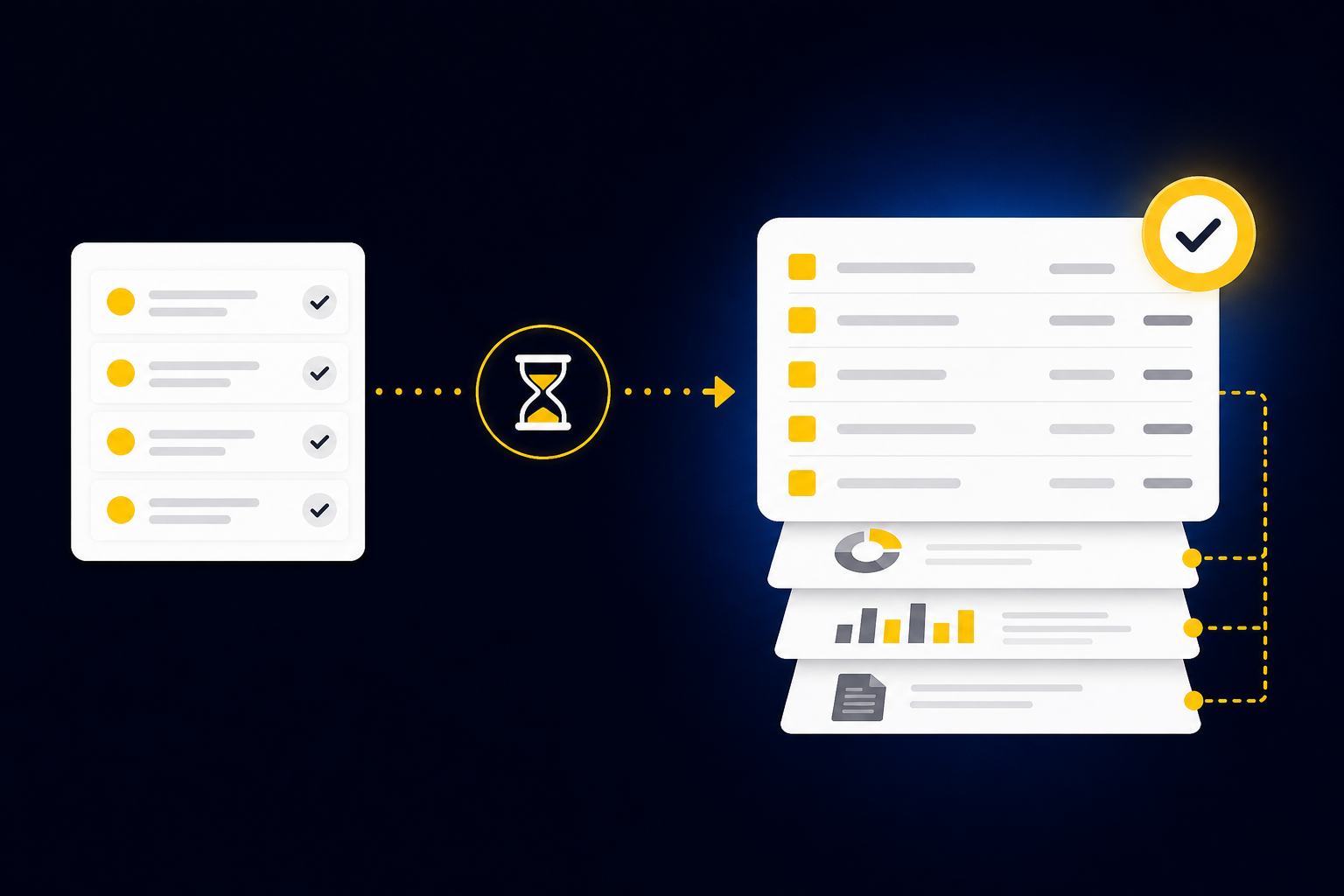
Each step is legitimate accounting work. The problem is that the process resets too often. A changed processor export can break a spreadsheet. A missing statement can sit unnoticed until review. A new preparer may reproduce the calculation but miss the classification logic that the reviewer corrected three months ago.
The delay compounds because review cannot begin until preparation is complete. When support arrives late, the reviewer either waits or starts checking an unfinished workpaper. When coding and dimensions are inconsistent, review turns into reconstruction. The controller is no longer reviewing the answer; the controller is rebuilding the path from source to answer.
Truewind sits in that preparation layer, upstream of the GL. It reads the recurring source files, applies the team’s existing accounting rules and historical treatment, prepares the reconciliation or workpaper, and routes exceptions to the accountant. Sage Intacct or QuickBooks Online remains the system of record, and nothing moves downstream without reviewer confirmation. To see how that preparation layer works against real source files and reviewer controls, you can See Truewind in action while keeping the ledger and sign-off process you already use.
The distinction matters because a bank feed is not a complete accounting workflow. It can show that cash moved. It cannot supply every restriction, program, fund, fee, refund, timing difference, or allocation carried by the systems around that cash. Closing faster requires repeatable preparation across those sources, not another place to view the ending balance.
A clean output is not necessarily reviewable
Controllers are not only evaluating whether an AI-prepared number agrees to the GL. They need to know which source produced it, how the calculation worked, what treatment was applied, which items did not fit, and who approved the result. A polished journal-entry draft without that evidence creates more work because the reviewer has to verify the process outside the output.
The workpaper is where preparation and judgment meet. It gives the accountant a familiar artifact that can be traced and re-performed. Source support belongs beside the calculation. Exceptions belong beside the proposed treatment. Reviewer corrections belong in the workflow so the team does not have to rediscover the same decision next period.
That review surface also changes what automation should do with exceptions. Missing statements, unexpected balance changes, inconsistent classifications, and mixed activity should not be forced through the standard path. They should be surfaced with enough source context for an accountant to decide what happens next. An unresolved item is not a failure of the workflow when the workflow makes it visible before posting.
The same principle applies to nonprofit dimensions. A deposit may reconcile to the bank while carrying incomplete fund or program coding. The cash total can be right while the accounting treatment is not ready. Reviewability means preserving those dimensions from source through the support schedule and into the approved journal entry, with rule changes left to the reviewer.
A growing company described its experience in one customer conversation by saying, “Truewind has been amazing.” The customer added, “It's like having an entire accounting department at our fingertips - efficient, accurate, and effortless.” That language described the level of preparation and support the customer felt, not autonomous accounting. Accountants still own treatment, corrections, approval, and posting.
Start with one workflow the team already understands
The first AI accounting workflow should not be the broadest problem in the close. It should be recurring, bounded, and supported by source files the team can identify. A prior approved workpaper gives you the expected structure and treatment. A reviewer who knows the account can inspect the differences between the prepared result and the known answer.
A useful starting workflow also has visible boundaries. A donation reconciliation may combine a donor-platform export, processor activity, bank deposits, fees, refunds, and timing differences. A prepaid schedule may begin with source documents and a prior-period schedule. A brokerage rollforward may require a custodian statement, entity context, prior balances, and established treatment for the activity shown.
Those workflows are good candidates because the team knows what complete looks like. The implementation can reproduce the existing process before trying to expand it. Reviewers can inspect how mappings, dimensions, cutoffs, and exceptions were handled. Their corrections can then become context for the next period without changing accounting policy on their behalf.
Before evaluating software, gather the current source files and a prior approved workpaper for one recurring workflow. Document the mappings, dimensions, cutoffs, and exceptions the reviewer needs to check, and identify who owns sign-off. Use five questions to find what still needs clarification:
- Does the workflow recur with a recognizable set of inputs?
- Is there a prior approved result the team can use for comparison?
- Are the accounting rules established well enough to explain?
- Can a reviewer identify what should be escalated?
- Does the output have a clear downstream destination in Sage Intacct or QuickBooks Online?
A workflow that cannot answer those questions may need process clarification before it needs AI. A workflow that can answer them gives the team a controlled place to test preparation, review the differences, and decide whether to expand. The next step should stay tied to that one account or reconciliation: Book a Truewind demo and bring the prior workpaper, current source files, and known result into the conversation.
Controlled iteration is slower than a promise of instant autonomy. It is also more useful for a reviewer-led close. The accounting team sees how the output was produced, corrects what does not match its process, and decides when the workflow is ready for another period or account. Confidence grows from inspectable work, not from a model-confidence score.
Preparation should preserve the process, not replace it
Recurring accounting work is specific to the team performing it. Two organizations can prepare the same type of reconciliation while using different account mappings, allocation rules, cutoffs, and review conventions. A generic template may recognize the document type and still miss the treatment that makes the workpaper usable.
Truewind uses prior workpapers, current-period source documents, ERP balances, and captured reviewer corrections as operating context. For a workpaper rollforward, it loads the previous workpaper, rolls balances forward, updates the supporting schedule, prepares any required journal-entry draft, and surfaces exceptions for review. The logic follows the team’s existing treatment. It does not create policy or resolve novel judgment items on its own.
Multi-source reconciliation addresses the part of the close where several systems describe the same activity differently. Truewind can ingest the relevant exports, match activity using historical treatment, account for fees and timing differences, and prepare the reconciliation and support schedule tied to source. When totals do not agree, the workflow surfaces the unreconciled items instead of forcing a match.
Dimensional and allocation preparation carries the accounting context that a bank balance cannot provide. Program, fund, department, purpose, location, or entity dimensions can follow the team’s explicit rules through the prepared output. Edge cases and rule changes go back to the accountant. The platform proposes preparation within known boundaries; the reviewer owns the decision.
Review happens before anything reaches the GL. Accountants inspect the prepared workpaper, reconciliation, schedule, or journal-entry draft alongside its source links and exception items. They can confirm the output, adjust it, or return it for preparation. After sign-off, approved structured output can move to Sage Intacct or QuickBooks Online with coding and dimensions preserved.
The audit trail retains the source files, coding decisions, reviewer corrections, and preparation steps associated with the workflow. That record does not replace an audit or certify compliance. It gives the team a traceable explanation of how the work was prepared and who approved it, which is what a reviewer needs when a balance or treatment is questioned later.
The capacity gain comes after the mechanism works
Close automation earns its place when it changes who does which part of the work without weakening ownership. The system prepares recurring work from the sources and rules the team already uses. The accountant reviews the treatment, handles exceptions, and approves what enters the ledger. Experienced staff can spend more of the close investigating changes and explaining results because they are not reconstructing every routine workpaper first.
In one customer conversation, an accounting firm described the preparation burden in direct terms: “Truewind automates a huge chunk of that busywork.” The same customer explained the consequence more fully: “It's not just about making bookkeeping simpler; it's about freeing up teams, and helping them focus on higher-value projects.” That is one customer’s experience, not a universal result, but the mechanism is clear. Repeatable preparation creates capacity only when accountants can inspect the output and keep control of the result.
The model has prerequisites. A team needs a recurring close, identifiable source materials, prior examples or established rules, and a reviewer who owns sign-off. Very small businesses without a dedicated close or reviewer are solving a different problem. Teams seeking autonomous posting, a replacement for their ERP, or a system that decides accounting policy without review are also outside the intended operating model.
The same limit applies to integrations. Truewind’s documented native ERP targets are Sage Intacct and QuickBooks Online. It does not promise a native connection to every SaaS system, and it does not remove the source files that make mid-market accounting complicated. It prepares work from those files and hands approved output to the ledger the team already runs.
A practical evaluation should therefore follow one item from intake through sign-off. Start with the source files. Inspect the proposed coding, reconciliation, calculation, dimensions, and exception handling. Then confirm what the reviewer sees and what prevents an unapproved item from reaching the GL. To test that review path against one of your recurring workpapers, Get a Truewind demo using the prior approved result as the standard.
Reduce delays where the work actually waits
Month-end close delays rarely begin with the final journal entry. They begin while the team is still collecting source files, carrying forward prior treatment, checking classifications, resolving differences, and assembling the support a reviewer needs. By the time the delay reaches the ledger, most of the work that caused it has already happened.
The answer is not to remove the accountant or ask the ERP to perform work it was not built to perform. It is to make preparation repeatable before review begins. Source, calculation, treatment, exceptions, and sign-off need to stay connected in the same workflow, with judgment left to the people who own the books.
That is the practical shape of controlled close automation. The GL remains the system of record. The accountant remains responsible for the result. The preparation between source and ledger becomes a workflow the team can inspect, correct, and run again next period.
Frequently Asked Questions
How do I reduce month-end close delays?
To reduce month-end close delays, start by organizing your source files. Gather all relevant documents like bank statements and processor reports before the close begins. Next, create a checklist that outlines each step in your reconciliation process. This will help ensure nothing is missed. Finally, consider using tools like Truewind to automate the preparation of workpapers and reconciliations, which can streamline the workflow and minimize manual errors.
What if my source files are inconsistent?
If your source files are inconsistent, first standardize the formats as much as possible. Identify the common elements across your documents and create a template for future uploads. Truewind can help by ingesting these varied formats and converting them into structured workflows, which reduces the manual effort needed to prepare your data for accounting tasks. Always ensure that your team reviews the outputs to maintain accuracy.
Can I automate transaction coding?
Yes, you can automate transaction coding by defining clear rules for categorization that align with your chart of accounts. Truewind uses AI to apply these rules and learns from past corrections, improving over time. However, remember that human review is essential; the system proposes categorizations, but accountants must confirm them before posting to the general ledger.
When should I involve my accountant in the workflow?
Involve your accountant at key points in the workflow, especially when exceptions arise or when preparing for the review phase. After Truewind prepares the workpapers and reconciliations, the accountant should review these outputs to ensure they align with established accounting rules and practices. This ensures that any discrepancies are addressed before final approval and posting.
Why does my review process take so long?
Your review process may take longer due to a lack of visibility into how outputs were prepared. Ensure that all workpapers include source links and clear explanations of the calculations used. Truewind helps by surfacing exceptions and providing a complete audit trail, allowing accountants to trace back to the original documents and understand the reasoning behind each entry, which can significantly speed up the review process.
Turn this into a close-ready workpaper
Start with sample files or upload your own statements to see how Truewind prepares review-ready workpapers and journal entries.