
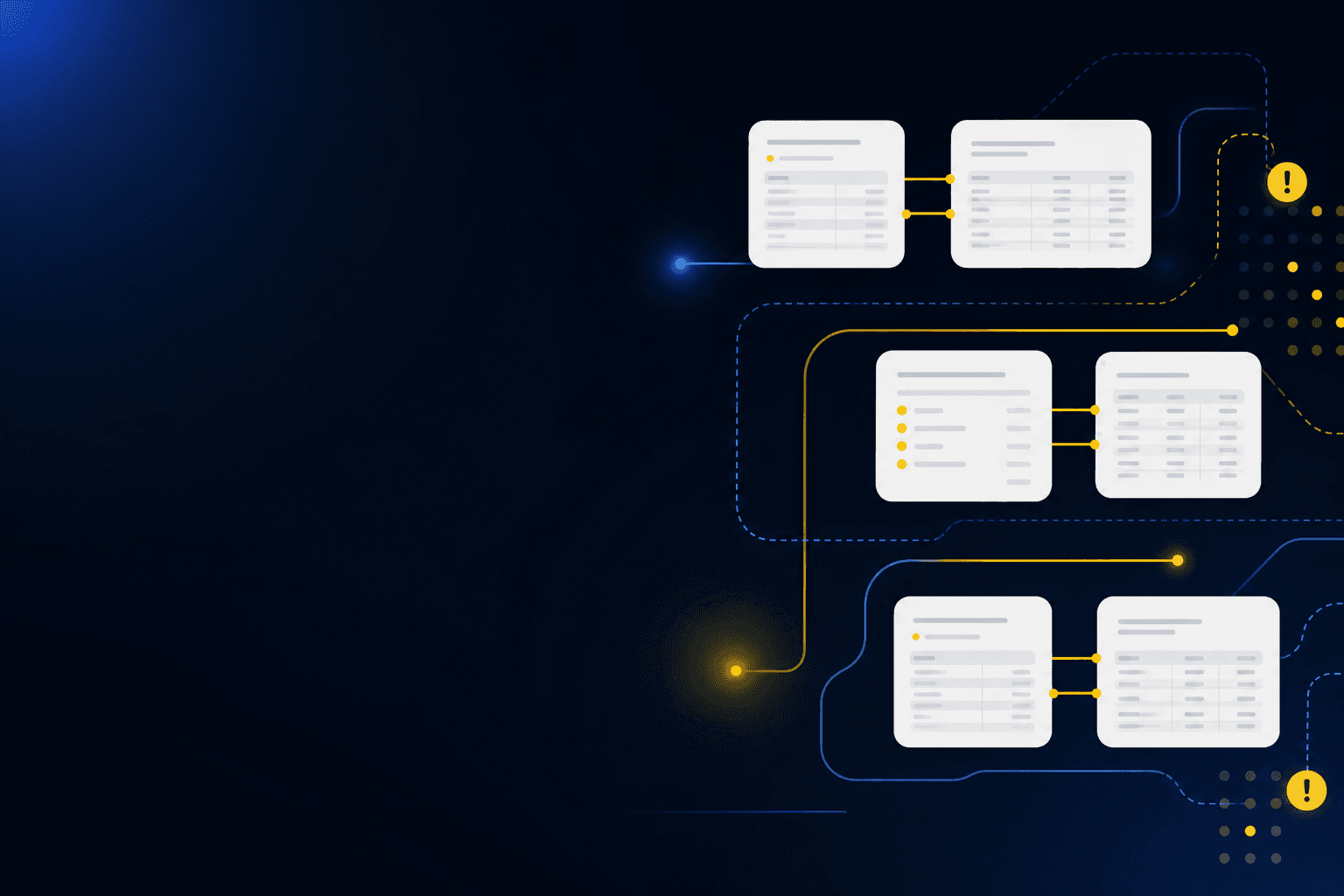
A donor export shows gross gifts by campaign. The processor report shows net settlements after fees and refunds. The bank shows deposits by date. Before a nonprofit accountant can prepare one journal entry, someone has to decide which records describe the same activity, preserve the fund and program coding, explain timing differences, and tie the result back to each source. None of that work begins in the GL.
The close checklist may call the task a donation reconciliation. That label hides most of the preparation required to make the reconciliation reviewable. Files have to be collected, checked for completeness, interpreted, mapped, combined, and compared with prior treatment. Exceptions have to reach someone who can decide what they mean. If you want to spot hidden pre-close work, start before the first workbook is opened and follow every source until a reviewer can sign off.
The close begins before the accounting task appears complete
Accounting systems record approved transactions. They do not prepare every source file that supports those transactions. Sage Intacct can hold the final journal entry, but it does not determine how a donor export relates to a processor settlement or whether a restriction carried the right dimensional coding. QuickBooks Online can remain the source of truth without becoming the place where every upstream decision gets made.
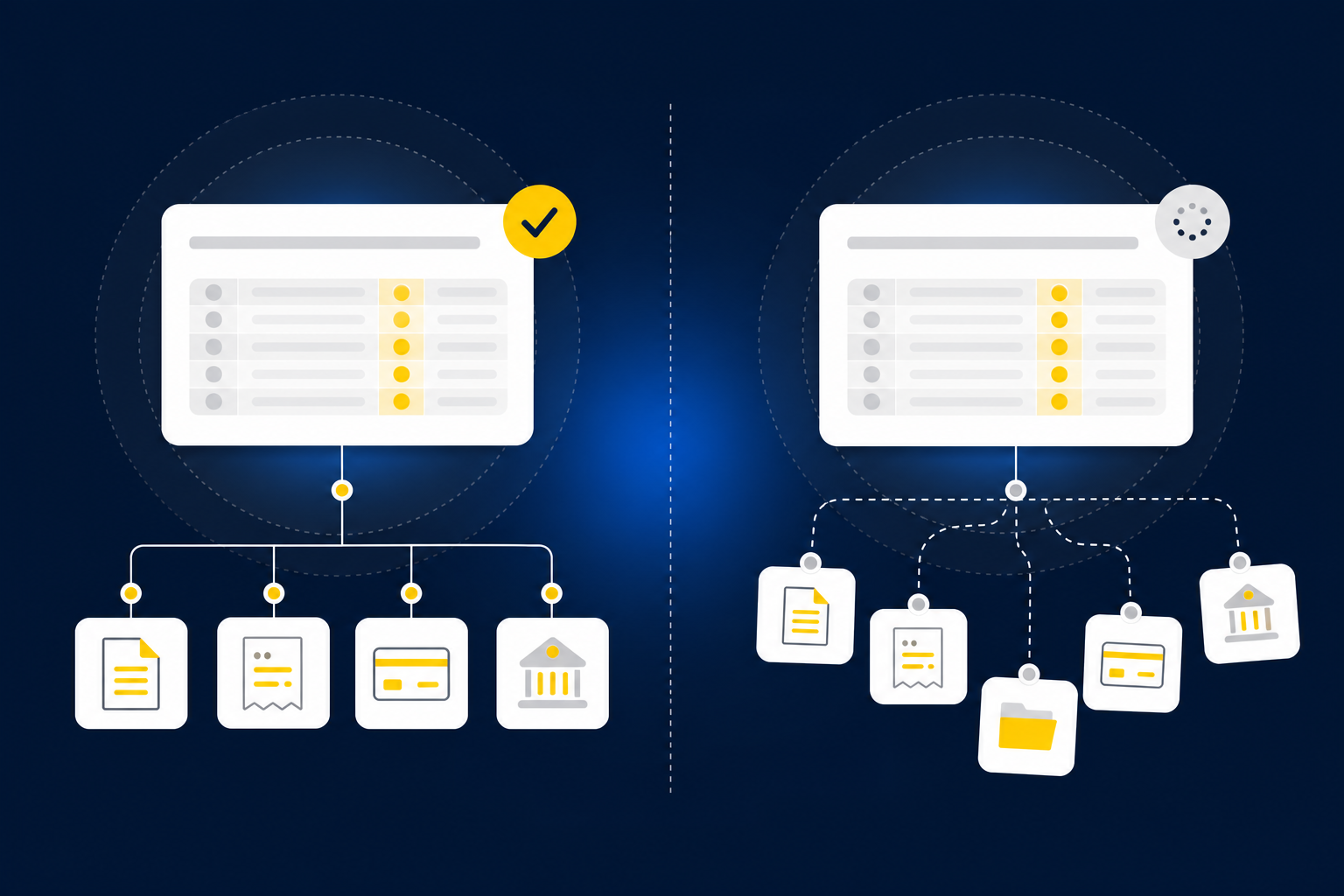
That distinction matters because a close checklist often records the visible task, not the work beneath it. “Reconcile donations” may include downloading reports, checking date ranges, aligning transaction identifiers, allocating fees, investigating unmatched deposits, applying fund classifications, preparing support, and answering reviewer questions. A task that looks like one line on the checklist may span several systems and several handoffs.
The hidden work is easiest to see when the usual preparer is unavailable. Another accountant can locate the workbook and prior-period folder, but the operating logic may still live in the preparer’s memory. Which export is authoritative? Which cutoff applies? How are fees allocated? Which exceptions can carry forward, and which ones need a new treatment? A workbook can preserve formulas without preserving those decisions.
A preparation layer is useful when it can carry that operating logic into the workpaper without taking judgment away from the accountant. To see how Truewind reads recurring source files, applies the team’s established treatment, and prepares the output for review, See Truewind in action.
Nonprofit accounting complexity is operational
Nonprofit accounting is often discussed through the language of compliance. The daily burden starts earlier. Finance teams assemble evidence across donor platforms, payment processors, grants, bank activity, restrictions, programs, and funds, then apply the same classifications across systems that describe activity differently.
A bank deposit does not explain which gifts it contains. A processor settlement may combine donations, fees, refunds, and timing differences. A donor platform may carry campaign or restriction data that disappears once activity reaches the bank. The accountant has to preserve that context while tying the total to cash and preparing the entry the GL expects.
Source-file work is therefore not simple extraction. Reading the fields is only the first move. The accounting work is determining what each record represents, whether the source is complete, how it relates to another source, which historical treatment applies, and what needs reviewer attention. A clean table of extracted transactions is not yet a reconciliation.
The same distinction appears outside nonprofits. A family-office accountant may receive custodian statements across several entities and investment vehicles. A CAS practice may use a common close process while preserving different mappings for every client. In each case, the difficult part is not moving a number from a document into a spreadsheet. It is preparing that number under the right rules and leaving enough support for another accountant to re-perform the work.
How to spot hidden pre-close work
Start with an approved output and trace it backward. Pick one journal entry, reconciliation, or support schedule that the reviewer accepts each month. Then identify every source, transformation, accounting decision, and exception required to produce it. The gaps between those points are where pre-close work tends to disappear.
Trace one reviewed number to its sources
Choose a number from the final workpaper and ask where it came from. A donation total may depend on a donor export, several processor reports, and the deposits recorded by the bank. A fixed-asset balance may depend on invoices, transaction coding, a prior schedule, and the depreciation treatment already approved by the team.
Keep tracing until the source and calculation are visible. If the explanation depends on “ask the preparer,” you have found undocumented work. If the reviewer has to open several files and recreate the tie-out, you have found fragmented review work. If the support exists but no one can explain which treatment was applied, you have found a control gap in the preparation process.
Record every change between source and workpaper
Source files rarely arrive in the format the workpaper needs. Columns get renamed. Dates get standardized. Processor fees are separated from gross receipts. Transactions are split across funds, programs, departments, or entities. Prior-period balances are rolled forward, and missing support is chased before the schedule can be completed.
Write down each change and who makes it. The point is not to count clicks. The point is to distinguish accounting preparation from clerical movement. A column deletion may be mechanical, while a split allocation reflects the team’s accounting rules. Both belong in the workflow, but only one may require judgment when the pattern changes.
Pay particular attention to transformations that recur every period but are not written into an SOP or workpaper. Those steps are repeatable enough to prepare consistently, yet fragile enough to fail when ownership changes. Historical workpapers and reviewer corrections often contain the real rule even when the formal process document does not.
Separate established treatment from exceptions
A recurring workflow usually contains two kinds of work. The first follows an established treatment: known account mappings, approved cutoffs, dimensional rules, and familiar calculations. The second requires judgment because something changed or does not fit.
Missing statements, unexpected balance movements, inconsistent classifications, and unmatched activity belong in the second group. They should not be forced through the normal path just to finish the workpaper. They should reach the accountant with the related source records and prior treatment attached.
The split matters because review should not require the accountant to rebuild every prepared item. The reviewer needs to inspect the support, understand the treatment, and concentrate attention where the current period differs from the known process. A customer described the effect on recurring coding directly: “Categorization is accurate, and we stopped having to double-check everything.” The same customer said, “It's essentially perfect.” Those statements describe that customer’s experience, not an automatic result for every workflow, but they point to the right review design: prepared work should remain inspectable while exceptions stay visible.
Truewind’s review workflow is built around that separation between prepared work and accountant-owned exceptions. If that is the review pattern your team needs, Book a Truewind demo to walk through it against a recurring workflow.
Measure when the work becomes review-ready
Close timing is often measured from the period end to the final financial statements. That view can miss the earlier wait for files, normalization, coding, and support. A reconciliation is not ready because the source arrived. It is ready when the source has been interpreted, tied to the relevant activity, prepared under the team’s rules, and packaged for review.
Map the elapsed path from source arrival to reviewer handoff. Note where the work waits for another export, where a preparer repeats a prior-period transformation, and where a reviewer sends the file back because the source or treatment is unclear. Those loops explain why a task that appears short on a close calendar can consume attention across several days.
The useful unit is not the number of files processed. It is the completed review artifact. For recurring accounting work, that artifact is usually a workpaper, reconciliation, schedule, or journal-entry draft with its support and exceptions attached.
A repeatable process starts with the team’s existing logic
Recurring accounting work is specific to the team performing it. Two nonprofits may reconcile the same donor platform while using different fund structures, cutoffs, fee treatments, and review conventions. Two family offices may receive statements from the same custodian while applying different entity rules. A generic template can reproduce the shape of the workpaper without reproducing the accounting process.
Prior workpapers, prior entries, SOPs, and reviewer corrections show how the team has handled the work before. They reveal which mappings were accepted, how allocations were prepared, what the reviewer changed, and which exceptions received a different treatment. That history should become operating context for the next period, not remain scattered across folders and email.
Start with a recurring workflow with known inputs and a prior approved result. Prepare the current period under the existing rules, compare the output with what the team expects, capture corrections, and keep the reviewer in control. Expansion should follow only after the work is understandable and repeatable.
Customer language is useful here because it names the capacity outcome more plainly than a feature list. One accounting-firm customer said, “Truewind automates a huge chunk of that busywork.” The same customer explained, “It's not just about making bookkeeping simpler; it's about freeing up teams, and helping them focus on higher-value projects.” The accounting decisions still belong to the team. What changes is how much preparation must happen before experienced staff can investigate changes, advise stakeholders, or improve controls.
Another customer summarized its experience with, “Truewind has been amazing.” That is an individual customer assessment, not a substitute for workflow evaluation. Your team still needs to test the product against known source files, approved treatments, and the review artifact your accountants already use.
Where Truewind fits in the pre-close workflow
Truewind sits between recurring source materials and the general ledger. It ingests supported source files, including bank activity, processor and donor-platform exports, custodian statements, payroll registers, prior workpapers, and operational exports. It structures those inputs for coding, reconciliation, schedule preparation, and workpaper generation while retaining the source against the workflow.
Historical-example learning applies the team’s captured coding decisions, allocation choices, classification splits, and reviewer corrections to later periods. The system does not create accounting policy. Reviewers continue to own rule changes and novel treatment, and each prepared output still requires accountant confirmation.
For a multi-source reconciliation, Truewind aligns records that describe the same activity differently. It can prepare the reconciliation and support schedule, account for fees, refunds, and timing differences under the team’s historical treatment, and surface unreconciled items with source context. It does not force totals to agree or resolve exceptions without review.
Workpaper generation follows the same control model. The prior workpaper, current source documents, and ERP balances feed the current-period workpaper. Balances roll forward, supporting schedules update, required journal-entry drafts are prepared with source-linked support, and exceptions move to the reviewer. The accountant can confirm, adjust, or send the work back before anything proceeds downstream.
The workpaper is the review surface. It brings together the source, calculation, accounting treatment, exceptions, and sign-off needed to understand the prepared output. The audit trail retains source files, coding decisions, preparation steps, and reviewer actions, but it does not replace formal audit procedures or certify compliance.
After reviewer confirmation, approved structured output can move to Sage Intacct or QuickBooks Online with coding, dimensions, and source references preserved. Both systems remain the system of record. Truewind does not post without accountant approval, and it does not claim native integration with every ERP.
The fit is strongest when your team has an established close, recurring source flows, prior examples, and a reviewer who owns the result. It is not designed for autonomous posting, personal finance, or replacing the GL. Teams looking to remove reviewer sign-off are evaluating a different operating model.
If you want to test that preparation model against a donation reconciliation, workpaper rollforward, or another bounded workflow, Get a Truewind demo and bring the prior approved result your reviewer already trusts.
The capacity stays with the accounting team
Hidden pre-close work matters because it absorbs experienced accounting time before interpretation can begin. The files still need to be understood. The mappings still need to reflect the chart of accounts. The reconciliation still needs to tie to source, and exceptions still need someone who can make an accounting call.
AI does not remove those responsibilities. It changes where the accountant enters the workflow. Instead of assembling every recurring artifact from the beginning, the accountant reviews prepared work, investigates what changed, corrects treatment when necessary, and signs off before approved output reaches the GL.
That is the useful test for any accounting workflow: can your reviewer see how the result was produced, trace it to source, understand the treatment, and retain control of approval? If the answer is no, the work has only moved. If the answer is yes, the preparation becomes repeatable and accounting capacity moves toward judgment.
Frequently Asked Questions
How do I identify hidden pre-close work?
To spot hidden pre-close work, start by selecting a journal entry or reconciliation that was accepted in the past. Trace it back to its sources, noting every transformation and decision made along the way. Look for gaps where undocumented work might exist, such as unclear explanations or multiple files that need to be opened for a complete understanding. This process helps highlight the extra work that often goes unnoticed but is crucial for a smooth close.
What if my accountant is unavailable during the close?
If your usual preparer is unavailable, ensure that documentation is clear and accessible. Another accountant can locate the necessary files, but they may not know the specific logic behind certain decisions. It's helpful to have a guide or notes that explain which sources are authoritative and how fees are allocated. This way, the substitute can still perform the work without needing to rely solely on memory.
How do I ensure my reconciliation is review-ready?
To make sure your reconciliation is review-ready, first confirm that all source files are complete and correctly interpreted. Next, prepare the reconciliation under your team's established rules, ensuring that every entry is traceable back to its source. Document any changes made during preparation, such as renaming columns or standardizing dates. This transparency allows reviewers to easily follow the logic and verify the work.
Can I automate my accounting preparation processes?
While you can't fully automate accounting preparation, you can streamline it. Use tools to ingest source documents and structure them for review. Focus on automating repetitive tasks, like transaction coding, while ensuring that human oversight remains for critical decisions. This balance helps reduce the time spent on manual work while maintaining control over the accounting process.
Why does my team need to document changes in the workflow?
Documenting changes in the workflow is essential because it helps maintain consistency and clarity. Each change should be recorded to distinguish between routine preparation and exceptions that require judgment. This practice not only aids in transparency but also ensures that every team member understands the reasoning behind adjustments, making it easier for reviewers to trust the prepared work.
Turn this into a close-ready workpaper
Start with sample files or upload your own statements to see how Truewind prepares review-ready workpapers and journal entries.