
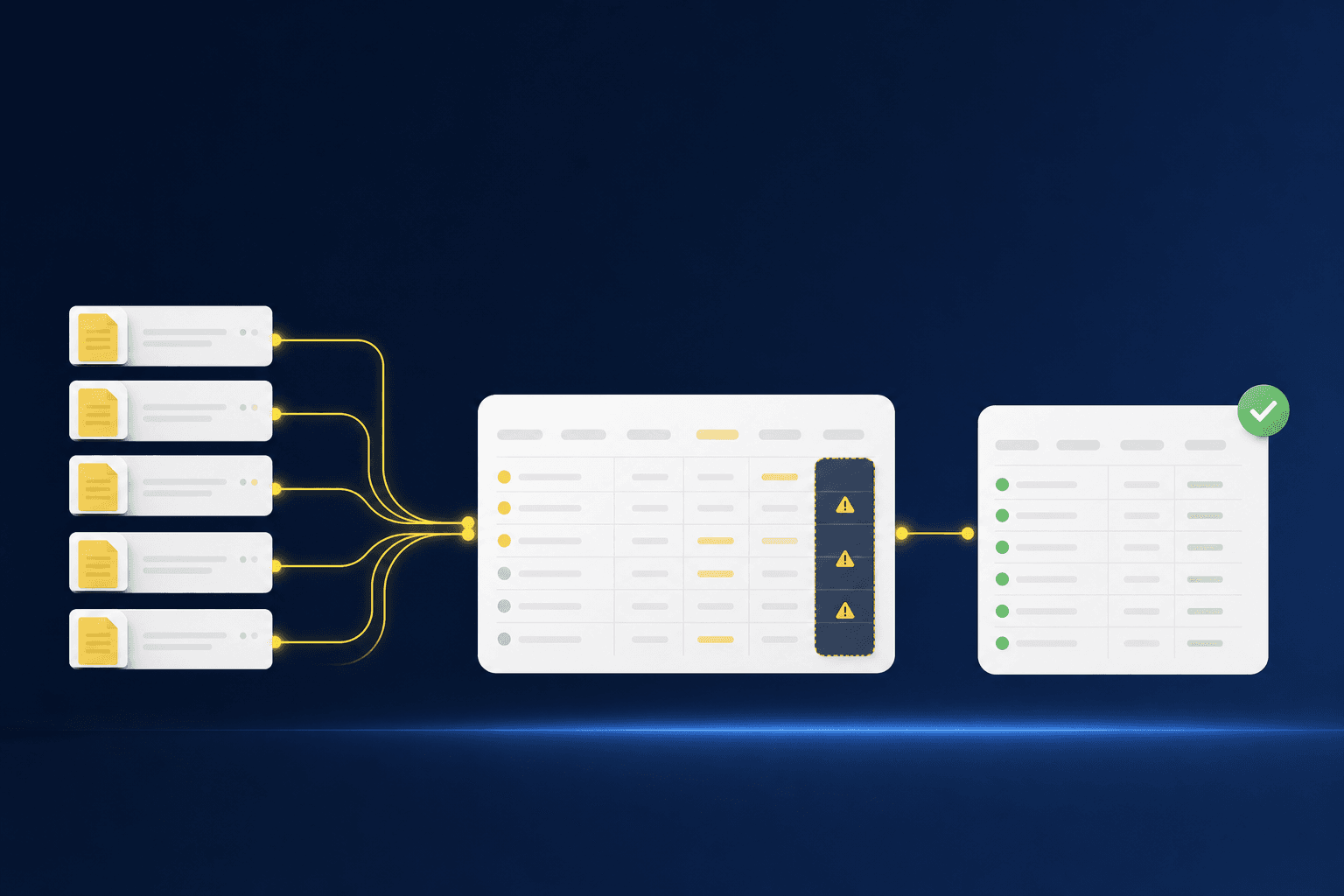
A workpaper can tie perfectly and still carry audit risk. You spot hidden audit risk when you ask whether a reviewer can trace the source, reproduce the calculation, understand the treatment, and see who approved the exception. A clean ending balance proves the arithmetic worked. It doesn't prove the process was controlled.
The risk usually enters upstream, while someone is combining files, applying mappings, carrying forward assumptions, or resolving differences outside the workpaper. Sage Intacct and QuickBooks Online receive the final entry, but neither system can explain why a statement was missing or a classification changed. AI doesn't fix that by producing a cleaner answer. It has to prepare evidence a reviewer can inspect.
Key Takeaways:
- Trace selected workpaper lines back to the exact source, calculation, treatment, and reviewer action.
- Compare current-period logic with the last approved period, then explain every meaningful change.
- Prove that expected source files are complete before testing whether totals agree.
- Keep exceptions inside the review workflow instead of resolving them in email or chat.
- Start automation with one recurring workflow that has known inputs and a prior approved result.
Why Hidden Audit Risk Starts Before Review
Hidden audit risk starts during preparation because that is where source files become accounting conclusions. A preparer decides what each document represents, which period it belongs to, how it maps to the GL, and whether it is complete. If those decisions aren't visible later, review begins with an answer but not enough evidence.
A Tied Balance Can Hide Unsupported Treatment
At 7:40 on review morning, a controller opens a fixed asset rollforward that agrees to the GL to the penny. One asset moved between classes, but the explanation sits in a Friday email thread rather than the workpaper. The change may be correct. The reviewer still can't see which source supported it, who approved it, or whether the same treatment should carry forward.
The audit risk isn't the reclassification alone. It is the broken link between the source, the accounting decision, and the approval. If a reviewer has to leave the workpaper and search an inbox to re-perform a key step, the preparation isn't complete. Frankly, a clean workbook can make that gap harder to see, because a tidy tie-out signals "done" to the eye long before the evidence is actually there.
Generic Templates Erase the Rules That Matter
Two finance teams can prepare the same reconciliation and reach different valid treatments. Their account mappings may differ, as may their cutoff rules, dimensions, and reviewer conventions. A generic template gives the work a consistent shape. It doesn't preserve the process that makes the work correct for a specific company.
Think of the workpaper as the handoff record between preparation and judgment, the way a relay baton carries the whole race in one object. If source, logic, and exceptions get stripped off, the reviewer receives the amount but not the accounting process that produced it. The number arrived. The control did not.
Recurring accounting work needs a stable format, but it also needs the team's historical logic. Prior workpapers, approved entries, and reviewer corrections show how a familiar workflow should behave. When current preparation departs from that history, the difference belongs in review.
Exceptions Resolved Outside the Workpaper Disappear
Missing statements and unexpected balance changes aren't processing noise. Neither are mixed personal and business activity or classifications that shift between periods. Each item asks for accounting judgment, which means each item needs a source, a decision, and a reviewer action.
Spreadsheets and email feel controllable because the team can adapt them quickly, and that flexibility is a real advantage worth defending. The weakness appears when an exception is resolved in one place and approval happens in another, leaving the final workpaper cleaner than the process that produced it.
Keeping the exception beside the source and reviewer decision is the point of the review surface. If you want to inspect that exact handoff, See Truewind in action with one of your recurring workpapers in mind.
A close process shouldn't hide the difficult calls behind a completed checkbox. To catch what the tie-out misses, you need a review method built around evidence, not appearance.
How to Spot Hidden Audit Risk in Recurring Close Work
You can spot hidden audit risk by testing the chain from source file to approved accounting output. Start with traceability, then check consistency, completeness, dimensions, and exception ownership. The goal isn't another review checklist. It is a workpaper that lets the reviewer understand and re-perform the important steps without reconstructing the close.
Start by Tracing Three Lines Backward
Pick three lines from a completed workpaper before you do anything else: one routine item, one allocation, and one exception. For each line, move backward from the journal-entry draft to the calculation and then to the exact source record. Don't accept a folder path as source evidence. The reviewer should be able to open the document and find the amount that fed the workpaper.
A successful trace answers more than where the number came from. It shows why the account or dimension was selected, which cutoff applied, and whether a reviewer changed the proposed treatment. If any link breaks, you have found hidden audit exposure before an auditor has to ask.
Use four questions during the trace:
- Can the reviewer open the exact source that supports the line?
- Can the reviewer reproduce the calculation without asking the preparer?
- Does the treatment follow an approved rule or documented prior decision?
- Can the reviewer see the exception, correction, and final sign-off?
A "no" doesn't automatically mean the treatment is wrong. It means the workpaper isn't yet ready to carry the conclusion. If two of these four questions fail on a single line, stop reviewing and send it back to preparation, because you are no longer reviewing work, you are rebuilding it.
Compare Current Treatment With the Last Approved Period
A prepaid schedule returns each month with many of the same vendors and assumptions. One month, an expense mapping changes, an amortization start date moves, or a department split is updated. Any of those changes may be appropriate. The audit risk appears when the current workpaper shows the new answer without explaining the change.
The prior approved workpaper is the right comparison point, not the final authority. Prior work can contain mistakes, and accounting policy can change. Still, a visible difference gives the reviewer something concrete to inspect instead of asking them to rediscover the full process.
Compare the periods for changes in:
- Account mappings and classification splits
- Cutoff dates and period assignments
- Fund, department, location, or entity dimensions
- Allocation logic and supporting source types
- Reviewer corrections that should persist
If current treatment differs from the prior approved result and no reviewer note explains why, route the item for judgment. Don't bury it inside a refreshed schedule.
Prove Completeness Before Testing Agreement
What can be missing from a reconciliation that agrees? Sometimes, the answer is an expected source file that never entered the workflow. A tie-out only compares the information presented to it. It can't prove that every processor report, custodian statement, or operational export for the period was received.
Completeness starts with an inventory of expected sources. Build that inventory from the recurring workflow and prior period, then record the reporting period and control total for each file. Only after that should matching and reconciliation begin. Agreement without completeness is a narrow test.
A practical sequence looks like this:
- List each source expected for the period.
- Confirm that the file covers the correct entity and reporting dates.
- Record a control total or ending balance from the source.
- Mark missing, duplicated, or superseded files as exceptions.
- Reconcile only after the source set is complete or the gap is approved.
That order matters because it separates a complete reconciliation from a reconciliation of whatever happened to arrive. To examine how source inventory, exception review, and sign-off can stay together, Book a Truewind demo using one reconciliation your team already knows.
Separate Repeatable Preparation From Accounting Judgment
Automation should stop where the accounting policy stops being explicit. A task belongs in repeatable preparation when its treatment follows documented rules, approved historical examples, and a calculation the reviewer can re-perform. A task belongs in judgment when it requires a new policy decision, a materiality call, or interpretation of an unfamiliar event.
That boundary is more useful than dividing work into "manual" and "automated." AI can organize source files, apply known mappings, prepare calculations, and surface differences. The accountant still decides whether the proposed treatment is appropriate and whether an exception changes the entry.
Not every workflow belongs in automation. One-off transactions with limited precedent may be easier to prepare directly under accountant ownership. Start where repetition is high, the inputs are known, and the reviewer already knows what a good result looks like.
Keep Dimensions Attached From Source to GL
A deposit can reconcile in dollars and fail in dimensions. The bank may show the correct total while the workpaper loses the fund, department, program, location, or entity context carried by the upstream source. The journal entry still balances. The reporting behind it no longer reflects the activity the same way.
Choose one split transaction and trace each dimension through the source, workpaper, and journal-entry draft. The allocation rule should remain visible at every stage. If a dimension appears only in the final entry, ask what source or approved rule supports it. If none exists, the reviewer is looking at an unsupported classification.
Mid-market teams often focus audit preparation on balances because balances are easy to test. Dimensional reasoning deserves the same attention. A correct total posted to the wrong entity or program can survive a basic tie-out and still create audit risk downstream.
Carry Reviewer Corrections Into the Next Period
A correction trapped in email has to be rediscovered next month. A correction captured against the workflow becomes part of the next preparation cycle. That distinction is where controlled iteration starts, because the process learns from approved treatment without changing accounting policy on its own.
Begin with a recurring workflow that has known inputs and a prior approved result. Prepare the current period using those examples, compare the output, and record each reviewer correction with its source and reason. Expansion should wait until the reviewer can trace the work and explain where judgment entered.
The adoption sequence is straightforward:
- Choose one recurring, example-rich workflow.
- Load the prior approved workpaper and current source files.
- Reproduce the known accounting process.
- Review every difference and exception.
- Capture confirmed corrections against the workflow.
- Expand only after the output is understandable and repeatable.
Controlled iteration has a real cost. Reviewers must spend time correcting the first runs and documenting rules they may have carried informally for years. That work is still worth doing because it turns personal knowledge into a reviewable close process. Audit readiness improves when each period carries forward not just the balance, but the evidence and decisions behind it.
How Truewind Keeps Preparation Tied to Evidence
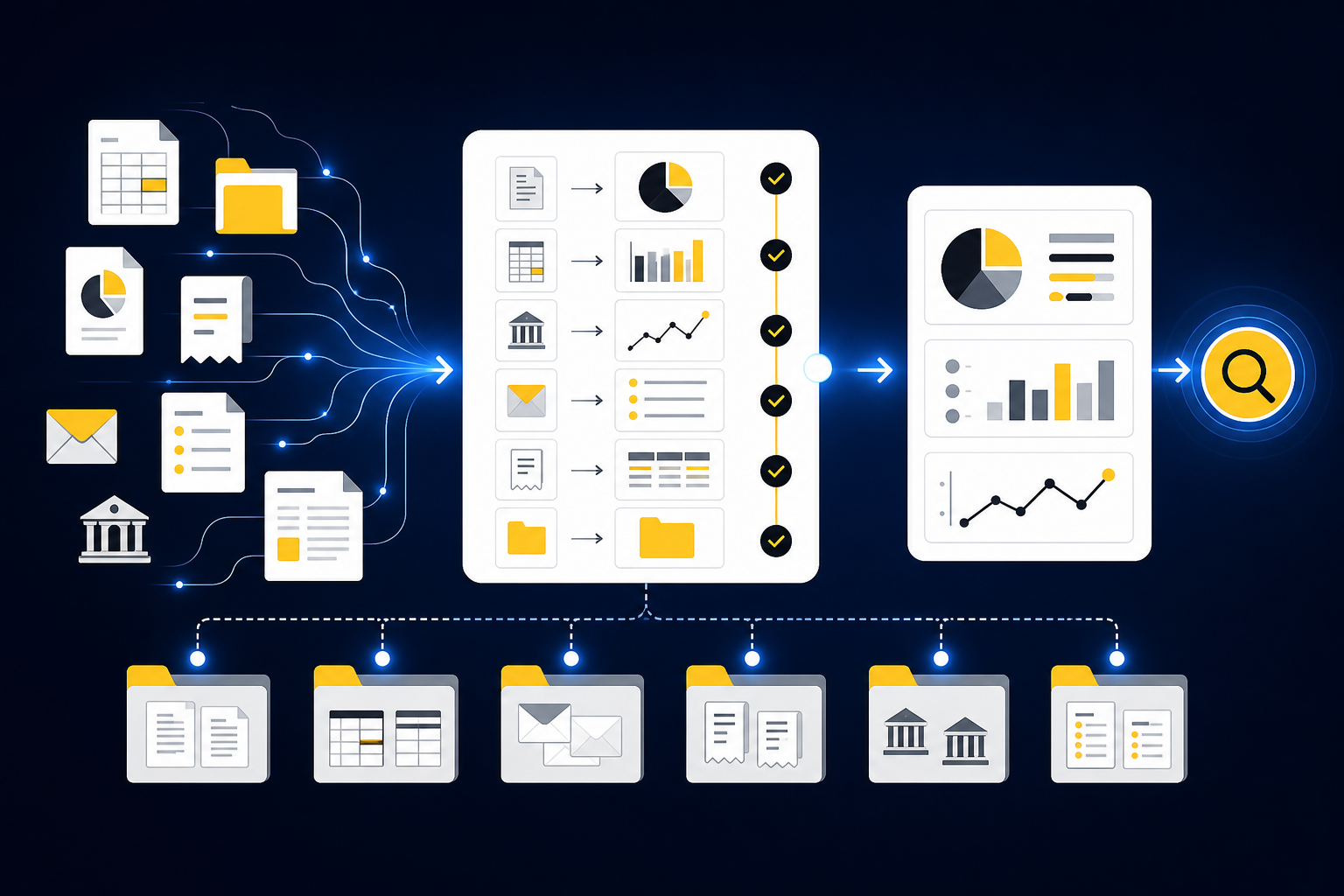
An AI preparation layer makes this method practical by keeping sources, accounting treatment, exceptions, and approval inside the recurring workflow. The platform prepares work for accountant review rather than deciding policy or posting on its own. Sage Intacct or QBO remains your source of truth, and the accountant keeps ownership of the result.
Workpapers Preserve the Preparation History
Workpaper Generation and Rollforward loads the prior workpaper, current source documents, and ERP balances into a familiar review artifact. Supporting schedules update, journal-entry drafts remain tied to source, and exceptions stay visible. The Audit Trail retains ingested files, coding decisions, reviewer corrections, and preparation steps against the workflow.
An audit trail documents what happened. It doesn't certify compliance or replace formal audit procedures. Its value is more practical: when someone questions a line, the reviewer can inspect the source and decision without rebuilding the period from folders and email.
One customer conversation captured the capacity change plainly: "Truewind automates a huge chunk of that busywork." The same customer added, "It's not just about making bookkeeping simpler; it's about freeing up teams, and helping them focus on higher-value projects." That is a customer example, not a universal result. The mechanism is what matters: repetitive preparation moves into a reviewable workflow while judgment stays with the accountant.
Exceptions Stay With the Accountant
Proactive Anomaly Detection compares current preparation with prior workpapers and the learned process. Missing statements, unexpected balance changes, mixed activity, and inconsistent classifications become review items with source links. The platform doesn't resolve those exceptions or auto-correct them without approval.
The Human-in-the-Loop Review Workflow gives accountants a place to confirm, adjust, or return prepared items. Historical-Example Learning records confirmed treatment and reviewer corrections for later periods. Policy remains under accountant control.
A separate customer conversation described the experience more bluntly: "It's essentially perfect." The customer then explained what that meant in practice: "Categorization is accurate, and we stopped having to double-check everything." That statement belongs to one customer experience. Reviewable source support and captured corrections are the controls that make the claim understandable.
Approved Work Moves Into the Existing Ledger
Native ERP Integration sends reviewer-confirmed output to Sage Intacct or QuickBooks Online with coding, dimensions, and source references preserved. Nothing pushes before reviewer confirmation. The GL remains the system of record, and the preparation layer remains upstream.
That limit matters. A team looking for autonomous posting without accountant sign-off isn't evaluating the same operating model. Neither is a team trying to replace its ERP. The product is built for reviewer-led close work where prior examples, recurring sources, and an accountable reviewer already exist.
To follow one source-linked workpaper from intake through reviewer-confirmed ERP push, Get a Truewind demo using a workflow your team already closes. The useful test isn't whether the output looks finished. It is whether your reviewer can see how it became ready.
What Changes When Review Starts With Evidence
Review starts earlier and with better focus when the workpaper carries its own source, calculation, treatment, exceptions, and sign-off. Accountants spend less of the review reconstructing preparation and more of it investigating what changed. That is how teams spot hidden audit risk without adding another disconnected checklist.
The goal of AI in accounting is capacity, not replacement. Experienced staff should own policy, exceptions, and approval, while repeatable preparation arrives in a form they can inspect. The accountant still owns the result. The close simply arrives at review with its evidence intact.
Frequently Asked Questions
How do I handle edge cases effectively?
To manage edge cases effectively, start by documenting the specific rules and logic your team uses for different scenarios. This ensures everyone understands the treatment of unique transactions. Next, use Truewind's Proactive Anomaly Detection feature to identify any discrepancies or unusual items that arise during the preparation process. This tool helps surface exceptions for review, allowing accountants to focus on judgment rather than re-checking prepared work. Finally, ensure that all corrections and decisions are captured in the workflow, so they can inform future periods and maintain consistency.
What if I find discrepancies during the review?
If you encounter discrepancies during the review, first trace the affected items back to their source documents to understand the root cause. Use Truewind's Human-in-the-Loop Review Workflow to inspect the prepared workpapers and identify where the process may have broken down. Document any corrections needed and ensure that these are captured against the workflow for future reference. It's also a good idea to communicate with your team about any changes in treatment or classification to prevent similar issues in the future.
Can I automate my recurring workflows?
Yes, you can automate your recurring workflows using Truewind. Start by identifying a workflow that has consistent inputs and a prior approved result. Use the Workpaper Generation and Rollforward feature to create a repeatable workflow that pulls in prior workpapers and current source documents. This helps maintain the structure and logic your team is familiar with. Additionally, ensure that your team reviews the outputs regularly to confirm that the automation aligns with your accounting practices and policies.
When should I compare current workpapers with prior periods?
You should compare current workpapers with prior periods whenever there are changes in account mappings, classifications, or treatment logic. This is crucial for identifying any audit risks that may arise from unapproved changes. Use Truewind's ability to track historical examples and corrections to highlight differences between periods. This way, you can provide a clear explanation for any meaningful changes and ensure that your review process remains thorough and consistent.
Turn this into a close-ready workpaper
Start with sample files or upload your own statements to see how Truewind prepares review-ready workpapers and journal entries.