
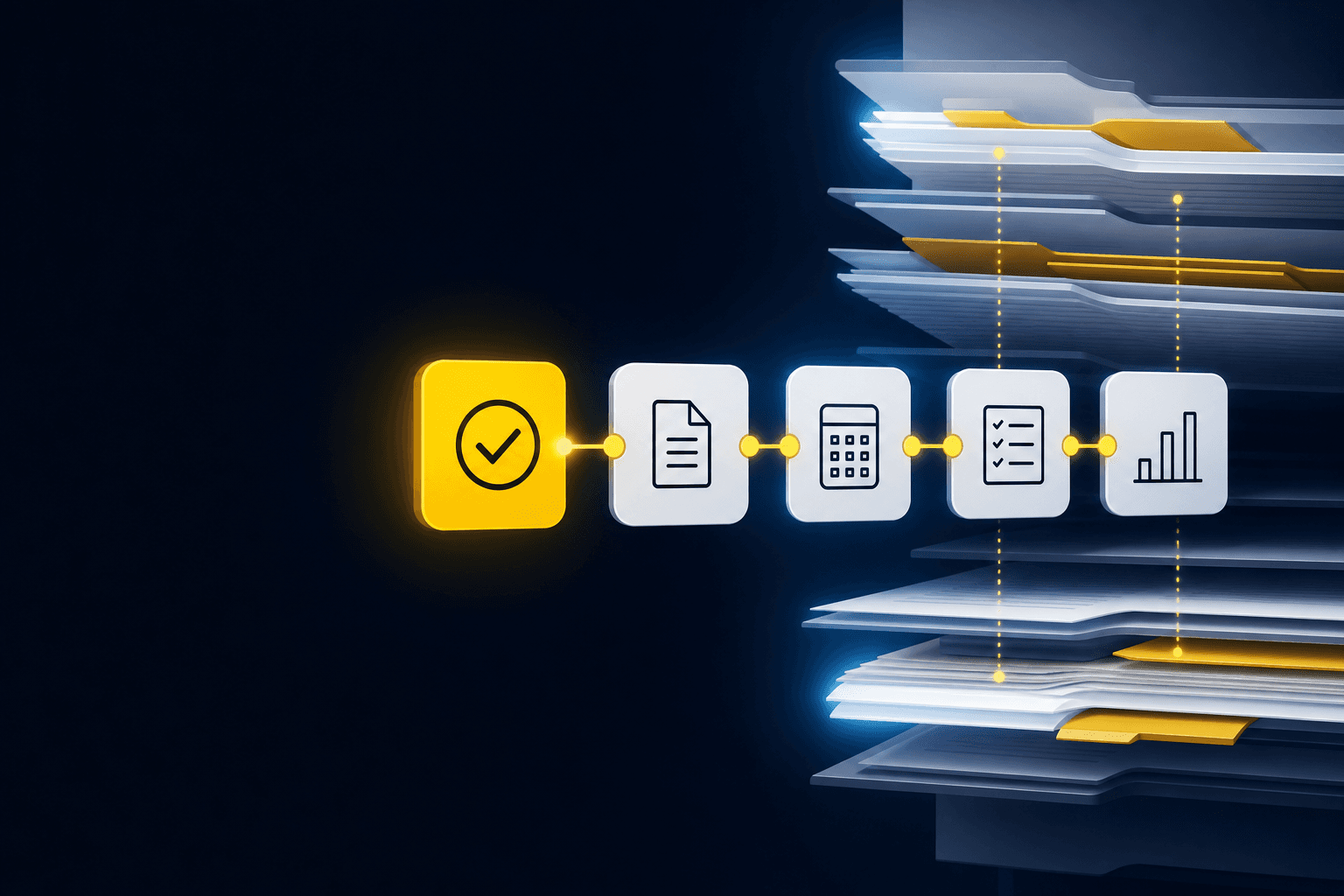
The pilot demo ends with a clean journal-entry draft. Then the controller asks where the coding came from, which source supports the total, and what happens when one statement is missing. If the workflow cannot answer those questions, the output is not ready for the close. A polished result without visible preparation only gives the reviewer a new artifact to check.
That is the biggest accounting automation mistake: choosing a workflow because the result looks impressive instead of because the team can compare, review, and defend it. The problem is rarely whether AI can produce an answer. The problem is whether the accountant responsible for the close can understand how that answer was produced, correct it when necessary, and approve it before anything reaches the GL.
When you choose choose the first accounting, the goal should not be maximum theoretical ROI. The goal should be maximum learnability. Pick work that recurs, has clear boundaries, comes with prior examples, and ends in an artifact your reviewer already knows how to inspect. A successful first workflow gives the team evidence it can use to decide what comes next.
The first workflow is an adoption decision
The first automation target sets the standard for every workflow that follows. If the pilot has unclear inputs, shifting accounting treatment, and no known answer, the team cannot tell whether the technology failed or the test was poorly designed. Every difference turns into a debate. Review takes longer because nobody agreed on what acceptable output looked like before the pilot began.
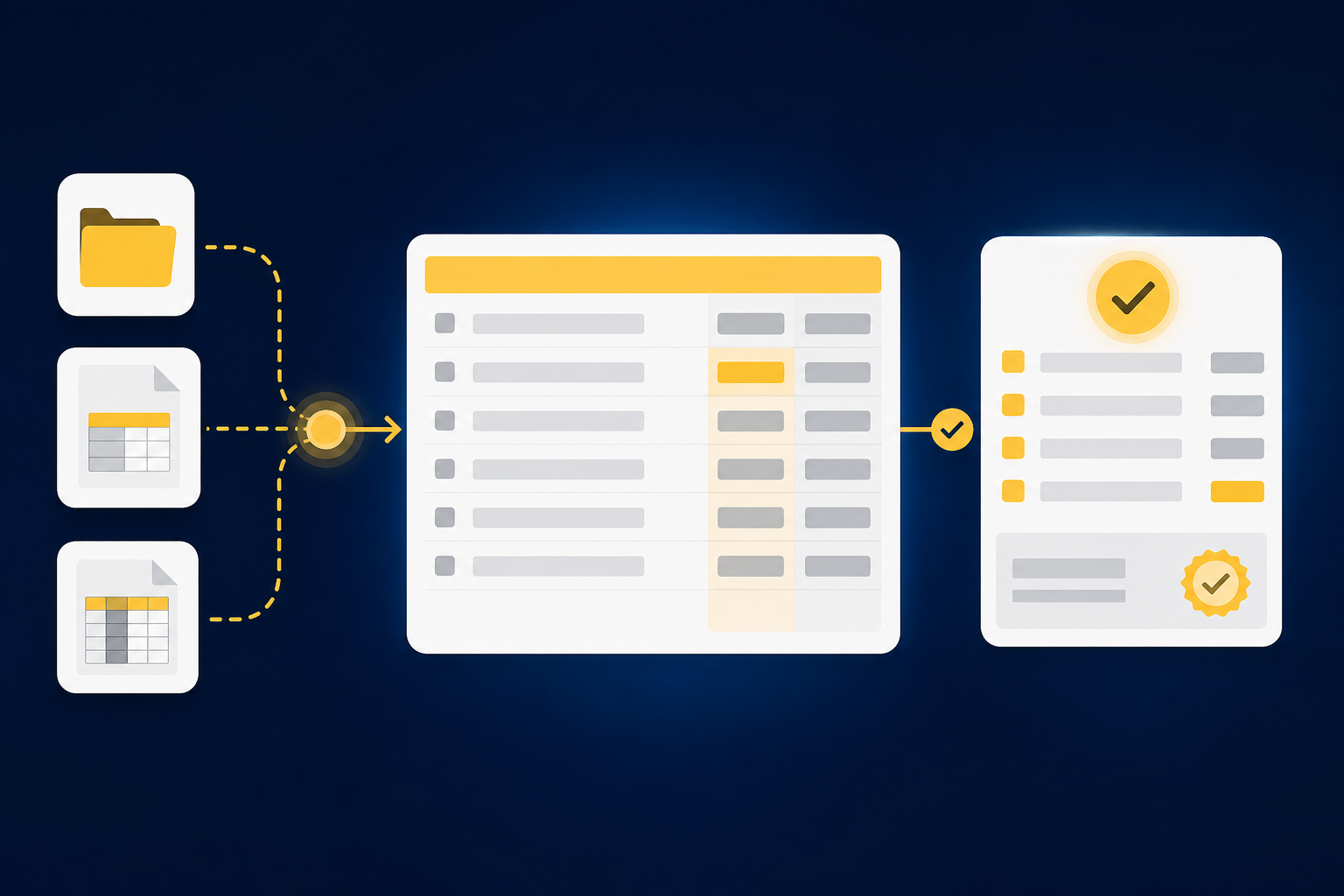
A better first target already has an operating history. The team receives similar source files each period, follows an established preparation process, and produces a workpaper, reconciliation, schedule, or journal-entry draft that a named reviewer approves. The workflow may still contain judgment. What matters is that preparation and review have recognizable boundaries.
One anonymized Sage Intacct team approached its evaluation by breaking the close down by entity, account, source availability, preparer, reviewer, module fit, implementation dependency, and rollout order. The team did not begin with the broadest possible automation. It looked for a workflow with known inputs and a prior approved result, because that gave reviewers something concrete to compare.
That posture changes the demo, too. Instead of asking whether AI can automate the close, you can ask whether it can reproduce one recurring workflow using your source documents, accounting rules, and review conventions. If you want to inspect that preparation and review pattern against a bounded workflow, See Truewind in action. The useful test is not whether the output looks finished. It is whether your reviewer can trace it and decide what to approve.
Choose for learnability before theoretical ROI
A high-volume workflow can look attractive on a business case and still be a poor pilot. Volume does not make the accounting treatment stable. It does not guarantee that source files are available, prior workpapers are usable, or exceptions can be separated from routine preparation. If those conditions are missing, a large target creates more surface area without creating better evidence.
Learnability asks a different set of questions. Can the workflow be observed from source through sign-off? Can the team compare the prepared result with an approved prior result? Can reviewer corrections be captured and applied during the next period? Can the team explain why a difference occurred rather than merely count the differences?
Start with work that recurs
Recurring work gives the team repeated exposure to the same preparation pattern. A donation reconciliation may combine a donor-platform export, processor reports, bank deposits, fund dimensions, and prior-period treatment. A brokerage rollforward may combine custodian statements, investment activity, entity rules, ERP balances, and the prior workpaper. The layouts may change, but the accounting objective and review artifact remain recognizable.
One-time analysis does not offer the same learning loop. There is no next period in which to apply a correction, test whether the treatment persisted, or see whether the exception queue improved. A pilot should give the team another chance to run the process with new source files and the same acceptance criteria.
Keep the boundary narrow enough to inspect
“Automate reconciliations” is not a pilot definition. It leaves open which accounts are included, which source systems matter, how timing differences are handled, who reviews the result, and what happens to unreconciled items. A bounded pilot might cover one processor-to-bank reconciliation, one recurring prepaid schedule, or one account rollforward across a defined set of entities.
Narrow does not mean trivial. A useful pilot can include multiple source files, dimensional coding, and real exceptions. The boundary only needs to be clear enough that the team can identify the expected inputs, output, reviewer, and escalation path before work begins.
Use a workflow with prior examples
Prior workpapers are operating context. They show how the team mapped accounts, applied cutoffs, split classifications, handled exceptions, and presented support to the reviewer. SOPs can describe the process, but the approved workpaper shows what the process produced when applied to actual source material.
Historical examples also create a known-answer comparison. The pilot can reproduce a prior period using the original source files, then place the prepared result beside the approved workpaper. The reviewer can inspect differences in balances, coding, dimensions, calculations, and exception treatment. That comparison is more useful than a general claim about model performance because it tests the workflow against the team’s own standard.
A customer accounting firm used transaction categorization as a bounded target and reported reducing credit-card categorization time by approximately 75%. The result belongs to that customer example, not every implementation. What makes the example relevant here is the shape of the work: recurring transactions, visible proposed categories, and an accountant who could confirm or correct the treatment before it moved downstream.
Define acceptance before running the pilot
Acceptance criteria should describe the prepared artifact and the control around it. A team might require every amount to tie to an identified source, every proposed classification to preserve the expected dimensions, every unreconciled item to appear in an exception queue, and every downstream handoff to require reviewer confirmation. The criteria should match the workflow rather than a generic automation score.
Differences do not automatically mean the pilot failed. Some reveal a missing source, an undocumented rule, or treatment that changed after the prior period. The reviewer needs to distinguish a preparation error from a legitimate exception and a policy decision. If your team wants to test how prior workpapers, current-period sources, and reviewer corrections fit together, Book a Truewind demo. Bring one approved workpaper and the source files that produced it, because those artifacts make the evaluation concrete.
The prior workpaper is the benchmark
A prior workpaper does more than provide the expected ending balance. It records the path the team used to reach that balance. Depending on the workflow, that path can include source documents, formulas, allocation logic, mapping decisions, reviewer notes, and the journal entry ultimately approved for posting.
Comparing only the final number misses most of the accounting work. Two schedules can reach the same total while using different cutoffs or classifications. A reconciliation can tie after an unsupported adjustment. A journal entry can balance while losing the fund, department, or entity dimensions the reviewer expects. The benchmark needs to cover the preparation logic and review surface, not just the total.
Run the historical period first when the source material is available. Give the workflow the prior source files without treating the approved result as an answer key it can simply copy. Then compare the prepared workpaper with the approved version and classify each difference:
- Source difference: A required statement, export, or ERP balance was absent or interpreted incorrectly.
- Calculation difference: The prepared schedule used a different formula, rollforward, allocation, or timing treatment.
- Classification difference: The account, fund, department, purpose, or entity coding did not match the approved treatment.
- Exception difference: The workflow prepared an item that should have been escalated, or escalated an item covered by an established rule.
- Presentation difference: The underlying accounting was supportable, but the artifact did not provide the structure or detail the reviewer expects.
The classification matters because each difference calls for a different response. Missing source material requires an intake correction. A classification difference may require historical context or an explicit rule. A novel exception belongs with the accountant. Treating every difference as an accuracy defect hides what the pilot is supposed to teach.
Exceptions are part of the output
A missing statement should not disappear inside a completed workpaper. Neither should an unexpected balance change, mixed personal and business activity, or a classification that conflicts with prior treatment. Those items belong in front of the accountant with the source context needed to decide what happens next.
That makes exception handling a pilot requirement, not a later enhancement. The team should know which conditions stop preparation, which produce a visible review item, and which can follow an established rule. Reviewers should also be able to see whether an exception came from incomplete source material, a changed pattern, or an accounting question that was never documented.
Silent resolution is not a sign of stronger automation. It removes the exact information the reviewer needs to own the result. A reliable workflow prepares routine work according to the team’s established process and makes departures from that process visible. The accountant still decides the treatment, changes the rule when appropriate, and signs off on the output.
Reviewer corrections need somewhere durable to live. If the controller resolves an allocation issue in email or edits a spreadsheet without preserving the reason, the next period starts with the same ambiguity. Capturing the decision against the workflow allows the team to inspect what changed and apply confirmed treatment later without turning one reviewer choice into an undocumented policy.
Controlled iteration with Truewind is designed around that kind of pilot. The workflow begins with recurring source material and prior examples rather than a blank prompt. Truewind can ingest bank activity, credit-card statements, processor and donor-platform exports, custodian statements, prior workpapers, and other documented source types, then structure those inputs for coding, reconciliation, schedule preparation, and workpaper generation.
For a recurring account, Truewind loads the prior workpaper, current-period source documents, and ERP balances. It rolls balances forward, updates supporting schedules, prepares any required journal-entry draft with source-linked support, and surfaces exceptions for reviewer handoff. The workpaper remains the review surface, so the accountant can inspect the source, calculation, treatment, and exceptions before approving the result.
Historical treatment provides the operating context. Confirmed coding decisions, allocation choices, classification splits, and reviewer corrections can inform preparation in later periods. Learning remains bounded by the team’s rules and captured decisions. Truewind does not create accounting policy or resolve novel treatment without the reviewer.
Multi-source reconciliation applies the same controlled pattern when different systems describe the same activity. Truewind can align activity across a donor platform, payment processors, and the bank, or across a custodian statement, investment-vehicle support, and an ERP balance. Fees, refunds, and timing differences are prepared for review, while unreconciled items remain visible rather than being forced into agreement.
Accountants review prepared workpapers, reconciliations, schedules, and journal-entry drafts with source links and exception queues. They can confirm, adjust, or return items to preparation. Nothing leaves review without accountant sign-off, and Truewind does not post autonomously.
Sage Intacct and QuickBooks Online remain the systems of record. After reviewer confirmation, Truewind can push structured output to the connected ERP with coding, dimensions, and source references preserved. Native ERP coverage is limited to those two documented targets, so a team looking to replace its GL or remove reviewer approval is evaluating a different approach.
The product is also not the right starting point for a business without a recurring close, an established reviewer, or prior examples of the work. Controlled iteration depends on someone owning the accounting treatment and defining what acceptable output means. To evaluate that handoff using one of your existing review patterns, Get a Truewind demo. The useful result is a prepared workflow your accountant can compare with known work, not a promise that the accountant can step away.
Prove one workflow before expanding
Run the pilot through one close cycle with the inputs, acceptance criteria, and reviewer named in advance. Compare the prepared output with the known answer. Document each difference, decide whether it reflects an error, an exception, or an undocumented rule, and capture the reviewer’s correction in the workflow.
Expansion should follow evidence from that cycle. If the team can trace the output to source, understand the applied logic, inspect exceptions, and confirm that corrections persist, it has a basis for adding another account or workflow. If reviewers still have to reconstruct the preparation in spreadsheets, increasing scope will only increase the amount of work they cannot defend.
The first target does not need to represent the largest cost in the close. It needs to produce the clearest proof. Select one recurring, bounded workflow with prior examples, a known-answer benchmark, and acceptance criteria your reviewer can validate within a single close cycle.
Frequently Asked Questions
How do I choose the first accounting workflow to automate?
Start by selecting a workflow that is recurring and has clear boundaries. Look for work that has known inputs and prior examples. This way, your team can easily compare the output with what they already know. Ensure that the workflow produces a review-ready artifact that your reviewers can inspect and approve before it goes to the general ledger.
What if my team struggles with understanding the output from automation?
If your team finds it hard to understand the automated output, it’s crucial to ensure that the workflow allows for traceability. The output should show the path from source documents to the final result. This way, reviewers can see how the output was produced, making it easier to identify any errors or necessary corrections.
When should I involve my accounting team in the automation process?
Involve your accounting team early in the process, especially when defining acceptance criteria for the workflow. Their input will help ensure that the automation aligns with existing practices and standards. This collaboration is essential for creating a workflow that is not only efficient but also meets the team's needs and expectations.
Why does my first workflow need to have prior examples?
Having prior examples is important because they provide context for the team. They show how similar tasks were handled in the past, which helps in comparing the new automated output with known results. This comparison can highlight any discrepancies and ensure that the automation process is consistent with established practices.
Turn this into a close-ready workpaper
Start with sample files or upload your own statements to see how Truewind prepares review-ready workpapers and journal entries.