

At 4:40 p.m. on the second day of close, the uncategorized queue looks finished. You open the support and find three deposits mapped to revenue with no processor detail, two vendor rules copied from another client, and one split allocation that nobody can explain. A bookkeeping categorization checklist should catch those problems before they reach review.
Categorization isn't a vendor-name exercise. It starts with the source, carries the client's account mappings and dimensions, checks the result against the related activity, and leaves a reviewer with enough support to approve or correct the treatment. If your checklist ends at account code, it ends too early.
Key Takeaways:
- Confirm that every expected source file is present before categorization begins.
- Identify what each transaction represents before applying a GL account.
- Use client-specific history, not generic vendor rules, for recurring treatment.
- Preserve entity, fund, program, department, and other dimensions through preparation.
- Reconcile categorized activity to the source and route exceptions to the reviewer.
- Capture reviewer corrections so the next period starts from the last approved treatment.
Why Categorization Breaks Before Review
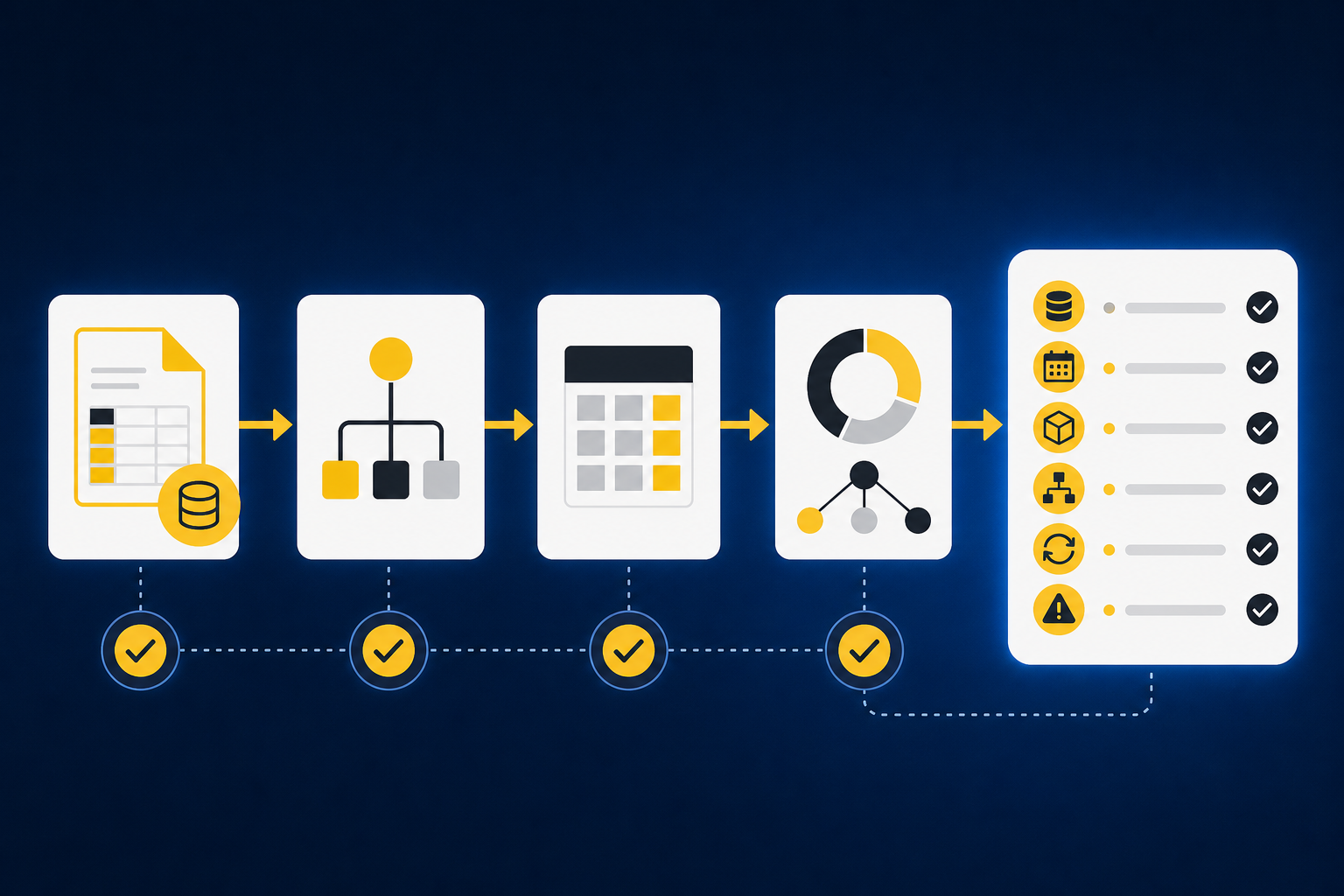
Categorization breaks when the team treats a proposed account as the finished work. A review-ready result also needs the source, period, dimensions, allocation logic, reconciliation status, exceptions, and reviewer action. Without those pieces, a clean account code can hide incomplete or misclassified activity.
A Clean Account Code Can Still Be Wrong
A CAS manager opens a client's monthly workbook at 9 a.m. and sees that every row has an account. The processor deposits are coded to revenue, the subscription charges are in software expense, and the card activity has no blanks. Review begins. Then the manager discovers that processor fees weren't separated, one deposit belongs to the next period, and a recurring vendor charge should have been split across three departments.
Nothing in the completed account column exposed those issues. The categorization checklist measured coverage, not accounting completeness. That's why vendor, amount, and proposed account can't be the only review fields. The reviewer also needs to see which source produced the transaction, which rule was applied, whether related activity agrees, and what changed from the prior period. If that review pattern is familiar, See Truewind in action to inspect how source-backed preparation changes what reaches the reviewer.
Source Work Is Accounting Work
Call it extraction and you have already missed the hard part. The visible input is a PDF, CSV, or portal export, so the work looks clerical. An accountant still has to determine what the document represents, whether the period is complete, how its activity maps to the ledger, and whether the current file differs from the prior one.
The distinction matters for nonprofits, family offices, and CAS practices. A donor export may carry fund and campaign context that never appears in the bank feed. A custodian statement may combine trades, dividends, fees, and cash activity across an entity that has its own treatment. A CAS practice can standardize the review artifact, but it can't erase the client's rules. A stronger bookkeeping categorization checklist treats source context as part of the accounting decision, not as clerical work performed before the decision.
A checklist that can't explain the source can't support the review. The next question is what the checklist must contain.
A Bookkeeping Categorization Checklist Built for Review
A bookkeeping categorization checklist should follow the same order as the work itself: confirm the inputs, identify the activity, apply the client's treatment, preserve dimensions, reconcile totals, surface exceptions, and capture approval. Each stage should leave evidence the next person can inspect.
Diagnose the Weak Point Before Rewriting the Checklist
Start by finding where your current categorization process loses context. A long checklist won't fix a broken handoff if the source disappears after import or the client's rules live in one manager's memory. Frankly, adding more boxes can make the process look stronger while leaving the same review problem underneath.
Take one completed period and trace a categorized transaction backward. Can you reach the original source without searching email? Can you explain why that account was selected? Does the entry preserve the dimensions used by the client? If the reviewer changed the treatment, can the preparer see that correction in the next period?
Use these questions to locate the gap:
- Is every expected source listed and marked as received?
- Can each categorized line be traced to its source?
- Does the proposed treatment reflect the client's prior approved work?
- Are dimensions and split allocations visible?
- Are missing support and unusual changes separated from routine activity?
- Is reviewer approval recorded before anything moves to the GL?
If you answer no at intake, fix intake first. If the source is complete but coding varies, focus on mappings and historical treatment. If the work is prepared correctly but review still requires reconstruction, the missing layer is the workpaper.
Confirm Completeness Before Applying an Account
Completeness comes before categorization because a partial source can produce a plausible but incomplete result. A bank feed may contain the deposit while omitting the donor, processor, restriction, or fee detail needed to code it correctly. A custodian PDF may arrive without the related capital statement. The transaction exists, but the accounting context doesn't.
Build the intake around expected sources by account and workflow. The processor reconciliation should name the bank activity and each processor export it requires. The investment workpaper should identify the custodian statement, entity, period, prior workpaper, and relevant ERP balance. Missing inputs belong in an exception queue before anyone starts filling account columns.
A practical intake sequence is:
- Identify the entity, account, and accounting period.
- List the source files expected for the workflow.
- Confirm that each file is present and readable.
- Compare the current source set with the prior period.
- Route missing or changed inputs for follow-up.
A full review of every file is reasonable when a workflow is new or its source format has changed. That extra work has value. Once the recurring pattern is established, though, the checklist should separate confirmed inputs from missing or changed ones so the reviewer isn't rechecking the same stable source set each month.
Identify the Activity Before Using Vendor Rules
Vendor rules are useful. They reduce repeated decisions when the same vendor consistently represents the same type of activity. The limitation is that a vendor name rarely carries the whole accounting treatment. One payment may be a prepaid, another may be a fixed asset, and a third may need allocation across departments.
Read the transaction in the context of its source, amount, period, description, and related support. For processor activity, identify whether the line represents a gross settlement, fee, refund, timing difference, or transfer. For a nonprofit deposit, retain the fund, program, grant, or campaign context supplied upstream. When vendor rules need client history and source support to stay intact, you can Book a Truewind demo and inspect how that context is carried into review.
The conditional rule is simple: if a vendor can map to more than one treatment, vendor name alone can't approve the category. Require another piece of context, such as the source document, transaction description, entity, or prior approved treatment. That one change prevents a common bookkeeping categorization mistake from spreading across every period.
Apply the Client's Approved Mapping
Recurring categorization should begin with the client's last approved treatment, not a generic chart-of-accounts template. Two clients can buy the same service from the same vendor and use different accounts, dimensions, cutoffs, or allocation methods. A shared operating process is useful for a CAS practice. Shared accounting treatment is not always appropriate.
Use prior workpapers, posted entries, SOPs, and reviewer corrections as the operating context. For each recurring pattern, record the source type, account mapping, dimensional treatment, cutoff rule, required support, and reviewer expectation. If the current transaction matches that pattern, prepare it consistently. If it doesn't, route it for judgment instead of forcing the old rule.
The checklist should make rule ownership visible:
- Confirmed treatment: The current item matches an approved recurring pattern.
- Changed treatment: The reviewer has approved a new mapping or allocation.
- Proposed treatment: The preparer has enough support to suggest a category, but review is still required.
- Exception: The source, amount, timing, or activity falls outside the established process.
Generic templates have a real advantage: they make setup easier. The tradeoff is that they flatten the details that matter in multi-client accounting. Standardize the preparation and review structure, then preserve each client's accounting rules inside it.
Preserve Dimensions and Allocations With the Category
An account code without dimensions is incomplete whenever the client reports by entity, fund, program, department, location, or purpose. The bank may show one deposit. The workpaper may need to split that deposit across several dimensions before the journal entry is ready.
Carry dimensions from the earliest source that contains them. A donor export may hold restriction and campaign detail that the bank can't provide. An operating report may show location or department context missing from the card feed. Lose that context at intake, and the reviewer has to reconstruct it manually or accept a category that is technically posted but operationally weak.
Check each dimension with three questions. Did the value come from the source, an approved allocation rule, or a preparer judgment? Does the split add back to the source total? Has the rule changed since the last approved period? If the answer to the first question isn't visible, the allocation isn't ready for sign-off.
Reconcile the Categorized Population, Not Just Individual Rows
Row-level categorization can look complete while the population remains out of balance. A processor export may include settlements that don't yet appear in the bank. A bank deposit may combine activity from multiple batches. Duplicate imports, missing refunds, and fees recorded net can all survive a row-by-row account review.
Tie the categorized population back to the source totals and the related GL balance. Explain timing items rather than forcing them into agreement. For multi-source workflows, preserve the bridge between systems that describe the same activity differently. The reviewer should be able to see what matched, what remains open, and what entry has been proposed.
Use a reconciliation checkpoint before approval:
- Tie the source population to its control total.
- Tie matched activity across related sources.
- Confirm that categorized amounts include required fees, refunds, and splits.
- Separate timing differences from true exceptions.
- Tie the proposed journal-entry draft to the workpaper.
- Record who reviewed the result and what changed.
The workpaper acts like a chain of custody for the accounting result. Each handoff should preserve where the number came from, what happened to it, and who approved the treatment. Break that chain, and review turns into reconstruction.
Route Exceptions Instead of Hiding Them
Exceptions are where accounting judgment belongs. A missing statement, unexpected balance change, mixed personal and business activity, or inconsistent classification shouldn't be resolved by stretching a rule until the item fits. It should be placed in front of the accountant with the source and prior treatment available.
Define exception conditions inside the checklist. Missing support should stop approval. A changed source format should trigger a comparison with the prior period. A new allocation or classification should require reviewer confirmation. Materiality and policy decisions remain with the accounting team.
Route at least these items for review:
- Missing or unreadable source files
- Transactions outside an approved recurring pattern
- New or changed account mappings
- Unexplained differences between related sources
- Mixed activity requiring judgment
- Changed dimensions or allocation rules
- Proposed treatment without adequate support
Reviewing every transaction can be the right control during initial setup. The better long-term pattern is to confirm stable preparation and focus review on what changed or didn't fit. Your team still owns the result. It just spends less of the review reopening work that already follows the approved process.
How the Platform Prepares Categorization for Review
The platform turns recurring source files into a review surface that preserves the team's mappings, dimensions, exceptions, and prior corrections. It sits upstream of Sage Intacct and QuickBooks Online, which remain the systems of record, and nothing moves downstream without accountant approval.
Source Files Become a Reviewable Workpaper
Multi-Source Ingestion accepts the files the workflow already depends on, including bank activity, processor exports, donor-platform files, custodian statements, and prior workpapers. Historical-Example Learning applies the team's confirmed treatment and reviewer corrections to the next period. Dimensional and Allocation Preparation carries approved fund, program, department, location, purpose, or entity rules into the prepared output.
The useful output isn't a list of suggested accounts. It is a workpaper that keeps the source, treatment, calculations, exceptions, and reviewer actions together. One accounting customer described the preparation burden plainly: “Truewind automates a huge chunk of that busywork.” The same customer explained the value in human terms: “It's not just about making bookkeeping simpler; it's about freeing up teams, and helping them focus on higher-value projects.”
Exceptions Stay With the Accountant
The Human-in-the-Loop Review Workflow presents prepared work beside source links and exceptions. Reviewers confirm, adjust, or send items back to preparation, and captured corrections can inform the next period. Proactive Anomaly Detection surfaces activity that doesn't fit the learned process, but it doesn't resolve the accounting judgment on its own.
After confirmation, Native ERP Integration can push structured output to Sage Intacct or QuickBooks Online. The ledger remains the source of truth, and the accountant keeps control of treatment and posting. Another customer said, “Categorization is accurate, and we stopped having to double-check everything.” The same customer called the experience, “It's essentially perfect.” Those are individual customer statements, not a benchmark or guarantee.
A different customer summarized the broader experience this way: “If I had to describe Truewind in one word: Lifechanging”. Strong language, yes. The mechanism underneath it is more useful: recurring preparation follows the team's existing process, exceptions remain visible, and approval stays with the accountant. To inspect that workflow against one of your own recurring categorization problems, Get a Truewind demo.
Keep Categorization Tied to Source and Sign-Off
A bookkeeping categorization checklist is complete only when a reviewer can trace the proposed treatment from source file to workpaper and from workpaper to approved ledger output. Account codes matter, but they aren't the whole job. Source completeness, client rules, dimensions, reconciliation, exceptions, and sign-off are what make the categorization usable.
Start with one recurring workflow that has known inputs and a prior approved result. Compare the prepared work with that known answer, capture reviewer corrections, and expand only after the process is understandable and repeatable. The goal isn't to remove the accountant from categorization. It is to move the accountant to the decisions that actually require judgment.
Frequently Asked Questions
How do I handle edge cases effectively?
To manage edge cases in your bookkeeping process, start by clearly defining the types of exceptions that may arise, such as missing source files or unusual transaction classifications. Use Truewind's Proactive Anomaly Detection feature to identify these exceptions and route them to the accountant for review. This way, you can ensure that each edge case is addressed with the necessary context and oversight, rather than forcing them into standard categories.
What if I need to adjust categorization rules?
If you find that categorization rules need adjustment, gather input from your accounting team to understand the necessary changes. Truewind allows you to capture reviewer corrections and apply them to future transactions, maintaining consistency across periods. Once you've established the new rules, make sure to document them clearly so the team knows how to apply them in the future.
Can I track changes in categorization over time?
Yes, you can track changes in categorization over time using Truewind's Audit Trail feature. This feature preserves the history of each prepared workpaper, including the source files and reviewer decisions. By reviewing this trail, you can see how categorization has evolved, which can help in identifying trends or recurring issues in your bookkeeping process.
When should I involve a reviewer in the process?
You should involve a reviewer at key points in your bookkeeping process, particularly after categorization and reconciliation stages. Truewind's Human-in-the-Loop Review Workflow ensures that prepared workpapers are inspected before any entries are posted to the general ledger. This approach helps maintain accuracy and accountability in your financial reporting.
Turn this into a close-ready workpaper
Start with sample files or upload your own statements to see how Truewind prepares review-ready workpapers and journal entries.