

Your family office runs on Sage Intacct because you need multi-entity consolidations, dimensional reporting across beneficiaries and asset classes, and a ledger that can scale past what QuickBooks handles. That part works. Where you're still spending time is transaction coding across entities, reconciliation tracking for 300+ accounts, close orchestration when every entity needs its own sign-off cycle, and tying brokerage positions back to the GL every month. Sage gives you the reporting structure, but it wasn't designed to automate the preparation work that gets you to a closed period. So most teams layer tools on top. Some handle it with separate point solutions for each workflow. Others try to run the whole operation inside Sage and end up with manual processes filling the gaps. The right stack for a family office on Sage Intacct in 2026 comes down to how you fill that execution layer without fragmenting your workflow across five different interfaces.
TLDR:
- Sage Intacct handles multi-entity consolidation and dimensional reporting well, but transaction coding, reconciliation, and close orchestration still require manual work.
- Custodian reconciliation for securities positions stays manual in Sage; portfolio tools like Addepar or Black Diamond fill that gap.
- Family offices typically run Sage Intacct alongside automation tools that handle transaction coding and close management workflows.
- AI sits on top of Sage Intacct to automate dimensional tagging and close prep while keeping human reviewers in control of final posting decisions.
- Truewind automates transaction classification, close checklists, reconciliation tracking, and variance analysis in one interface on top of Sage Intacct.
Why Family Offices Choose Sage Intacct Over Entry-Level Accounting Software
QuickBooks handles a single entity cleanly. Add a trust, a holding company, a real estate LLC, and a separate brokerage account, and the cracks show fast. Consolidations become manual exports, inter-entity eliminations live in spreadsheets, and the chart of accounts turns into a workaround instead of a reporting structure.
Sage Intacct was built for exactly this kind of complexity. Its multi-entity architecture lets family office teams run each entity in its own ledger while consolidating across all of them in a single view. Dimensions replace the bloated account segment approach, so you can slice reporting by entity, asset class, or beneficiary without rebuilding your GL.
A few reasons family offices land on Sage Intacct:
- The multi-entity consolidation engine handles inter-entity transactions and eliminations natively, without manual journal entries across tabs.
- Dimensions give reporting flexibility across entities, portfolios, and family branches without multiplying account codes.
- Role-based access controls let you give an external auditor or a family member read-only visibility into specific entities without exposing the full ledger.
- The audit trail is built in, which matters when you're preparing for an estate review or responding to a trustee inquiry.
The short version: entry-level accounting software runs out of runway once a family office crosses two or three entities. Sage Intacct is where most serious family office accounting teams land when they outgrow it.
Multi-Entity Consolidation and How Sage Intacct Handles It
Sage Intacct's multi-entity consolidation is one of its most cited strengths, and for family offices managing several LLCs, trusts, or investment vehicles, it delivers real structural value. Each entity gets its own chart of accounts, its own close cycle, and its own set of dimensions. Intercompany eliminations run at the consolidation layer, so the consolidated view stays clean without manual journal entries to tie across books.
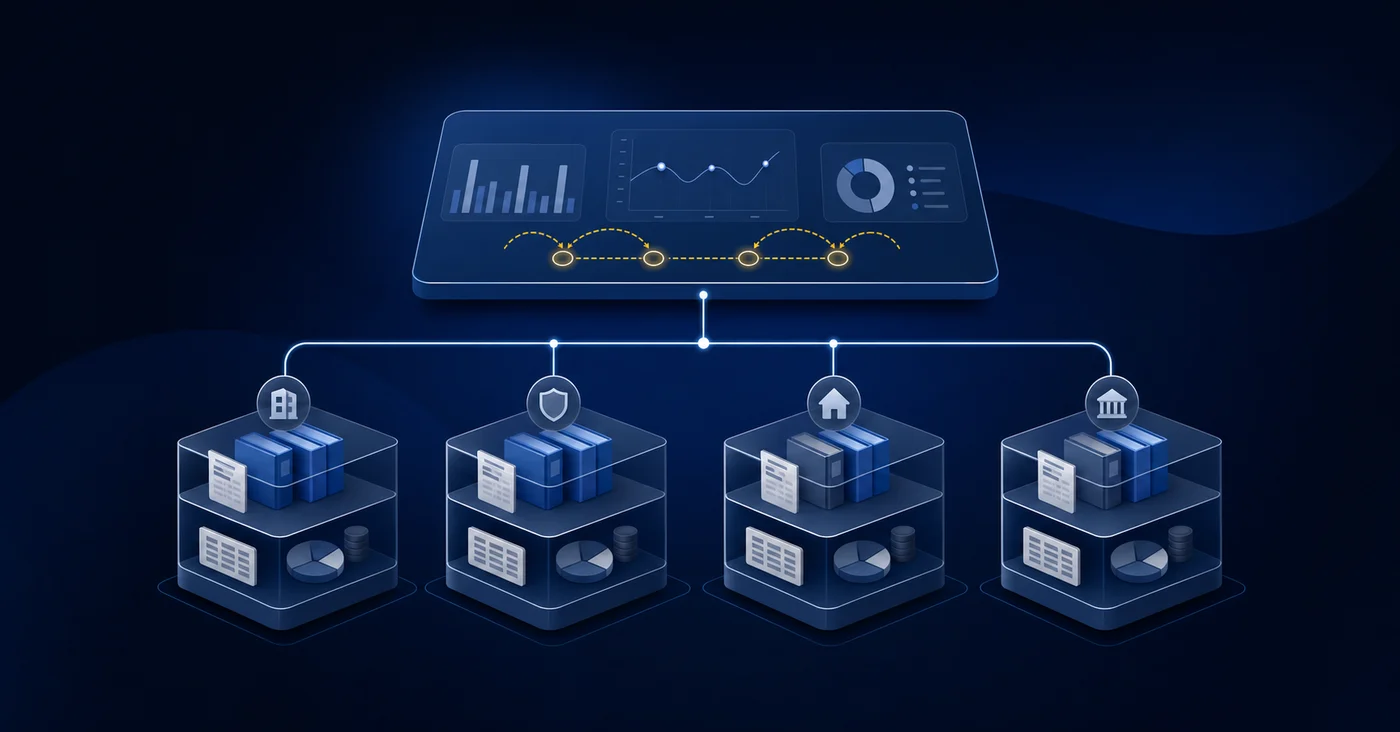
Where teams run into friction is volume and repetition. Each entity still needs transaction coding, reconciliation sign-off, and variance review before the consolidated close can start. At five entities, that's manageable. At twenty or forty, the work multiplies faster than headcount typically does.
Dimensional Accounting and Why It Matters for Family Office Reporting
Sage Intacct's dimensional accounting model is one of the primary reasons family offices choose it over simpler general ledgers. Instead of multiplying chart-of-accounts line items to track investments by entity, strategy, or geography, dimensions let you tag every transaction with metadata that drives reporting across any combination of those attributes.
For a family office running a single entity, this is a convenience. For one managing 15 LLCs, two trusts, and a foundation, it becomes the only workable path to consolidated reporting without a separate GL for each structure.
The core dimensions family offices rely on most:
- Entity or location, separating activity by legal structure so intercompany eliminations are clean at consolidation
- Investment class or fund, tagging transactions to private equity, real estate, liquid securities, or venture positions
- Beneficiary or family branch, supporting bespoke reporting for individual family members without duplicating the chart of accounts
- Project or deal, tracking capital deployment and returns at the individual investment level
Where this creates real accounting work is at the transaction level. Every journal entry, AP bill, and bank transaction needs dimension tags that hold up under audit. When tagging is inconsistent, consolidated reports break, and the fix is manual. That cleanup typically falls on the same person responsible for the monthly close.
Investment and Brokerage Account Reconciliation Gaps in Sage Intacct
Sage Intacct handles securities positions and brokerage accounts as reference data, not as a live reconciliation layer. Custodian feeds from providers like Schwab, Fidelity, or Pershing arrive as statements, and someone on your team has to manually tie those positions to what's sitting in the GL. For a single-entity family office, that's a manageable monthly task. For offices managing multiple trusts, LLCs, and partnership structures across several custodians, the reconciliation burden multiplies quickly across every account and every entity.
Where the Gap Shows Up in Practice
The core problem is that Sage stores what you post, not what your custodian holds. When positions drift between statement dates or corporate actions hit mid-period, the GL doesn't self-correct. Your team has to catch the difference manually, build a workpaper, and post the adjusting entry.
Common reconciliation gaps family office teams run into on Sage Intacct alone:
- Unrealized gain/loss calculations require a separate spreadsheet or portfolio tool, then a manual journal entry back into Sage. There's no native mechanism to pull market values and compute period-end positions automatically.
- Dividend and interest accruals from custodian statements often don't match the posting date in Sage, creating timing differences that have to be tracked and cleared each period.
- Corporate actions like stock splits, spinoffs, or return-of-capital distributions require manual cost basis adjustments that Sage won't calculate for you.
- Multi-custodian environments mean your team is matching against multiple statement formats with no single aggregation layer inside Sage itself.
A dedicated portfolio accounting tool, whether that's Addepar, Black Diamond, or a similar solution built for investment-heavy family offices, fills this gap by maintaining a live position ledger that feeds validated data into Sage instead of leaving the comparison work to your staff.
The Software Stack Approach for Family Offices on Sage Intacct
Family offices running on Sage Intacct typically don't run on Sage alone. The general ledger handles the system of record, but the work that surrounds it, transaction coding, close orchestration, reconciliation tracking, variance analysis, falls to a collection of add-ons, spreadsheets, or manual effort.
The stack approach recognizes this reality. Instead of asking Sage Intacct to do everything, you identify the specific workflows where it needs support and fill each gap with a purpose-built tool that integrates at the API level.

For family offices, those gaps tend to cluster around three areas:
- Transaction coding across multiple entities and asset classes, where volume and complexity outpace what rule-based categorization can reliably handle
- Month-end close management, where checklists, reconciliation status, and preparer/reviewer workflows need coordination across a small team
- Reporting and consolidation, where investment data, capital call activity, and entity-level financials need to roll up into a single view without manual assembly
The sections below cover the tools that handle each layer, with notes on how they connect to Sage Intacct and where each one fits in a working family office accounting workflow.
| Tool Type | Core Function | What It Handles for Family Offices |
|---|---|---|
| Sage Intacct | General ledger and multi-entity consolidation foundation | Multi-entity ledgers, dimensional reporting, consolidations, and inter-entity eliminations at the system-of-record layer |
| Truewind | AI-assisted transaction coding and close automation | Transaction classification, close checklists, reconciliation tracking, dimensional tagging, and variance analysis in one interface on top of Sage |
| Addepar or Black Diamond | Portfolio accounting and investment position tracking | Live securities position reconciliation, unrealized gain/loss calculations, and custodian statement matching across multiple brokerage accounts |
| Horizontal close-management tools | Task tracking and period-end workflow orchestration | Close checklist assignment, sign-off workflows, and period-end task management across entities without transaction coding or reconciliation prep |
Automation Layers That Extend Sage Intacct for Family Office Workflows
Sage Intacct handles the general ledger, dimensional reporting, and consolidations well. What it does not do is automate the execution work that sits between transaction ingestion and a closed period. For family offices, that gap is where most of the manual labor lives.
Several tools have built on top of Sage Intacct to close parts of that gap. They fall into a few functional categories.
AI-Assisted Transaction Coding and Close Automation
This is where Truewind sits. It connects to Sage Intacct via API and automates transaction classification, close checklists, reconciliation tracking, and flux reporting in one interface. The same system that codes bank transactions also runs the close checklist and surfaces variance analysis, so family office accountants are not toggling between separate tools for each workflow.
Truewind is positioned as a digital staff accountant: the AI proposes, a human reviewer approves, and the posting goes directly into Sage. That human-in-the-loop structure matters for family offices where audit trails and principal accountability are non-negotiable.
Dedicated Close Management Tools
Horizontal close-management tools handle task tracking and period-end checklists across teams. They integrate with Sage Intacct to pull data and assign sign-off workflows. For offices that already have transaction coding handled and want structured close orchestration across multiple entities, these tools serve that narrower function well.
The tradeoff is that they cover one layer. Transaction coding, reconciliation prep, and variance analysis still require separate solutions.
Common Implementation Challenges When Moving to Sage Intacct
Sage Intacct is a strong fit for family offices managing multiple entities, but the migration and setup process carries real friction that teams underestimate upfront.
The most common pressure points include:
- The multi-entity and consolidation configuration requires careful planning around intercompany eliminations and shared chart of accounts structures. Getting this wrong early means rework later, often during close.
- Dimension setup is a one-time decision that shapes every report you'll ever run. Family offices frequently undersize their dimension framework at go-live, then struggle to retrofit granular reporting for investments, properties, or beneficiaries after the fact.
- Data migration from prior systems, whether spreadsheets or legacy accounting software, rarely arrives clean. Mapping historical transactions to a new GL structure takes longer than most implementation timelines budget for.
- User permissions and approval workflows need to match the actual org structure of the family office, which often differs from a typical corporate hierarchy and requires custom configuration.
The implementation timeline also tends to stretch when the office lacks dedicated internal accounting staff to own the project alongside the implementation partner. Family offices that assign a clear internal owner to the Sage Intacct build move through configuration and testing faster than those treating it as a vendor-managed handoff.
How AI Is Changing Family Office Accounting on Sage Intacct in 2026
Family offices running on Sage Intacct face a specific accounting burden that general-purpose tools weren't designed to handle. Multi-entity structures, capital call tracking, investment reporting across asset classes, and LP-level allocations all sit on top of a GL that requires precise dimension tagging to produce anything useful downstream.
AI is starting to close that gap in concrete ways.
Where AI Is Making a Difference
Truewind's AI layer sits directly on top of Sage Intacct via API, reading transaction history to learn entity-specific coding patterns and applying them at scale. When a capital distribution hits the bank feed, Truewind classifies it, tags the correct dimensions, and routes it for human review before anything posts to the GL.
The same logic applies to close orchestration. Reconciliation status, flux reporting, and checklist tracking run through one interface instead of across separate tools.
Human reviewers own every final posting decision. The AI handles the preparation work.
How Truewind Fills Sage Intacct's Execution Gaps for Family Offices
Sage Intacct gives family offices a strong GL foundation, but the execution layer sits outside what the software handles natively. Transaction coding, close orchestration, reconciliation tracking, and variance analysis each require separate tools or manual effort to complete.
Truewind sits directly on top of Sage Intacct through an API-level integration and handles that execution layer in one interface. The same interface that codes bank transactions against entity-level dimension structures also runs close checklists, tracks reconciliation status across accounts, and surfaces variance analysis through flux reporting.
For family offices managing multiple entities, that consolidation matters. Each entity needs its own reconciliation pass, its own close sign-off, and its own dimensional coding before the consolidated view is accurate.
Final Thoughts on Extending Sage Intacct for Family Office Workflows
Sage Intacct gives family offices the multi-entity foundation they need, but the execution work, coding transactions, running close checklists, tracking reconciliations across entities, lives outside what Sage handles natively. Truewind sits on top of Sage through an API-level integration and automates that layer in one interface, so your team stops losing time on manual categorization and dimension tagging before the consolidated close can even start. If you're managing multiple entities on Sage Intacct, see how Truewind works with your existing GL.
FAQ
Can I use Sage Intacct for family office accounting without adding any other tools?
Yes, Sage Intacct provides the GL foundation for multi-entity family offices and handles dimensional reporting and consolidation well. However, teams typically need additional tools to handle transaction coding, close orchestration, brokerage reconciliation, and variance analysis (workflows Sage doesn't automate natively). The execution layer between transaction ingestion and a closed period requires either manual effort or purpose-built automation on top of Sage.
Sage Intacct vs QuickBooks for family offices with multiple entities?
Sage Intacct's multi-entity architecture handles consolidations, inter-entity eliminations, and dimensional reporting natively, while QuickBooks requires manual exports and spreadsheet workarounds once you cross two or three entities. If you're managing multiple trusts, LLCs, or investment vehicles with entity-level close requirements, Sage Intacct provides the structural foundation QuickBooks can't match.
How do family offices tie brokerage accounts to Sage Intacct?
Sage Intacct stores securities positions as reference data, not as a live reconciliation layer. Your team manually ties custodian statements from providers like Schwab or Fidelity to GL balances each period. For offices managing multiple accounts across several custodians, that reconciliation work multiplies quickly. Most teams either build spreadsheets or add a dedicated portfolio accounting tool like Addepar or Black Diamond to maintain position-level accuracy.
What's the difference between adding a close-management tool and an AI automation layer on top of Sage Intacct?
Horizontal close-management tools handle task tracking and sign-off workflows but leave transaction coding, reconciliation prep, and variance analysis to separate solutions. An AI automation layer like Truewind handles transaction classification, close checklists, reconciliation tracking, and flux reporting in one interface, consolidating workflows that dedicated close platforms handle separately.
When does it make sense for a family office to move from QuickBooks to Sage Intacct?
When you cross two or three entities and start managing consolidations, inter-entity transactions, or entity-level dimensional reporting in spreadsheets outside QuickBooks, you've hit the structural ceiling. Sage Intacct becomes the more stable path once manual workarounds start consuming more time than the migration itself would take.
Turn this into a close-ready workpaper
Start with sample files or upload your own statements to see how Truewind prepares review-ready workpapers and journal entries.