
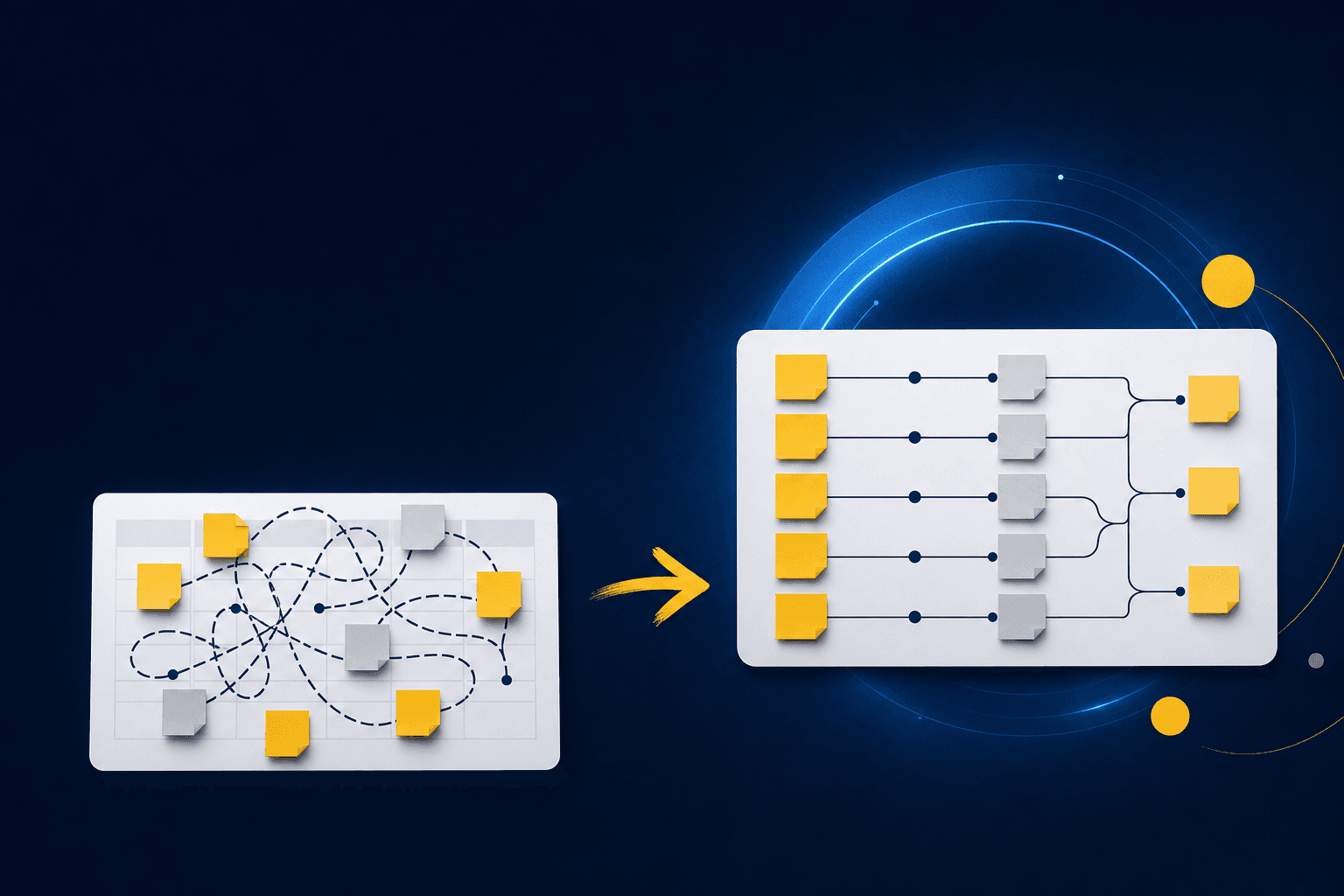
A March rollforward can carry the right ending balance into Sage Intacct and still fail the audit test. The prior-period PDF is present, but no one can see which lines were reused, which assumptions changed, or why the reviewer accepted an exception. The math survived. The preparation logic did not.
That gap is what turns recurring work into reconstruction. A reviewer has to open last month’s workbook, trace formulas across tabs, search email for an explanation, and compare source files to determine what changed. If the original preparer is unavailable, the workpaper may show the answer without showing how the team reached it.
Audit-ready workpapers for rollforwards preserve more than balances. They keep prior support, current-period evidence, calculations, accounting treatment, exceptions, and reviewer decisions connected as the file moves forward. The goal is not another sign-off box. The goal is a workpaper a reviewer can trace from source to journal entry in one pass.
The rollforward fails when its logic disappears
A spreadsheet rollforward is good at carrying numbers forward. It can preserve formulas, opening balances, amortization tables, and links to supporting tabs. What it often fails to preserve is context: which source supported the balance, whether a prior assumption still applies, and why the team treated an unusual item a certain way.
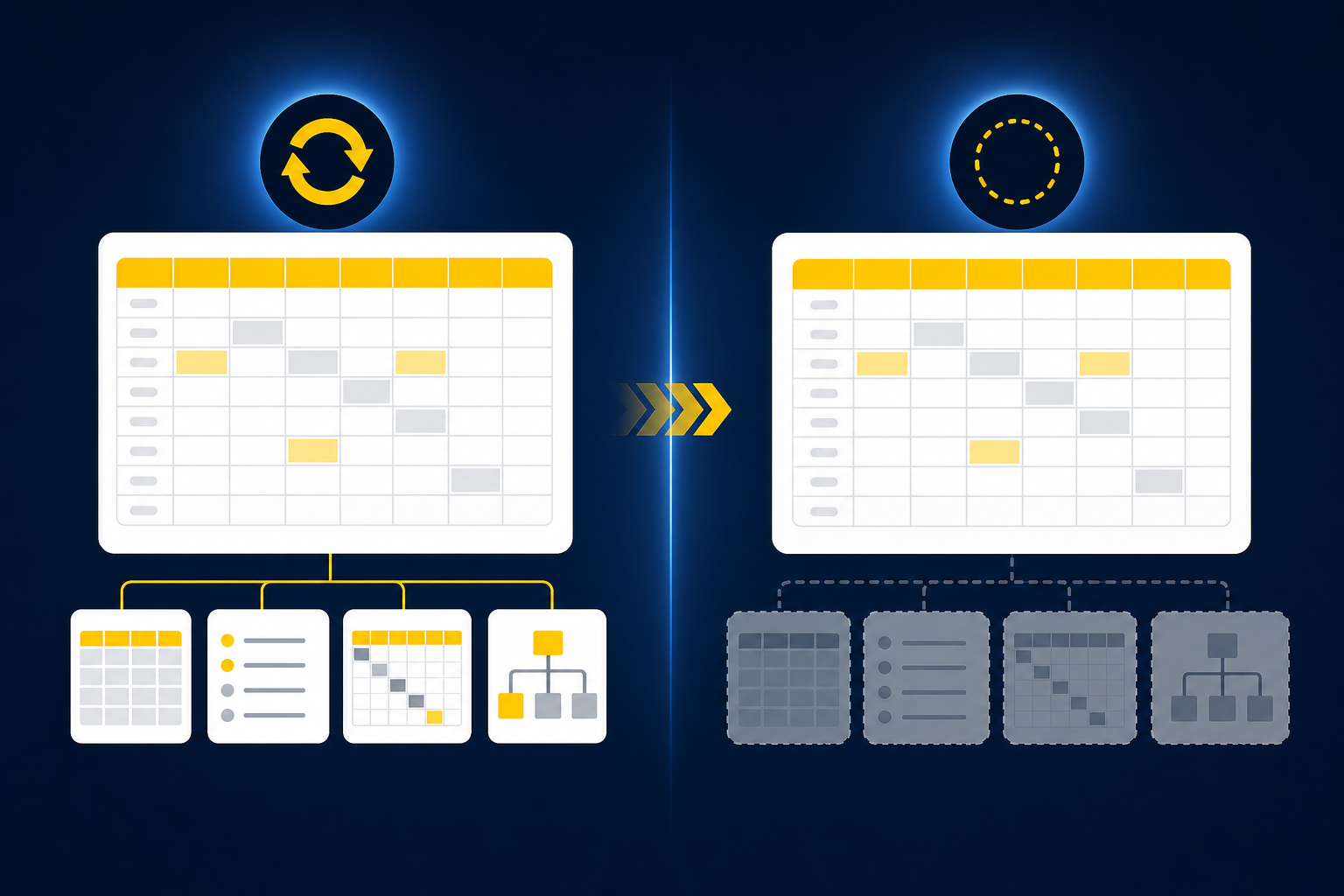
That missing context matters because recurring accounting work is not generic. Two teams may prepare the same prepaid schedule or brokerage rollforward while using different cutoffs, account mappings, entity rules, and review conventions. Copying the workbook preserves its structure. It does not necessarily preserve the process that made the prior-period result acceptable.
The problem gets harder in family offices and nonprofits. A family-office rollforward may combine custodian statements, investment-vehicle support, and ERP balances across several entities. A nonprofit reconciliation may connect donor activity, processor settlements, bank deposits, funds, and restrictions. If the workpaper carries the balance but drops those relationships, the reviewer has to rebuild them before review can begin.
Truewind uses prior workpapers, prior entries, SOPs, and reviewer corrections as operating context for the next period. The workflow applies the team’s existing treatment rather than forcing the account into a generic template. If you want to inspect how that historical context carries into preparation and review, see Truewind in action.
A rollforward becomes reusable when the approved logic moves with it. The prior result still matters, but it is no longer the only evidence. Each new period connects the old treatment to current source files, current balances, visible changes, and the reviewer’s decision.
An evidence map makes the workpaper re-performable
An evidence map connects each material workpaper line to the source, calculation, and accounting treatment that produced it. It does not need to be a separate document. It can live inside the workpaper structure, as long as the reviewer can follow the path without searching across folders and email threads.
Start with the source, not the ending balance
A tied balance proves that the schedule agrees to the selected endpoint. It does not prove that the source population was complete or that the right activity entered the schedule. A reviewer still needs to know which statements arrived, which ERP balance was used, and whether every expected source was included.
For a prepaid rollforward, that may mean connecting the opening schedule, current invoices, additions, amortization calculations, and ending GL balance. For a brokerage account, the map may need the prior workpaper, current custodian statement, investment activity, entity treatment, and journal-entry draft. The exact source set changes by workflow, but the review question remains the same: can someone reproduce the prepared result from the evidence provided?
Preserve calculations and accounting treatment together
A calculation without treatment is only half a workpaper. The reviewer may be able to verify the formula and still have no record of why an item was capitalized, allocated to a particular entity, assigned to a restricted fund, or excluded from the current period.
Useful evidence mapping puts the calculation beside the rule that governed it. Prior workpapers and reviewer corrections can show how the team handled a recurring item before. Current-period preparation can then apply that treatment again while leaving new facts and changed assumptions visible for review. The accountant still owns the policy decision; the workflow preserves how that decision was executed.
Show what changed from the approved period
A rollforward should not make the reviewer rediscover the difference between periods. New source files, balance changes, classification changes, and revised assumptions should be visible against the prior approved result. Otherwise, the reviewer has to compare two complete workbooks and infer which differences matter.
The same principle applies to reviewer context. A correction captured only in a comment or email is easy to lose when the file rolls forward. A correction retained against the workflow can inform later preparation while remaining open to review. Consistency comes from reusing approved treatment, not from hiding change.
The operating test is practical: give a reviewer the prior approved workpaper, the current source set, and the prepared rollforward, then ask whether the journal-entry draft can be re-performed without outside explanation. To examine that test against one of your own recurring schedules, book a Truewind demo.
Missing expected events belong in the workpaper
Exceptions are not evidence that the workflow failed. In recurring accounting, they are often the most important part of the review. A missing custodian statement, an unexpected balance change, mixed personal and business activity, or an inconsistent classification belongs in front of the accountant with its source context intact.
Missing activity deserves the same treatment. If an account usually receives a monthly statement and none arrived, a blank schedule is not enough. The workpaper should show that the statement was expected, that it was not included, and that the reviewer must decide what happens next. The absence is part of the evidence.
Burying that fact in reviewer notes weakens the rollforward. The note may not survive the next period, and another preparer may read the unchanged schedule as proof that no activity occurred. Treating the missing event as a first-class exception preserves the difference between “nothing happened” and “the team does not yet have the evidence.”
Truewind compares current preparation with the learned process and prior workpapers, then surfaces items that fall outside the pattern. The platform does not resolve those items on its own. Reviewers receive the exception with source context, make the accounting call, and retain that decision against the workflow for later periods.
A system that forces every total to agree can produce a clean-looking file while concealing the question that needed judgment. A system that exposes the unreconciled item gives the accountant something useful to review. For rollforwards, visible exceptions are part of the control.
Reviewer checkpoints should test the work, not the status
A completed checkbox tells you that someone touched the workpaper. It does not tell you whether that person tested completeness, traced the source, or re-performed the important calculations. Review needs a defined surface, not just an approval field.
A useful checkpoint asks the reviewer to confirm:
- The expected current-period source files are present, and missing items are documented.
- Opening balances agree to the prior approved workpaper.
- Current additions, disposals, allocations, or other changes tie to source.
- Calculations follow the team’s established treatment.
- Entity, fund, program, department, or other required dimensions remain intact.
- Exceptions and timing differences are visible and unresolved items have an owner.
- The journal-entry draft agrees to the reviewed schedule before anything reaches the GL.
Those checks separate preparation from judgment. The preparer, whether human or software, assembles the evidence and applies the known process. The reviewer tests what was prepared, changes the treatment where needed, and signs off on the output. Accountant ownership does not disappear because preparation becomes repeatable.
Review also needs visible history. If a schedule changes after an initial review, the reviewer should be able to inspect the changed item and the evidence behind it rather than repeat the entire review from the beginning. An audit trail can preserve source files, coding decisions, reviewer corrections, and preparation steps, but it does not certify compliance or replace formal audit procedures.
How Truewind preserves the preparation path
Use those review checkpoints to evaluate how Truewind prepares a rollforward. Truewind sits between recurring source files and the general ledger. It loads the prior workpaper, current-period documents, and ERP balances, then prepares the current workpaper using the team’s existing treatment. Balances roll forward, supporting schedules update, and any required journal-entry draft remains tied to source.
Historical-example learning is what keeps the workflow specific to the accounting team. Confirmed coding decisions, allocation choices, classification splits, and reviewer corrections become context for later periods. Novel items still go to the accountant. The platform does not change accounting policy because a new statement resembles an old one.
Multi-source reconciliation carries the same approach into workflows where several systems describe one activity differently. Donor activity, processor settlements, and bank deposits can be aligned in one reconciliation. Custodian activity, investment-vehicle support, and the ERP balance can be prepared into a schedule that preserves entity treatment and surfaces timing differences rather than forcing agreement.
The review workflow keeps prepared work beside source links and exception items. Accountants can confirm an item, adjust it, or return it to preparation. Nothing leaves review without accountant sign-off, and Truewind does not post to the GL on its own.
After approval, structured output can move to Sage Intacct or QuickBooks Online with coding, dimensions, and source references preserved. Those systems remain the system of record. Truewind owns the preparation path upstream, where source files become workpapers, reconciliations, schedules, and reviewed journal-entry drafts.
A useful evaluation should begin with one bounded rollforward that already has known inputs and an approved prior result. Compare the prepared workpaper with the accepted version, review the differences, and confirm that corrections remain visible in the next period. Seeing that full source-to-GL path is more useful than watching a generic prompt produce an answer, so get a Truewind demo and bring a recurring workpaper your team already knows how to review.
Better rollforwards create accounting capacity
The value of repeatable preparation is capacity, not the removal of accountants. When source gathering, evidence mapping, and schedule assembly consume less attention, experienced staff can spend more time investigating changes, advising stakeholders, and improving controls. Judgment moves later in the process because the work arrives ready to inspect.
One approved customer case study shows the capacity point in another recurring accounting workflow. A lead-generation company reduced monthly bookkeeping work from about ten hours to under 30 minutes, while the process also surfaced a duplicated recurring charge worth $30,000. That is one company’s result, not a benchmark for rollforwards, but it shows why visible exceptions matter alongside repeatable preparation.
The same standard should govern monthly workpapers. A rollforward is not audit-ready because the balance agrees or the file carries a reviewer’s initials. It is ready for review when prior support remains connected, current changes are visible, missing expected events are documented, and the journal-entry draft can be traced back through the workpaper to source.
Reusable evidence mapping is what reduces the need to rebuild that story every month. The accountant still reviews the treatment and owns the result. What changes is the amount of assembly required before judgment can begin.
Frequently Asked Questions
How do I ensure my rollforward is audit-ready?
To make your rollforward audit-ready, start by preserving all relevant context. This means connecting prior workpapers, current evidence, and calculations clearly. Use an evidence map within your workpaper to link each line to its source, calculation, and accounting treatment. Make sure to document any changes from the prior period, including new source files or assumptions, so that reviewers can easily trace the logic and decisions made. This way, your rollforward isn't just a number; it tells a complete story that reviewers can follow.
What if I have missing expected events in my workpaper?
If you discover missing expected events, document them clearly in your workpaper. For instance, if a custodian statement is missing, indicate that it was expected but not received, and outline the next steps for the reviewer. This transparency helps distinguish between 'nothing happened' and 'evidence is still pending.' By treating these exceptions as part of your evidence, you maintain the integrity of your workpaper and provide a clear path for review.
Can I automate my workpaper preparation process?
While Truewind can help streamline your workpaper preparation, it does not automate all aspects. You'll still need to review and confirm each output. Truewind organizes your source documents and applies your team's existing accounting logic, but the final review and approval remain in your hands. This ensures that all exceptions and unique cases are addressed properly before anything is posted to the general ledger.
When should I document reviewer corrections?
Document reviewer corrections immediately as they occur. This practice ensures that all changes are captured against the workflow and not lost in the workpaper. By keeping a visible history of corrections, you can improve consistency in your recurring preparation and make it easier for future reviewers to understand the context of changes. This approach helps maintain accountability and clarity in your accounting processes.
Turn this into a close-ready workpaper
Start with sample files or upload your own statements to see how Truewind prepares review-ready workpapers and journal entries.