
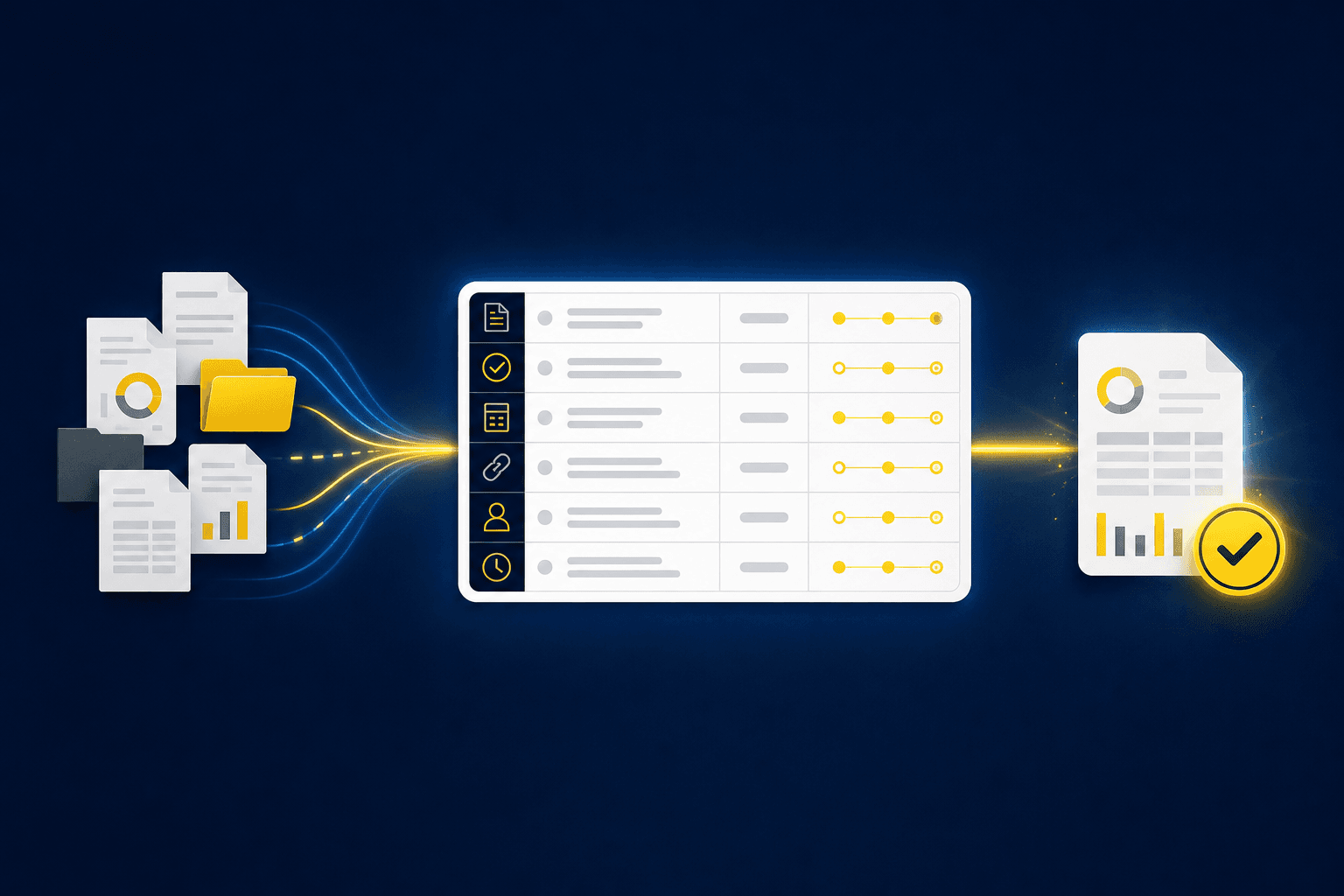
The workpaper is marked complete, the balance agrees to the GL, and the support sits in the right folder. Then the reviewer asks who approved the treatment, which source supports the adjustment, and whether the file changed after sign-off. No one can answer without opening email, checking document history, and asking the preparer what happened. A polished workpaper with no recorded review evidence can create more audit risk than an unfinished file with visible open questions.
The problem is not the final number. It is the missing path from source to calculation, from calculation to accounting treatment, and from treatment to approval. A reviewer needs to see who prepared the work, what they relied on, what exceptions they found, and what the reviewer decided. When those facts live outside the workpaper, the file may look finished while the review remains incomplete.
Audit-ready workpapers make that path visible. They do not replace formal audit procedures, and they do not certify that a treatment is correct. They give the accounting team a repeatable record that another person can inspect, understand, and re-perform without reconstructing the close from scattered files and conversations.
A final number does not prove the review happened
Most recurring workpapers begin with a reasonable structure. The preparer rolls the file forward, updates the source support, checks the balance, and sends it to a manager. The manager leaves comments in the workbook or replies by email. Once the comments are cleared, someone changes the status in the close checklist and moves on.
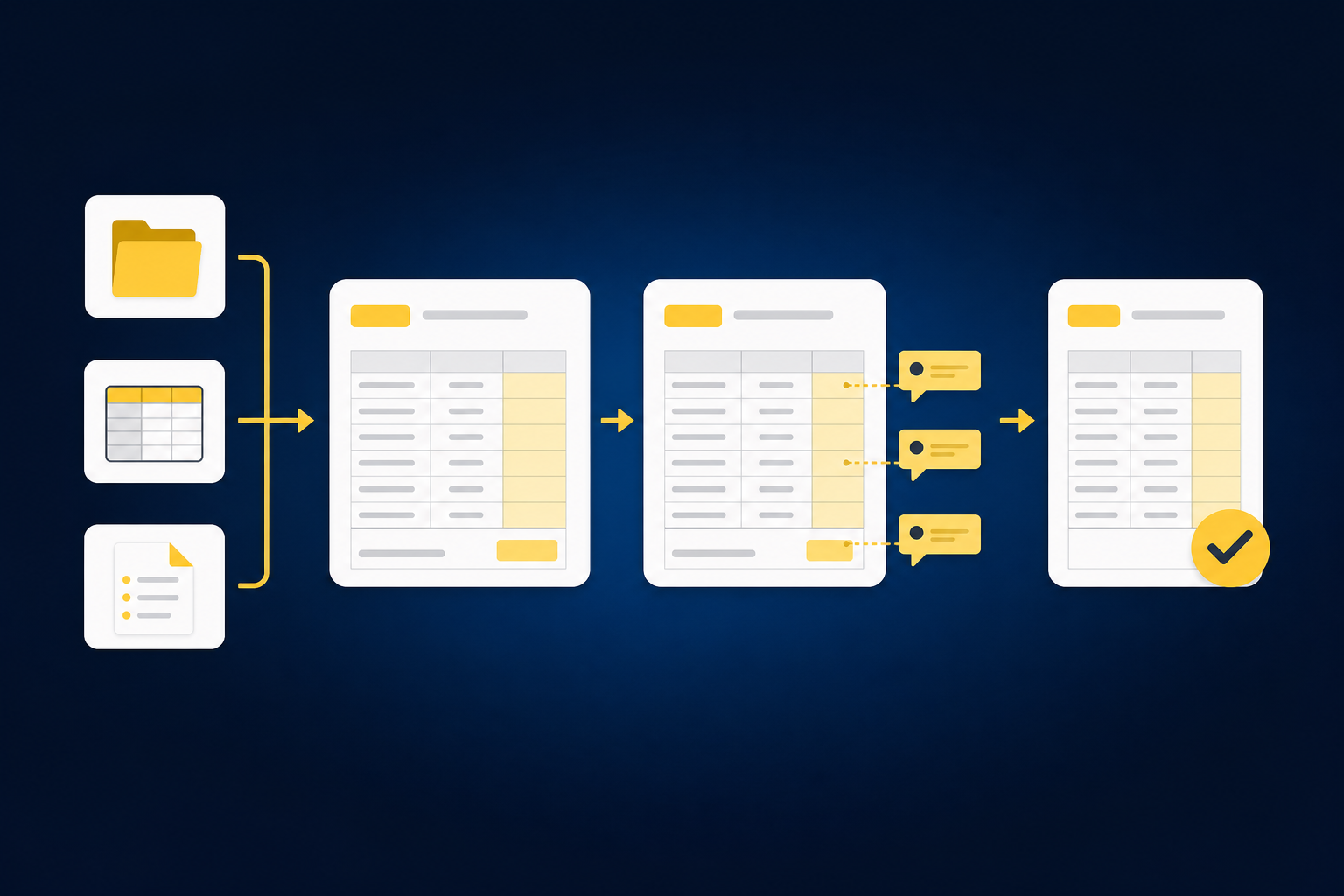
The process can work, but the evidence is spread across too many places. The workbook shows the calculation. A shared folder holds the source. Email contains the reviewer questions. The close checklist says the task is done, but it may not show which version was reviewed or what changed before approval. Each piece makes sense on its own; together, they still leave ambiguity.
A complete workpaper needs explicit evidence of preparation and review. At minimum, the record should show the accounting period, preparer, reviewer, approval status, source support, open exceptions, and the disposition of each reviewer note. Initials in a cell are not enough when they cannot be tied to a specific version or review action. The objective is not more documentation for its own sake. The objective is to show what happened and who owned each decision.
AI does not remove that requirement. It makes the requirement more important because a prepared output can look complete before a reviewer has inspected the underlying logic. Truewind presents prepared workpapers, reconciliations, schedules, journal-entry drafts, source links, exceptions, and reviewer actions in a review workflow. Nothing leaves review without accountant sign-off. If you want to inspect that sequence in a recurring close workflow, See Truewind in action.
What an audit-ready workpaper has to show
Reviewability is not a formatting preference. It is the operating structure that lets a reviewer trace the work, challenge the treatment, and confirm that the approved output is the output used downstream. Five elements matter: preparation evidence, source traceability, visible calculations, isolated exceptions, and recorded sign-off. Leaving out one weakens the rest.
Record preparation and review as separate actions
The preparer and reviewer do different work, so the workpaper should preserve different evidence for each. Preparation evidence shows who assembled the support, applied the accounting treatment, completed the calculation, and identified unresolved items. Review evidence shows who inspected that work, what they questioned, which corrections they required, and when they approved the final version.
A status field marked “complete” collapses those actions into one label. It does not tell you whether review happened, whether comments were resolved, or whether the reviewer approved the version now in the folder. A stronger sign-off structure records preparation first, review second, and final approval only after exceptions and comments have a disposition.
The distinction also keeps accountability where it belongs. AI can prepare a workpaper using current source files, prior workpapers, and the team’s established treatment. The accountant still owns accounting policy, unusual items, materiality judgments, and approval. Review evidence should make that ownership visible rather than imply that preparation and judgment were the same action.
Link support so the reviewer can re-perform the work
Attaching a PDF proves that a document was stored. It does not prove that the document supports the workpaper. A reviewer still needs to know which statement, page, account, period, or line produced the number under review. Without that connection, the source folder becomes another place to search.
Useful source links support re-performance. They connect the prepared balance or journal-entry line to the underlying document and preserve enough context for the reviewer to repeat the important step. A custodian statement may support trades, dividends, interest, fees, and ending positions. One attachment at the top of the workbook does not explain which section supports each treatment.
The same issue appears in multi-source reconciliations. A nonprofit deposit may begin in a donor platform, pass through a payment processor, and reach the bank net of fees or refunds. The bank amount alone cannot show the fund, campaign, or restriction attached to the activity. Review-ready support has to preserve the path across the source systems, not merely confirm that cash arrived.
Route exceptions instead of burying them
Normal preparation and judgment items should not look the same. A missing statement, an unexpected balance change, a timing difference, or an inconsistent classification requires attention for a reason. When those items remain mixed into ordinary support, the reviewer has to re-check the whole file to find what matters.
An exception queue changes the review pattern. Prepared items remain available for inspection, but unresolved differences are isolated with the source context needed to make a decision. The reviewer can confirm the recurring treatment, investigate what fell outside it, and record the resolution against the workpaper. The process does not force an unexplained total to agree.
Truewind compares current-period preparation with prior workpapers and the learned process, then surfaces items that do not fit for accountant review. It does not resolve those items autonomously or change accounting policy on its own. To evaluate how that exception handoff fits your existing reviewer process, Book a Truewind demo.
Preserve visibility when approved work changes
Approval is tied to a version of the work, not to a filename. If someone edits a schedule after sign-off, the team needs to know what changed and whether the change requires another review. Otherwise, the evidence says one file was approved while the current file contains different numbers or treatment.
Post-approval changes are not always improper. A late statement may arrive, a cutoff may need correction, or a reviewer may request a revised allocation. The control issue is visibility. The workpaper should retain the earlier review action, identify the later correction, and return the changed output to the appropriate reviewer before it is used.
A durable audit trail also preserves the decisions around the work. Truewind retains ingested sources, coding decisions, reviewer corrections, and preparation steps against the workflow so reviewers can inspect the trail by item and period. That record documents what happened inside the workflow, but it does not replace formal audit procedures or certify compliance with a regulatory framework.
Build the sign-off structure into every period
A sign-off process becomes useful when the team can apply it the same way each month. If one reviewer records approval in a workbook, another uses email, and a third updates only the close checklist, the evidence changes with the person doing the work. The policy may be consistent while the record is not.
A recurring checklist should follow the actual order of review:
-
Confirm the source set. Identify the statements, exports, prior workpapers, and ERP balances required for the period. Record missing inputs as exceptions rather than treating the source set as complete.
-
Tie calculations to source. Connect balances, allocations, reconciling items, and journal-entry support to the documents that produced them. A reviewer should not have to guess where a number came from.
-
Separate recurring treatment from judgment items. Apply established mappings and classifications where the process is clear. Route new activity, unusual changes, and unsupported differences for review.
-
Resolve reviewer notes before approval. Give every question a visible disposition. A deleted comment does not preserve the decision that resolved it.
-
Lock approval to the reviewed output. Record who approved the work and which version they approved. Any later change that affects the accounting should become visible and return to review.
The checklist should fit the workflow rather than impose a generic accounting template. A brokerage rollforward, donation reconciliation, and prepaid schedule do not use the same calculations or sources. They can still use the same sign-off logic: confirm completeness, trace the source, inspect the treatment, resolve exceptions, and approve the exact output that will be used.
Start with one recurring workpaper that already has known inputs and a prior approved result. Compare the newly prepared output with the known answer, review the differences, and capture the corrections. Expansion makes sense after the team can see that the workflow reproduces its process and keeps reviewer judgment visible.
How Truewind prepares work for review
Truewind sits between the source material and the general ledger. It ingests recurring inputs such as bank statements, processor exports, donor-platform files, custodian statements, spreadsheets, prior workpapers, and operational-system exports. Those inputs become structured preparation for coding, reconciliation, schedules, workpapers, and journal-entry drafts. Sage Intacct and QuickBooks Online remain the systems of record.
For recurring workpapers, Truewind loads the prior workpaper, current-period source documents, and ERP balances. It rolls balances forward, updates supporting schedules, prepares any required journal-entry draft, and surfaces exceptions with source-linked support. Historical corrections and confirmed treatments can inform later periods, but the learning stays bounded by the team’s rules and reviewer decisions.
The review workflow puts the prepared output beside its sources and exceptions. Accountants can confirm the work, adjust it, or return it for further preparation. Reviewer actions are captured against the workflow, and approved output can move to Sage Intacct or QuickBooks Online only after reviewer confirmation. Truewind does not become the GL and does not post on its own.
One marketplace customer reported reducing its month-end close by four days and reaching audit-ready books each month after introducing Truewind into its finance process. That result is one customer example, not a universal benchmark. The more useful point is how the workflow connects preparation and review: source material enters in its existing form, the accounting work is prepared against established treatment, and a person approves the result before it reaches the ledger.
Truewind is not designed for a team seeking autonomous posting or a replacement for reviewer judgment. It fits accounting organizations that already have a recurring close, prior examples, defined reviewers, and workpapers they want to make more repeatable. If your team wants to test that model against one existing reconciliation or rollforward, Get a Truewind demo.
Make sign-off repeatable before the next close
Audit-ready workpapers are not the files with the cleanest tabs or the fewest open questions. They are the files that show how the team moved from source to treatment, where judgment entered the process, and who approved the final output. Visible exceptions are safer than hidden assumptions because the reviewer knows where a decision is still required.
The goal is not to add another review layer. It is to give the existing review a durable structure. Record preparer and reviewer actions separately, link support for re-performance, isolate exceptions, preserve changes after approval, and apply the same sign-off sequence every period.
AI can take on more of the recurring preparation between source documents and the GL. The accountant should remain in control of policy, exceptions, and approval. When that boundary is built into the workpaper, the team gains capacity without giving up the evidence that makes the close defensible.
Frequently Asked Questions
How do I ensure my workpapers are audit-ready?
To make your workpapers audit-ready, start by documenting the preparation and review processes separately. Clearly show who prepared the work and who reviewed it, along with their comments and approvals. Next, link all source documents to the relevant calculations in your workpapers to allow reviewers to trace the information easily. Lastly, maintain a record of any exceptions and their resolutions to ensure transparency and accountability throughout the process.
What if my reviewer has questions about the workpaper?
If your reviewer has questions, ensure that all comments are documented and visible in the workpaper. Each question should have a clear disposition, indicating how it was resolved. This will help maintain a transparent review process and ensure that no issues are overlooked. Make sure to address any outstanding exceptions before final approval to keep the workpaper audit-ready.
Can I automate the preparation of my workpapers?
While Truewind helps streamline the preparation of workpapers by organizing source documents and automating some tasks, it’s important to remember that human review is still required before anything is posted to the general ledger. You can use Truewind to ingest data from various sources and prepare structured workflows, but the final review and approval must be conducted by an accountant to ensure accuracy and compliance.
When should I route exceptions for review?
You should route exceptions for review as soon as they are identified during the preparation process. Exceptions can include missing documents, unexpected balance changes, or any discrepancies that require further investigation. By isolating these items and providing the necessary source context, you allow the reviewer to focus on what truly needs attention, ensuring a more efficient review process.
Why does my workpaper need to show source traceability?
Source traceability is crucial because it allows reviewers to verify the accuracy of the calculations and understand the context behind the numbers. If a reviewer cannot trace a figure back to its source, it undermines the credibility of the workpaper. By linking each calculation to the relevant source documents, you create a clear path that can be followed, making the review process more robust and reliable.
Turn this into a close-ready workpaper
Start with sample files or upload your own statements to see how Truewind prepares review-ready workpapers and journal entries.