

In one workflow-scoping conversation, a lean Sage Intacct team did not describe one close problem. It described cash reconciliations, prepaid schedules, fixed assets, accruals, cards, intercompany accounts, and workpapers repeated across several entities. The tempting pilot was the workflow with the highest visibility. The credible pilot was the one with known inputs, a prior approved result, and a reviewer who could inspect every difference.
The riskiest AI accounting pilot is often the workflow that feels most important. Prestige use cases attract attention, but they also carry more dependencies, accounting judgment, and exception paths. When the first result is difficult to explain, the team cannot tell whether the problem sits in the source data, workflow design, accounting treatment, or AI preparation. Trust falls before the implementation has had a fair test.
An AI accounting pilot scorecard changes the decision from “Where could AI have the biggest impact?” to “Where can we produce credible proof?” The first workflow should be recurring and bounded, with stable source materials and an accepted workpaper or entry to compare against. Complexity matters less than inspectability. A difficult reconciliation can still be a good pilot if its inputs, treatment, exceptions, and approval path are already understood.
The hardest close problem is usually the wrong first pilot
A high-stakes workflow can look like the natural starting point because its pain is visible. Family-office accounting makes the temptation easy to understand. The team may be processing statements across entities, investment vehicles, and custodians while preserving entity-specific treatment through review. That is an important problem, but importance alone does not make the workflow suitable for a first implementation.
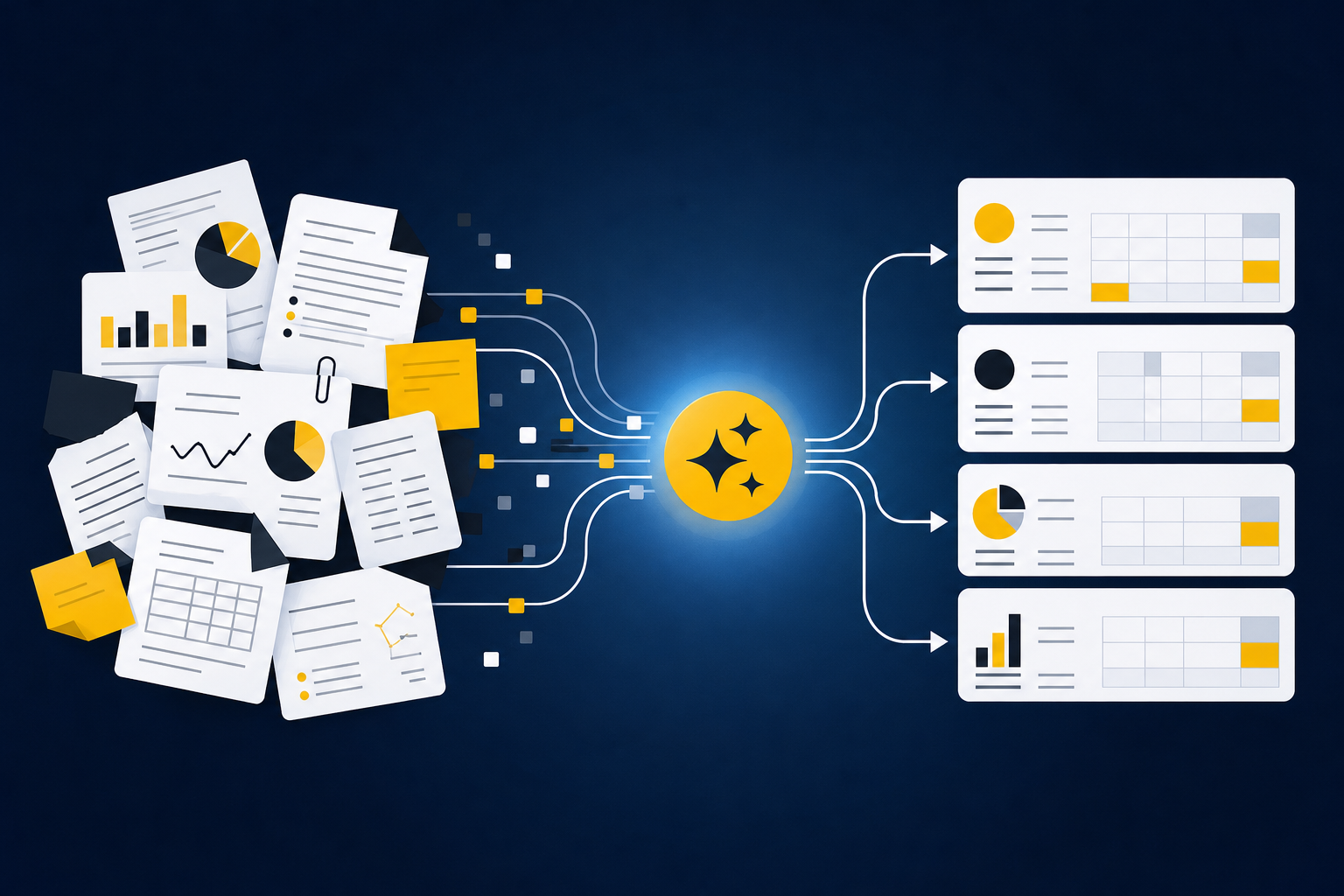
The better question is whether the workflow has edges. Can you name the source files that begin it? Can the preparer explain the account mappings, cutoffs, and classifications that apply? Is there a prior-period workpaper showing the expected output? Can the reviewer distinguish a preparation error from a legitimate exception without reconstructing the entire close?
If those answers are unclear, the pilot begins with process discovery rather than repeatable preparation. AI then gets blamed for ambiguity the accounting team has not resolved. A bounded pilot avoids that confusion by establishing what enters the workflow, what treatment should be reproduced, which items require judgment, and what the reviewer must approve.
The same boundary should be visible in the product demonstration. If you want to inspect how source documents, exception handling, and accountant sign-off fit inside one recurring workflow, you can See Truewind in action. The useful part is not a polished answer on sample data. It is seeing whether the prepared output gives your reviewer enough evidence to accept or correct the work.
Score workflows before you commit implementation time
A scorecard should expose implementation conditions, not produce a decorative total. Some criteria are additive. Others are hard gates. A workflow with high volume but no prior approved result is not automatically better than a smaller workflow whose inputs and accounting treatment are already documented.
Use the questions below to compare candidates. Rate each area as strong, workable, or weak, then write down the evidence behind the rating. A score without the supporting document, reviewer, or process owner will not survive implementation.
| Scorecard area | Strong pilot signal | Weak pilot signal |
|---|---|---|
| Recurrence | The workflow runs each period using a recognizable process | The work is ad hoc or unlikely to repeat |
| Boundary | The start, preparation steps, review point, and approved output are identifiable | The workflow expands into several unresolved processes |
| Source availability | Required statements, exports, prior workpapers, and ERP balances can be supplied | Inputs arrive inconsistently or depend on unresolved access |
| Known result | A reviewer-approved workpaper, schedule, reconciliation, or entry exists for comparison | No accepted output exists, or prior periods use conflicting treatment |
| Accounting logic | Mappings, cutoffs, dimensions, and classifications are explicit or visible in prior work | Treatment depends on undocumented knowledge held by one person |
| Reviewability | A named reviewer can trace the result to source and explain acceptance | Approval is informal or happens after posting |
| Exception profile | Common exceptions are known and can be routed to the accountant | Most items require fresh judgment or investigation |
| Implementation dependency | The workflow can run without waiting on several unrelated system changes | Success depends on integrations, access, or policy decisions outside the pilot |
| Expansion value | The same process appears across periods, accounts, entities, or clients | The result proves little beyond a single transaction or one-time event |
Treat recurrence as evidence, not repetition alone
A workflow qualifies as recurring when the accounting process repeats, even if the source files change format or the transactions differ. A brokerage rollforward can still be recurring when one custodian changes a statement layout. A donation reconciliation can still repeat when the mix of processors, fees, refunds, and restrictions changes from month to month.
The relevant question is whether the team applies an established process to each new period. Prior workpapers, journal entries, SOPs, and reviewer corrections show what that process is. They reveal which balance rolls forward, how dimensions are preserved, where timing differences appear, and which conditions require escalation. Without that context, recurrence is only a calendar pattern.
Make boundedness visible on paper
A bounded workflow has a definable handoff on both sides. Source files and ERP balances enter. A workpaper, reconciliation, schedule, or journal-entry draft leaves for review. The GL remains downstream, and nothing posts without accountant approval.
Boundaries also prevent the pilot from absorbing every nearby problem. A processor reconciliation should not become a redesign of revenue recognition, bank access, entity structure, and the chart of accounts. Dependencies that block the workflow need resolution, but unrelated improvements belong outside the first test.
Require a known approved result
The prior approved result is the pilot’s comparison point. It shows the expected structure, accounting treatment, reviewer conventions, and final disposition of exceptions. The goal is not to copy last month without question. The goal is to separate differences caused by current-period activity from differences caused by preparation.
Acceptance criteria should be written before implementation begins. They can include required source coverage, preserved dimensions, reconciliation to identified balances, visible exceptions, reviewer traceability, and an explicit approval step. A criterion such as “the output looks accurate” is too loose because it gives the reviewer no stable test.
Assemble the documents and context the workflow needs
A pilot cannot learn an accounting process from the current-period source file alone. The source may show a custodian balance, processor payout, or prepaid invoice, but it does not contain the full accounting decision. Account mappings, entity treatment, allocation rules, cutoffs, and reviewer expectations usually live in prior workpapers, entries, SOPs, or corrections.
Build the pilot package around the actual workflow:
- Current-period source files in the formats the team normally receives
- Prior-period source files for comparison
- The last reviewer-approved workpaper, reconciliation, schedule, or journal entry
- Relevant ERP balances and dimensional structure
- Written SOPs or preparer notes, where they exist
- Examples of reviewer corrections and their final treatment
- Known exceptions that should be surfaced rather than prepared as routine items
- A named preparer and reviewer with authority to confirm the result
The package does not need to make every decision mechanical. Judgment belongs with the accountant. It does need to show where preparation ends and judgment begins, because a pilot cannot be evaluated when those responsibilities remain mixed together.
Reviewer context matters as much as source coverage. One team may batch entries to simplify review, while another preserves individual entries for source-level traceability. Two organizations can prepare the same account reconciliation and still use different dimensions, cutoff rules, or support schedules. The pilot should reproduce the team’s approved process, not impose a generic template.
Once the source package and acceptance criteria are assembled, the implementation conversation becomes concrete. If you want to walk through one candidate workflow using its actual source files, prior workpaper, and reviewer requirements, you can Book a Truewind demo. That discussion should establish the workflow boundary and proof standard before broader rollout enters the plan.
Count exception review as part of the pilot cost
A workflow can be repetitive and still make a poor pilot if nearly every item becomes an exception. High transaction volume does not create value when the reviewer has to reopen each source, reconsider the treatment, and rebuild the workpaper. The scorecard therefore has to measure the shape of review, not only the amount of preparation.
Start by separating expected variation from unresolved judgment. Timing differences, missing statements, unexpected balance changes, mixed personal and business activity, or inconsistent classifications should appear as review items with source context. The system should not force the totals to agree or apply a new accounting policy merely to complete the workflow. Visible exceptions let the reviewer focus on the items that actually require a decision.
Review volume alone is not enough to disqualify a candidate. A workflow may begin with more corrections while the team’s historical treatment is being captured. The problem is persistent ambiguity: incomplete sources, conflicting prior treatment, or rules that change without a clear owner. Those conditions make it difficult to prove whether later output is improving.
One accounting-firm customer example shows why a narrow starting point can work. The firm focused on recurring credit-card transaction categorization and reported an approximately 75% reduction in categorization time. That is one documented outcome, not a benchmark for every accounting team, but the workflow shape matters: the task repeated, historical treatment existed, and reviewers could confirm proposed coding.
The outcome to seek is capacity, not reviewer removal. Repetitive preparation should move away from experienced staff so they can investigate changes, handle exceptions, and explain results. The accountant still owns the policy, correction, and sign-off.
Run the pilot as a reviewable preparation workflow
Truewind sits between recurring source material and the general ledger. For a pilot, the team uploads the source files it already handles, including supported bank statements, card activity, payout reports, spreadsheets, custodian statements, and prior workpapers. Truewind structures those inputs for coding, reconciliation, schedule creation, exception review, and workpaper preparation.
Historical-example learning applies the team’s prior treatment to the current period. Confirmed coding decisions, allocation choices, classification splits, and reviewer corrections become context for preparation. Novel items still go to the accountant, and the workflow does not change accounting policy on its own.
For a workpaper rollforward, Truewind loads the prior workpaper, current-period source documents, and ERP balances. It rolls balances forward, updates supporting schedules, prepares any required journal-entry draft with source-linked support, and surfaces exceptions for review. The reviewer can inspect the prepared work, confirm or adjust it, and return items for additional preparation.
Multi-source reconciliation follows the same control pattern. Truewind can align activity across sources that describe the same event differently, such as a processor report and bank activity or a custodian statement and an ERP balance. Fees, refunds, timing differences, and unreconciled items remain visible in the reconciliation and support schedule. Unreconciled amounts are not forced into agreement.
The review workflow keeps prepared outputs beside their source links and exceptions. Accountants confirm, adjust, or send items back, and their decisions can inform later periods. After reviewer confirmation, structured output can be pushed to Sage Intacct or QuickBooks Online with coding, dimensions, and source references preserved. Those systems remain the system of record, and Truewind does not post without accountant approval.
A credible pilot uses those mechanics to test one known process, not to demonstrate open-ended autonomy. If you have a recurring workflow with a prior approved result and a reviewer ready to define acceptance, you can Get a Truewind demo and scope the test around that exact workpaper or reconciliation. The implementation should begin with the evidence the reviewer already trusts.
Expand only after the first workflow produces proof
Broader rollout should follow observable proof from the first workflow. The prepared output needs to match the agreed structure, tie back to the required sources, preserve the relevant dimensions, and show exceptions in a form the reviewer can resolve. Corrections should remain visible so the team can see what changed before the next period.
A passed pilot does not mean every close workflow is ready. The next candidate still needs its own inputs, historical examples, accounting rules, exception profile, and reviewer. Expansion is strongest when the next workflow shares something already proven, such as the same source type, workpaper pattern, entity treatment, or review convention.
A failed pilot also needs diagnosis before abandonment. Missing source access is an implementation problem. Conflicting prior treatment is a process problem. An output that cannot be traced or re-performed is a reviewability problem. Calling all three an AI accuracy problem prevents the team from fixing the actual cause.
Pick one recurring workflow with explicit acceptance criteria. Test its prepared output against a known, reviewer-approved result, and keep Sage Intacct or QuickBooks Online as the system of record. Expand only after the reviewer can see what the workflow prepared, where each number came from, which exceptions remain, and why the result is ready for approval.
Frequently Asked Questions
How do I choose the right workflow for my AI accounting pilot?
To choose the right workflow, focus on these key points: 1) Ensure the workflow is recurring and bounded, meaning it has stable inputs and a clear output for comparison. 2) Look for a known approved result to serve as a benchmark for the pilot. 3) Make sure the workflow is inspectable, allowing reviewers to easily trace back to source documents and understand the accounting logic. This way, you can produce credible proof of the AI's effectiveness before expanding to more complex workflows.
What if my first AI accounting pilot fails?
If your first pilot fails, take these steps: 1) Diagnose the cause by examining whether the issue was due to missing source access, conflicting prior treatment, or reviewability problems. 2) Gather feedback from the review process to understand what went wrong. 3) Adjust your approach by selecting a different workflow that has clearer boundaries and documented inputs, ensuring it aligns with the team's established processes. This will help you build a more effective pilot for the next attempt.
How do I ensure my workflow is reviewable?
To ensure your workflow is reviewable, follow these steps: 1) Maintain a clear audit trail that links prepared workpapers and outputs back to the original source documents. 2) Involve a named reviewer who can trace the results and explain their acceptance. 3) Capture any reviewer corrections and confirmations within the workflow to maintain consistency and accountability across periods. This will help build trust in the outputs generated by your AI accounting pilot.
Can I automate exception handling in my accounting workflow?
While you can automate many aspects of your accounting workflow, exception handling requires human oversight. To manage exceptions effectively: 1) Identify common exceptions that can be anticipated and prepare guidelines for handling them. 2) Use Truewind to surface these exceptions with the necessary source context for the accountant to review. 3) Ensure that the final decision on exceptions remains with the accountant, preserving their judgment in the process.
When should I expand my AI accounting pilot to other workflows?
You should expand your AI accounting pilot only after the first workflow has produced credible proof of its effectiveness. Ensure that: 1) The prepared output matches the agreed structure and ties back to the required sources. 2) All exceptions are documented in a way that the reviewer can resolve them. 3) The next workflow shares characteristics with the proven one, such as similar source types or review conventions, to enhance the likelihood of success.
Turn this into a close-ready workpaper
Start with sample files or upload your own statements to see how Truewind prepares review-ready workpapers and journal entries.