
Sage Intacct access is still unresolved when the accounting team finishes its pilot. Security has not reviewed the source files, IT does not know which dimensions must survive the handoff, and the reviewer has not agreed on what prevents an unapproved entry from reaching the GL. The prepared work may be correct. The project still cannot launch. Many accounting AI pilots stall here because security and integration were treated as procurement questions when they were implementation work from the beginning.
A useful pilot proves that AI can prepare one bounded workflow from known inputs and produce an output the accountant can review. Production requires more. The team has to define where source files enter, how prior workpapers inform treatment, which exceptions stop the workflow, who approves the result, and what happens after approval. An AI accounting implementation checklist should make those dependencies visible before the pilot starts, not after finance asks IT for final signoff.
Why a successful pilot can still sit in limbo
Finance usually begins with the accounting problem. A reconciliation takes too long, a rollforward depends on one preparer, or a processor report has to be reshaped before anyone can code it. The team finds a workflow that can prepare the work and tests it against a known result. From an accounting perspective, the pilot works.
Security and IT see a different project. They need to understand which files enter the system, where credentials are required, what information returns to the ERP, and which human action authorizes that handoff. If those questions arrive after the accounting test, the pilot has proved only that the preparation logic works. It has not proved that the workflow can operate inside the company’s control environment.
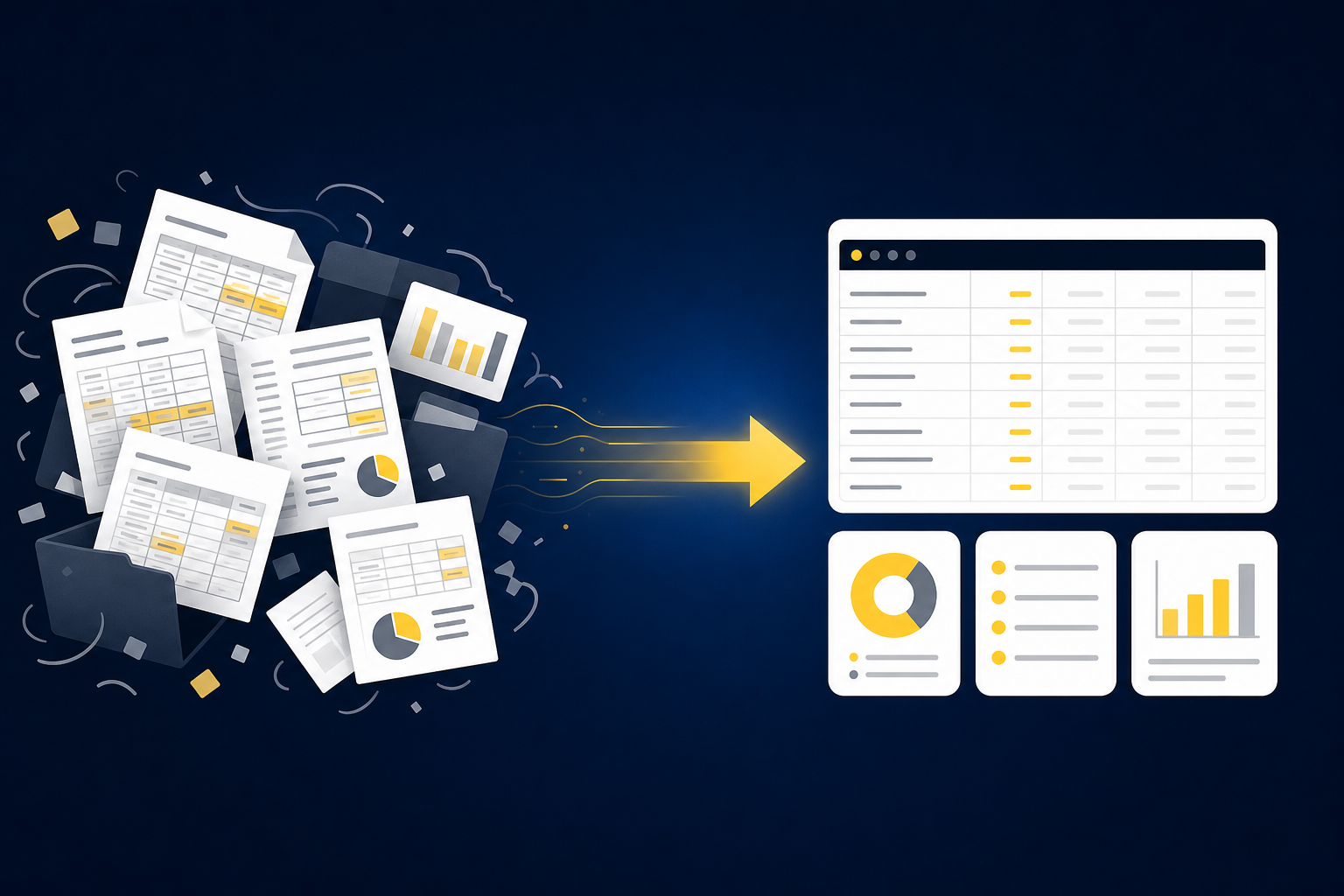
The gap matters because accounting implementation crosses several systems. Source documents may arrive as PDFs, spreadsheets, processor exports, portal downloads, or emailed statements. The prepared output may include a workpaper, reconciliation, support schedule, or journal-entry draft. Sage Intacct or QuickBooks Online remains the system of record, but the work between source and ledger still needs explicit ownership.
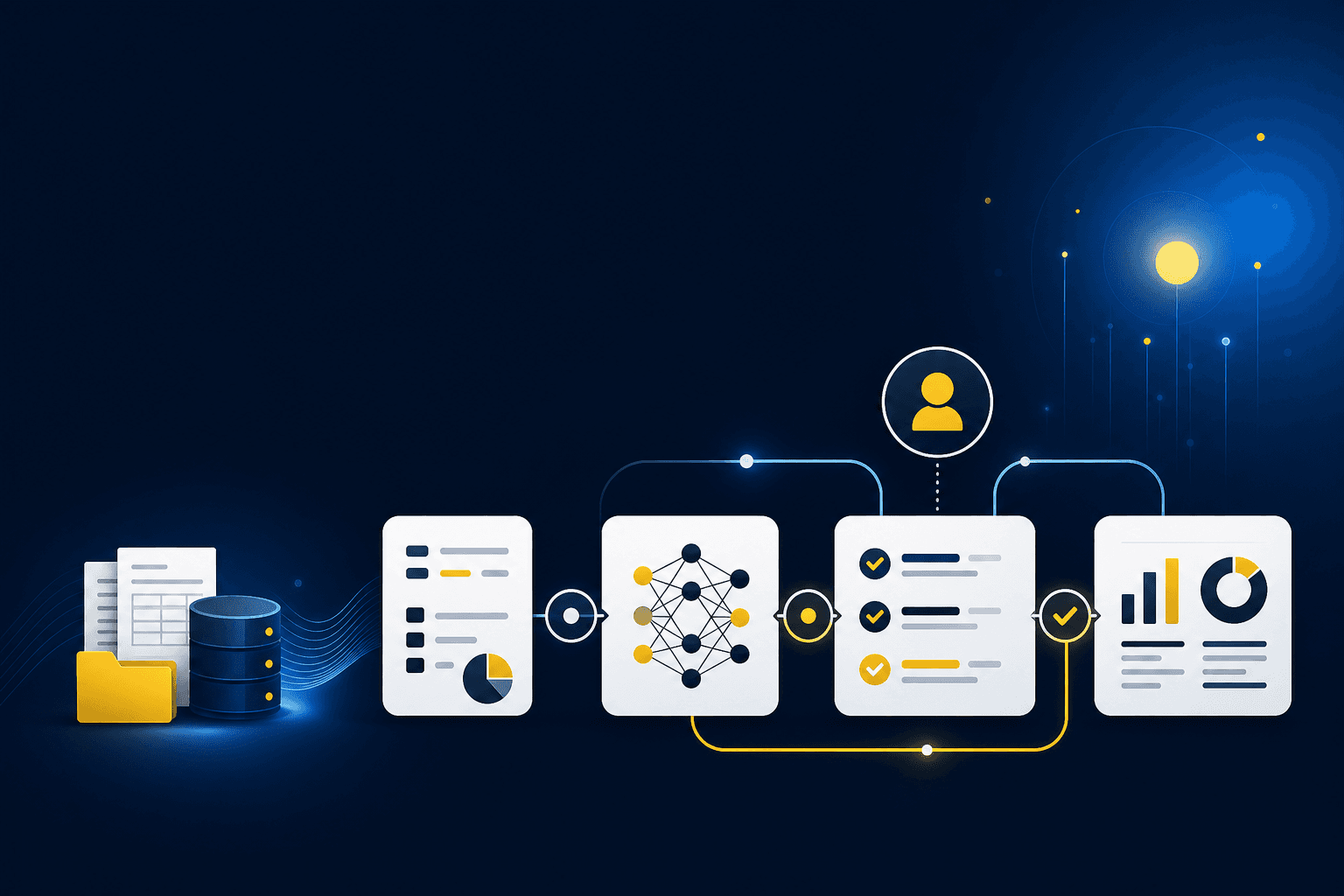
A stronger evaluation shows that full path early. Source files enter, the team’s mappings and historical treatment are applied, exceptions move to the reviewer, and approved output reaches the GL only after signoff. If you want to inspect that preparation and review path before setting your own launch gates, See Truewind in action as part of the implementation discussion.
Start with the workflow, not the vendor questionnaire
A security questionnaire can tell you how a vendor handles certain controls. It cannot define the accounting workflow your company is approving. Finance has to do that first, because only the accounting team knows which sources matter, how the work is prepared today, and what evidence a reviewer expects before approving an entry.
Start with one recurring workflow that already has a known answer. A prepaid rollforward, donation reconciliation, processor settlement, or credit-card coding workflow can work when the inputs recur and the prior output is available. The first workflow should be bounded enough that the reviewer can compare the prepared result with the last approved workpaper and explain every difference.
A documented customer example shows why that scope matters. At one accounting firm, a transaction-categorization workflow reduced the time spent categorizing credit-card transactions by approximately 75%. That is one customer outcome, not an implementation benchmark. The useful lesson is narrower: the firm started with a specific recurring task whose current process and output were already understood.
Finance should document the workflow in accounting terms before asking other teams to approve it:
- The source files and systems used each period
- The prior workpaper, entry, or schedule that represents the known result
- The account mappings, dimensions, cutoffs, and classifications applied
- The items that require reviewer judgment
- The artifact the reviewer expects to receive
- The system that records the approved result
- The person authorized to approve the handoff
That description gives IT and security something concrete to review. Instead of approving “AI for accounting,” they are reviewing a defined path from specified source files to a specified accounting artifact, with a named reviewer between preparation and posting.
The implementation checklist finance should bring to IT and security
The checklist should follow the work in the order it happens. A generic software review often starts with the vendor and ends with the integration. Accounting implementation needs to start with source, move through preparation and review, and end at the ledger.
1. Inventory every source the workflow needs
List each input used to prepare the selected workflow. Include recurring statements, exports, prior workpapers, ERP balances, and any supporting file the preparer checks before completing the work. Record the source owner, delivery method, expected timing, and period covered.
Do not label the step “data extraction” and move on. A custodian statement or donor-platform export has accounting meaning that has to survive intake. The implementation team needs to know what the document represents, which entity or fund it belongs to, how completeness is checked, and how the current period differs from the prior one.
2. Define the known answer
A pilot needs an approved result against which the prepared output can be compared. Supply the prior workpaper, associated source documents, relevant ERP balance, and final journal entry when those artifacts are part of the process. The reviewer should also explain any manual adjustments or exceptions that are not evident from the files.
Without a known answer, the team can inspect whether an output looks reasonable but cannot determine whether the workflow reproduced its accounting process. Controlled iteration begins with comparison. Differences are reviewed, corrections are captured, and expansion happens only after the output becomes understandable and repeatable.
3. Preserve mappings and dimensions
Integration is not complete because a journal-entry draft can move into the ERP. The workflow also has to preserve the coding the ledger requires. For a nonprofit, that may include fund, program, chapter, or purpose. For a family office, entity boundaries and account-specific treatment may be the central requirement.
Document every required dimension and the rule that produces it. Identify which rules can be applied from historical treatment and which cases always need judgment. If an allocation rule changes, the reviewer should see the change rather than discover it after the output reaches Sage Intacct or QuickBooks Online.
4. Map the complete data path
IT should be able to follow the workflow from the first source file to the approved ledger output. The map should identify where files enter, which systems are connected, what information is prepared, and where reviewer action occurs. It should also show whether the workflow produces a reconciliation, schedule, workpaper, journal-entry draft, or some combination of those artifacts.
The handoff to the GL deserves its own gate. A production workflow should specify what reviewer confirmation is required, what coding and source references accompany the output, and what happens when an item remains unresolved. “Integrated with the ERP” is not enough detail for implementation approval.
5. Prepare the security evidence before review begins
Security review becomes a critical path when finance submits a vendor request without describing the data involved. Give security an inventory of the source types, the roles that need access, and the actions each role must perform. Ask the vendor for evidence covering its data-handling, access, retention, and incident processes according to your company’s requirements.
Finance also needs to identify the accounting consequence of each control. Access is not only a user-management question; it determines who can prepare, adjust, and approve work. Retention is not only a storage question; it affects whether a reviewer can trace a workpaper back to the source and decisions that produced it.
A product demonstration can bring those abstract questions down to the actual review surface. To examine how source links, exceptions, reviewer actions, and the ERP handoff fit together, Book a Truewind demo with the accounting and technical owners in the same session.
6. Define the exception boundary
An exception is any item the workflow should not resolve without accounting judgment. Missing statements, unexpected balance changes, mixed personal and business activity, inconsistent classifications, and unreconciled timing differences are examples supported by recurring accounting workflows. Your list will depend on the process being implemented.
For each exception, name the reviewer and the evidence needed to make a decision. Also define what the workflow does while the item is unresolved. A production control is stronger when the system surfaces an item with its source context and waits for review than when the project assumes every item should pass through automatically.
7. Specify the review artifact
The reviewer should not have to reconstruct the preparation from a journal-entry total. Define the workpaper or reconciliation the workflow must produce and the information it must contain. Source, calculation, accounting treatment, exceptions, and reviewer action belong together when they are needed to understand the result.
Acceptance criteria should be inspectable. The reviewer must be able to trace material lines to source, understand how mappings and dimensions were applied, identify what changed from the known answer, and confirm the final treatment. A polished output without that trail may be useful for presentation, but it is not enough for accounting approval.
8. Assign owners to launch gates
Shared responsibility often becomes unowned work. Give every gate one accountable owner, even when several teams contribute evidence. Finance owns the workflow definition and accounting acceptance criteria. IT owns the technical dependencies assigned to it, while security owns its review and the accounting reviewer owns final signoff on prepared work.
A practical gate table can look like this:
| Launch gate | Evidence required | Suggested owner |
|---|---|---|
| Workflow scope | Sources, current process, output, exceptions | Accounting manager |
| Known-answer test | Prior approved workpaper and comparison | Workflow reviewer |
| Data review | Source inventory and role requirements | Security owner |
| Integration readiness | ERP path, dimensions, permissions, handoff | IT owner |
| Accounting acceptance | Traceable output and resolved exceptions | Controller |
| Production release | Completed approvals and named support path | Project owner |
The titles may differ inside your company. The important part is that no gate depends on an unnamed group approving the project later.
A pilot and a production workflow prove different things
A low-risk pilot should limit scope without avoiding the hard parts of the accounting process. It can use one workflow, a known set of source files, and a prior approved result. The reviewer can compare outputs without allowing the workflow to affect the live ledger.
Production readiness adds operating controls. The source flow has to recur, access has to match real roles, exceptions need owners, and the ERP handoff must follow reviewer approval. The team also needs a process for handling source changes, new edge cases, and corrections after launch.
| Pilot question | Production question |
|---|---|
| Can the workflow reproduce a known result? | Can it do so each period under defined controls? |
| Can a reviewer explain the differences? | Are differences routed to the right reviewer? |
| Does the output match the expected workpaper? | Does the workpaper retain source and review history? |
| Can the team test the ERP handoff? | Can approved output reach the ERP with required coding intact? |
| Can the team correct the result? | Are corrections available as context for later periods? |
Do not use pilot success as automatic production approval. Treat it as evidence for the next gate. The right sequence is to reproduce, compare, correct, approve, and then expand.
How Truewind fits the implementation path
Truewind sits between recurring source material and Sage Intacct or QuickBooks Online. It ingests supported source files, structures them for downstream accounting work, and applies the team’s existing rules and historical treatment. The output can include workpapers, reconciliations, schedules, and journal-entry drafts for accountant review.
Multi-source reconciliation aligns activity across systems that describe the same transaction differently. Unreconciled items and timing differences are surfaced with source context rather than forced to agree. Workpaper generation uses prior workpapers, current source documents, and ERP balances to prepare the next period while keeping the reviewer responsible for treatment and signoff.
The review workflow presents prepared work alongside source links and exceptions. Accountants can confirm, adjust, or return items to preparation, and captured decisions can inform later periods. After reviewer confirmation, structured output can be pushed to Sage Intacct or QuickBooks Online with coding, dimensions, and source references preserved. Truewind does not post without accountant approval, and it does not replace the GL.
That operating model is not a fit for a buyer seeking autonomous posting or a replacement for the system of record. It is designed for teams that already have a recurring close, prior examples, and a reviewer who owns the result. If those prerequisites match your implementation plan, Get a Truewind demo to test one bounded workflow against its known answer.
Use one checklist across accounting, IT, and security
Pilot delays are rarely solved by adding another finance-only task list. Accounting can define the treatment but cannot approve every technical dependency. IT can map the connection but cannot decide whether a workpaper is reviewable. Security can assess data handling but needs finance to explain which data and actions the workflow requires.
A shared checklist puts those decisions in sequence. Choose the recurring workflow, collect the known answer, inventory the sources, map the data path, define exceptions, prepare security evidence, and assign each launch gate to one owner. Production approval then rests on visible evidence instead of a late request for general signoff.
The goal is not to remove review. It is to make preparation repeatable and review specific. When accounting, IT, and security agree on the evidence required at each gate, a successful pilot has a defined path into production rather than another round of unanswered questions.
Frequently Asked Questions
How do I define the known answer for my workflow?
To define the known answer for your workflow, start by gathering the prior approved workpaper and any associated source documents. Ensure you also include relevant ERP balances and the final journal entry, as these will serve as your benchmark for comparison. This known answer is crucial because it allows the reviewer to assess whether the prepared output accurately reproduces the expected results. By clearly documenting this, you create a solid foundation for your pilot and ensure that the workflow can be evaluated effectively.
What if my source files come in different formats?
If your source files arrive in various formats, you should first standardize them before starting your accounting process. Truewind can help by ingesting these raw materials, such as bank statements, credit card activity, and PDFs, and converting them into structured workflows. This way, you can reduce the manual effort of reformatting each document and ensure that all inputs are organized for downstream accounting tasks. Consistency in your source files is key to maintaining an efficient workflow.
How do I prepare security evidence for my review?
To prepare security evidence, create a comprehensive inventory of the source types your workflow will use. Document the roles that need access and the specific actions each role must perform. This information is critical for your security review, as it helps clarify how data will be handled throughout the workflow. Additionally, ensure you request evidence from your vendor regarding their data-handling practices, access controls, and incident response protocols. This preparation will facilitate a smoother review process.
When should I assign owners to launch gates?
You should assign owners to launch gates early in the implementation process. Each gate should have a clear, accountable owner who understands their responsibilities. For example, the accounting manager might own the workflow scope, while the IT owner manages integration readiness. Assigning ownership helps ensure that every aspect of the workflow is monitored and that accountability is maintained throughout the implementation. This structured approach prevents tasks from falling through the cracks and helps facilitate smoother approvals.
Why does my pilot need a defined path into production?
Your pilot needs a defined path into production to ensure that all teams—accounting, IT, and security—are aligned on the workflow's requirements and expectations. A clear path allows you to identify potential issues early and address them before moving to production. It ensures that the pilot does not just demonstrate that the workflow can produce a result, but also that it can operate within the company's control environment. This alignment is crucial for a successful transition from pilot to full production.
Turn this into a close-ready workpaper
Start with sample files or upload your own statements to see how Truewind prepares review-ready workpapers and journal entries.