
The controller opens the restricted-fund workpaper and sees a clean total. The donor platform supports one number, the processor settlement supports another, and the bank shows a net deposit after fees and refunds. None of those sources is wrong. None is sufficient on its own.
Someone still has to determine whether every statement arrived, preserve the fund and program dimensions, reconcile timing differences, and document the treatment a reviewer will approve. Sage Intacct or QuickBooks Online can record the final entry, but the ledger cannot assemble that evidence. The operational work happens before anything is ready to post.
Several accounting automation myths that slow nonprofit adoption begin with the same mistake. They treat preparation as data entry and assume the goal is to remove people from the process. In practice, useful automation reads the source material, applies the accounting team’s established logic, prepares the expected workpaper, and sends exceptions to the accountant who owns the result.
Myth 1: A clean bank feed means the work is done
A bank feed shows that money moved. It does not necessarily show which donations made up a deposit, which processor fees were withheld, whether a refund belongs to the current period, or how the activity should be split across funds and programs. The accounting entry depends on context that lives outside the bank.
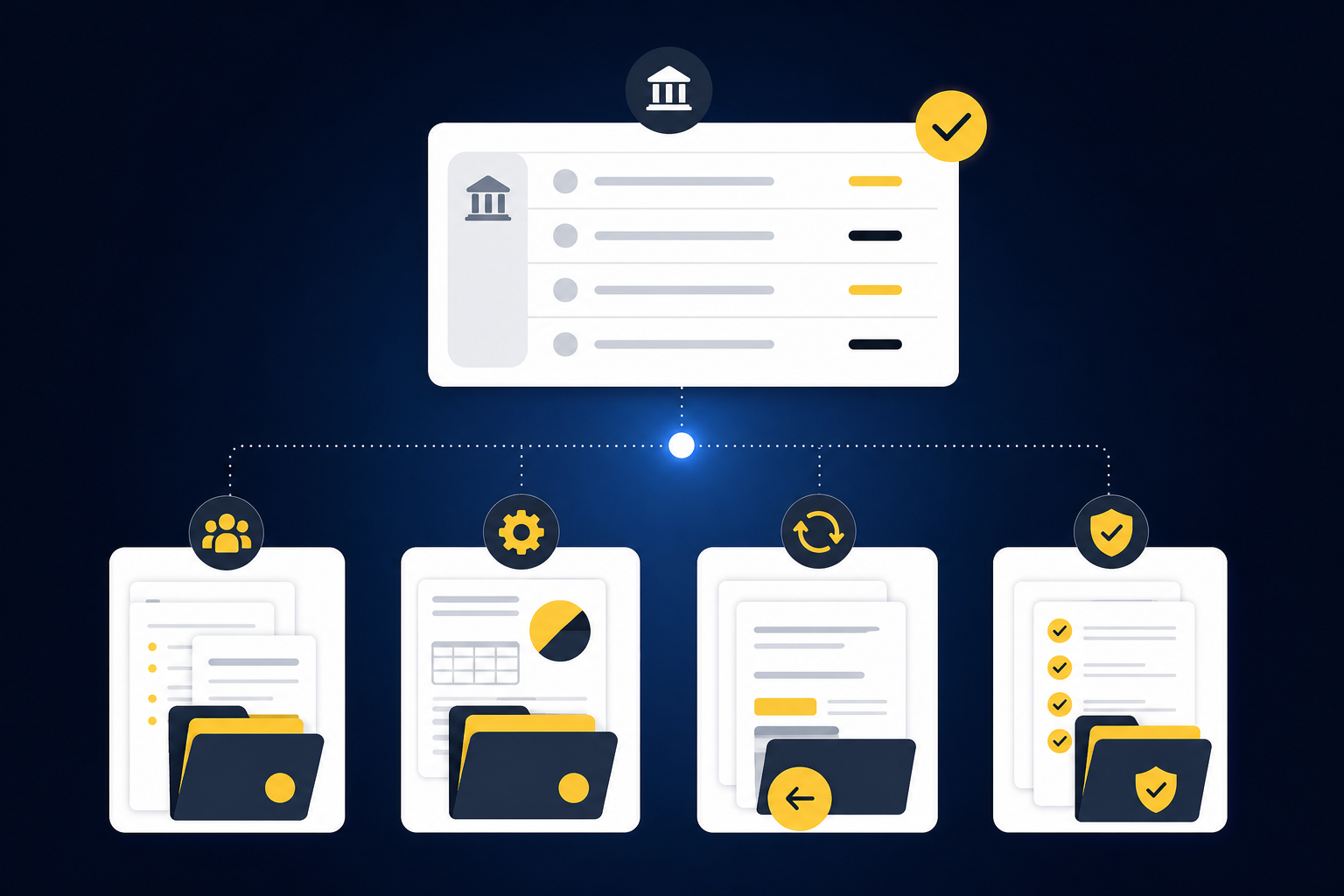
That context may sit across donor-platform exports, processor reports, grant records, emailed support, and prior workpapers. Each source describes part of the same activity in a different structure. The preparation work is combining those sources, checking totals, applying dimensions, and producing a reconciliation that shows how the bank deposit became a journal-entry draft.
A tool that imports bank activity and proposes a category has addressed one part of that workflow. It has not completed the donation reconciliation. For nonprofit teams, the meaningful unit of automation is the whole recurring process from source files through review, not the single transaction visible in the feed.
Truewind’s multi-source reconciliation brings donor, processor, and bank activity into one preparation workflow, then surfaces fees, refunds, timing differences, and unreconciled items with their source context. The accountant still decides how exceptions should be treated and approves the prepared output. If that review pattern matches the work your team owns, you can See Truewind in action and inspect how the source trail reaches the workpaper.
Myth 2: Nonprofit accounting complexity is mainly regulatory
Regulatory and reporting requirements matter, but much of the daily burden is operational. Before a team can answer an auditor, funder, board member, or program leader, it has to assemble evidence scattered across systems. The difficulty is not only knowing the correct treatment. It is applying that treatment consistently to incomplete or differently structured inputs every period.
A restricted gift may begin in a donor platform, settle through a payment processor, arrive at the bank net of fees, and require coding across purpose, program, or fund dimensions. A grant may have separate support for the award, spending, restriction, and reporting period. When those records live in different places, the workpaper becomes the place where the accounting story has to come back together.
That distinction changes what you should automate. A generic compliance checklist cannot reconcile the underlying activity. Useful preparation has to preserve the source trail, carry the correct dimensions, show the calculation, and identify where current-period activity does not follow the established pattern.
Nonprofit accounting complexity is therefore not solved by adding another report at the end. It is reduced by making the recurring preparation before that report more consistent and reviewable. The work still requires accounting judgment, but the reviewer should not have to reconstruct every source file before that judgment can begin.
Myth 3: Automation should apply one standard template
Two nonprofits can run the same donor platform and still account for similar activity differently. Their charts of accounts may differ. Their fund structures, allocation rules, cutoffs, and reviewer expectations may differ too. A standard template can organize a workflow, but it cannot decide the accounting policy a team has already established.
The more useful starting point is the team’s prior approved work. Previous workpapers show which sources were used, how classifications were split, which dimensions were preserved, and where the reviewer corrected the initial treatment. SOPs and prior entries add context, but the approved result shows how the process operated in practice.
Truewind uses those historical examples and reviewer corrections when preparing the next period. Proposed coding stays bounded by the team’s rules, and later changes remain subject to review. The system does not invent a new policy because a transaction looks similar to something it has seen before.
Buyer language around bounded workflows is often direct. One buyer described the result as, “Categorization is accurate, and we stopped having to double-check everything.” Another said, “It’s essentially perfect.” Those statements describe individual experiences, not a result every team should assume, but they point to the practical standard: automation is useful when the prepared work follows the treatment the reviewer already recognizes.
A product evaluation should therefore include a real prior-period workpaper, the underlying source files, and the final approved entry. Truewind can use those materials to reproduce the workflow and put the differences in front of your reviewer. To evaluate that process against one of your own recurring reconciliations, Book a Truewind demo with a known workflow in mind.
Myth 4: Better automation should eliminate exceptions
An exception is not proof that automation failed. A missing processor statement, an unexpected balance movement, a new restriction, or an inconsistent classification may be exactly what the accounting team needs to investigate. The failure would be allowing the item to pass through because the output looks complete.
Nonprofit workflows create legitimate edge cases. A donor may change the purpose of a gift. A program may use a new department code. A refund may settle in a later period than the original donation. Static rules cannot resolve every case without risking a treatment the reviewer never approved.
Truewind compares current-period preparation with prior workpapers and the learned process, then routes items that do not fit to the accountant with source links. It does not force unreconciled totals to agree or resolve a novel classification on its own. Reviewer decisions are captured so later periods can follow the confirmed treatment when a similar item appears.
The right review surface separates prepared work from judgment work. Accountants can confirm the recurring treatment, adjust a proposed classification, or send an item back for preparation. Nothing leaves review without sign-off, and the exception remains visible until a person decides what should happen.
Teams evaluating automation should ask where exceptions appear, what evidence accompanies them, and whether the workflow preserves the reviewer’s decision. A system that claims to handle every item without escalation is not necessarily giving you more control. It may only be making the unresolved work harder to see.
Myth 5: Trust comes from turnkey autonomy
Trust in accounting automation does not begin with turning on a workflow and walking away. It begins with a bounded process whose answer is already known. The team compares the prepared work with the approved result, reviews every difference, and decides whether the source trail and accounting treatment are understandable.
A recurring donation reconciliation is a strong candidate when the source inputs are available and the reviewer knows what the finished workpaper should contain. The same is true for a prepaid schedule, fixed-asset rollforward, or processor settlement workflow. A broad promise to automate the close is harder to evaluate because the team cannot isolate what worked, what changed, and what still requires judgment.
Controlled iteration gives the reviewer evidence. The first period shows whether the workflow found the right sources, applied the right mappings, and produced the expected support. Corrections then become operating context for the next period, while policy changes and unfamiliar items remain explicit review decisions.
Customer language can sound much bigger than the implementation path that produced it. A marketplace customer said, “If I had to describe Truewind in one word: Lifechanging”. An accounting-firm customer said, “Truewind automates a huge chunk of that busywork.” The same customer added, “It’s not just about making bookkeeping simpler; it’s about freeing up teams, and helping them focus on higher-value projects.”
Those are individual customer experiences, not standard outcomes. The mechanism underneath them is less dramatic and more useful: choose a recurring workflow, compare prepared output with a known answer, capture reviewer corrections, and expand only after the team can trace the work. Confidence grows because the process becomes inspectable, not because review disappears.
Myth 6: AI should remove accountants from the close
The accountant owns the policy, the treatment, and the final approval. Automation can prepare source files, propose coding, update schedules, reconcile activity, and draft journal entries. It should not decide that a new restriction is immaterial, change an allocation rule, or post an unapproved entry to the GL.
That boundary matters most in nonprofit accounting because similar transactions can carry different obligations. Two donations of the same amount may belong to different funds. A familiar vendor may support multiple programs. A single deposit may combine activity that needs separate dimensional treatment.
Removing the reviewer would not simplify those decisions. It would hide them inside the workflow. Human-in-the-loop review keeps the accounting team responsible while moving repetitive preparation into a system where the source, calculation, proposed treatment, exceptions, and reviewer action remain connected.
The capacity gain comes from changing what reaches the accountant. Instead of rebuilding every reconciliation from raw exports, the reviewer receives prepared work and a visible queue of items that need a decision. Experienced staff can spend more of the close investigating changes and explaining results, while retaining ownership of every approved output.
Truewind is not designed for teams seeking autonomous posting without reviewer sign-off. It prepares the work, records corrections, and waits for accountant confirmation. That is a constraint by design because the goal is controlled preparation, not unattended accounting.
Myth 7: Better automation requires replacing the general ledger
Sage Intacct and QuickBooks Online already serve as the system of record for many nonprofit teams. Replacing either system would not remove the work of reconciling donor platforms, processors, banks, grants, and supporting schedules. The operational gap sits upstream of the ledger.
A preparation layer addresses that gap without asking the GL to become something it was not built to be. Source files enter the workflow, historical treatment and explicit rules guide preparation, and the resulting workpaper or journal-entry draft goes to the accountant. Only approved output moves downstream.
Truewind supports that model through its Sage Intacct and QuickBooks Online integrations. After reviewer confirmation, structured output can move to the connected ERP with coding, dimensions, and source references preserved. Truewind does not become the ledger, and it does not push an entry before the accountant approves it.
That division of responsibility is useful. The ERP records the books and supports downstream reporting. The preparation layer assembles the evidence, applies the team’s process, surfaces exceptions, and produces the artifact the reviewer expects.
For nonprofit teams, the question is not whether to keep the GL or adopt automation. You can keep the system of record and improve the work feeding it. If you want to test that model with a donation reconciliation, rollforward, or supporting schedule your team already runs, Get a Truewind demo and bring the prior approved workpaper.
Start with one workflow your reviewer already understands
A good first workflow is recurring, bounded, and supported by accessible source files. It has a prior approved result, a reviewer who understands the treatment, and enough repetition for corrections to matter in later periods. The point is not to choose the broadest process. It is to choose one whose preparation can be inspected without ambiguity.
Give the workflow its real inputs. For a donation reconciliation, that may include the donor export, processor settlement detail, bank activity, prior workpaper, and approved journal entry. Keep the relevant fund and program dimensions in scope, because removing them would make the test easier while making the result less useful.
Then compare the prepared work with the known result. Check whether totals tie to source, whether dimensions survived, whether timing differences are visible, and whether exceptions reached the reviewer with enough context to decide. Capture the corrections and run the workflow again before expanding.
Accounting automation earns a place in the close when it can reproduce the team’s process without hiding the work. The accountant remains responsible for judgment and approval. What changes is the amount of source assembly required before that judgment can begin.
Frequently Asked Questions
How do I handle edge cases effectively?
To manage edge cases in accounting, start by documenting any unusual transactions or exceptions as they arise. This includes changes in donor restrictions or new classification codes. Next, ensure that these edge cases are routed to the appropriate accountant for review. Truewind helps surface these exceptions with the necessary source context, allowing for informed decision-making. Finally, capture the decisions made during the review process to inform future workflows and maintain consistency.
What if I have multiple source documents to reconcile?
When reconciling multiple source documents, begin by gathering all relevant materials, such as bank statements, processor reports, and prior workpapers. Use Truewind's multi-source reconciliation feature to align activity across these documents. This tool prepares a review-ready reconciliation that highlights discrepancies and exceptions, ensuring that all relevant context is preserved. After preparation, have an accountant review the reconciliation to confirm accuracy before posting any entries.
Can I automate the preparation of journal entries?
Yes, you can automate the preparation of journal entries by using Truewind's capabilities. Start by ingesting your source documents, such as bank statements and processor reports. Truewind will then categorize transactions based on your existing accounting rules and prior corrections. The output will be a draft journal entry that is ready for accountant review. Remember, no entry is posted without human confirmation, ensuring that all decisions align with your established accounting policies.
When should I review prepared workpapers?
You should review prepared workpapers after Truewind has transformed your source documents into structured outputs. It's essential to check these workpapers before any entries are posted to the general ledger. Focus on verifying that totals match the source documents, dimensions are preserved, and any exceptions are clearly noted. This review process allows accountants to maintain control over the final output while ensuring that all necessary corrections are captured.
Why does my team need to review exceptions?
Reviewing exceptions is crucial because it allows your team to maintain control over the accounting process. Exceptions can indicate missing information or unusual transactions that require further investigation. Truewind surfaces these exceptions with full source context, enabling accountants to make informed decisions. This review process ensures that no unapproved entries are posted to the general ledger, preserving the integrity of your financial reporting.
Turn this into a close-ready workpaper
Start with sample files or upload your own statements to see how Truewind prepares review-ready workpapers and journal entries.