
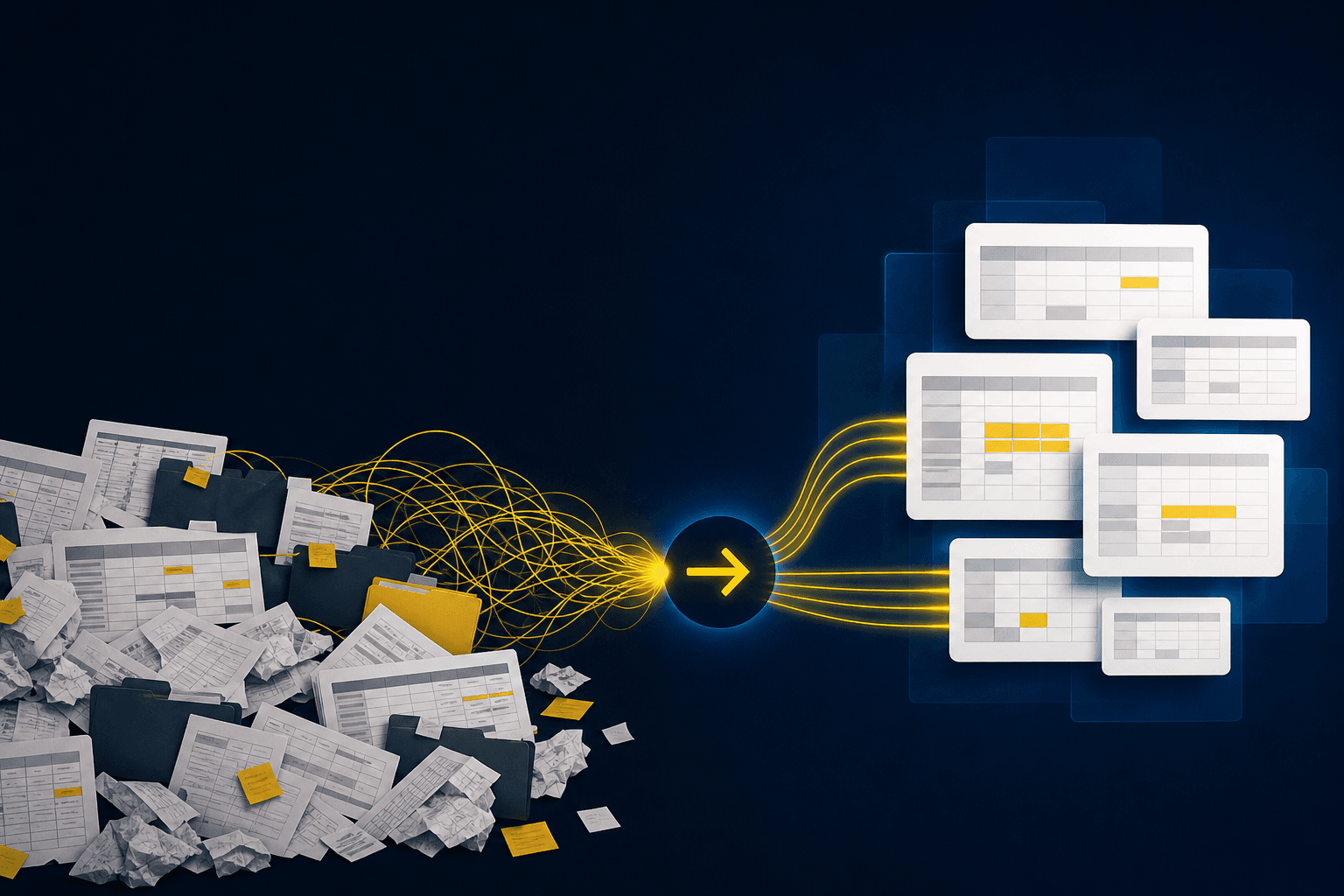
A preparer opens last month’s brokerage rollforward, copies it into a new workbook, and starts replacing statements one account at a time. The process is familiar. It is also carrying more accounting logic than the workbook shows: which entity owns the activity, how fees are classified, what cutoff applies, and which changes require reviewer attention.
The question is not whether AI can read the statement. The question is whether your close has enough recurring structure for AI to prepare the work the way your team already expects it. Teams that are ready usually have known source files, prior approved workpapers, established accounting treatments, and a reviewer who owns the result. Their problem is not a lack of process. Their problem is repeating that process by hand every period.
The seven signs below point to the same conclusion. Your finance team may be ready when recurring preparation is consuming the time that should be reserved for exceptions, investigation, and review.
1. Your close still starts with source-file cleanup
Your ERP may be current while the work feeding it remains scattered across PDFs, spreadsheets, processor exports, portal downloads, and emailed statements. Someone has to determine what each document represents, whether it is complete, and how its activity maps to the ledger. Only then can coding or reconciliation begin.
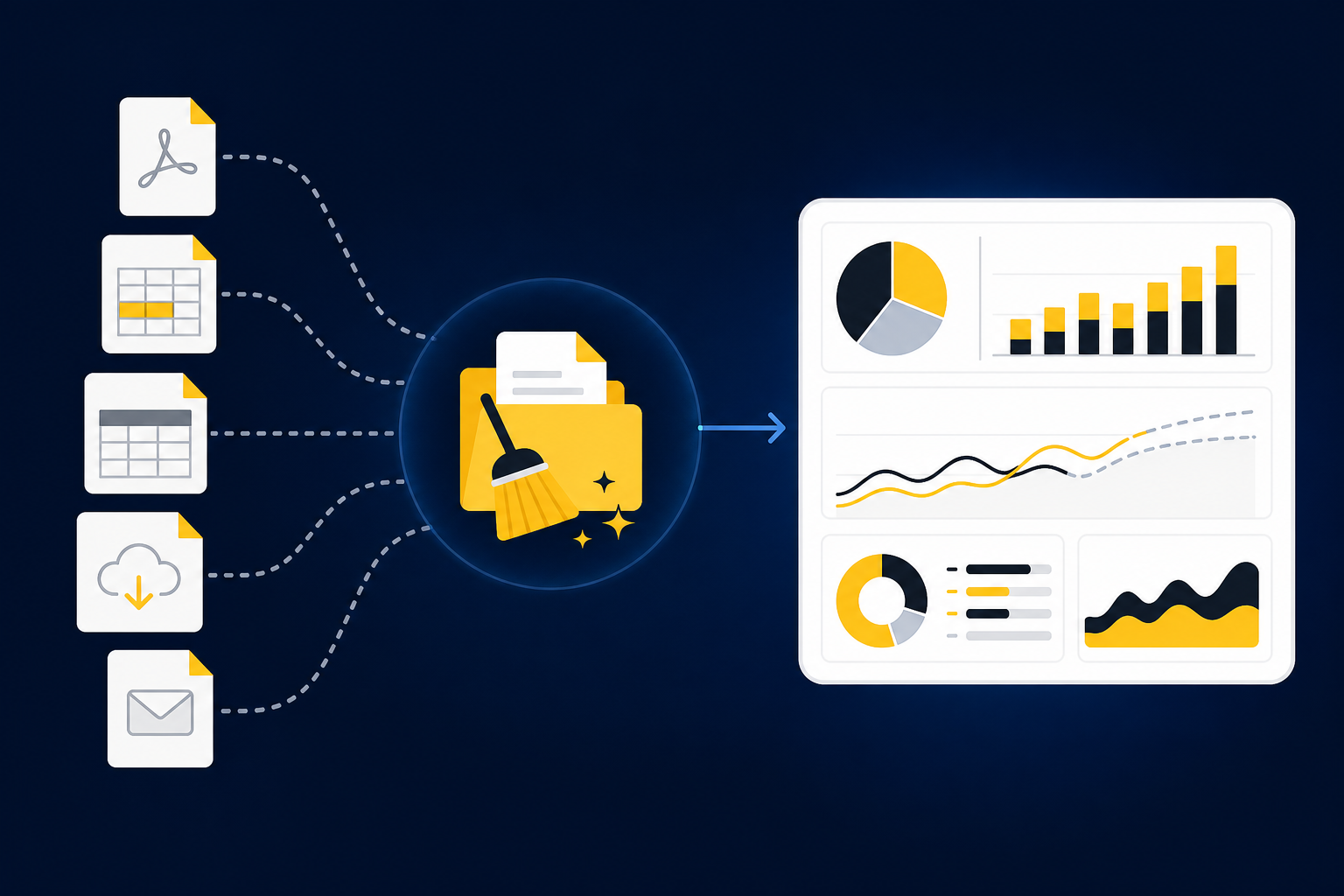
That work is more than data extraction. A processor export can describe deposits differently from the bank. A donor platform may preserve fund or campaign detail that disappears when cash reaches the bank. A custodian statement may combine trades, income, fees, and activity across accounts with different entity treatment. Reading the file is one step. Preparing accounting support from it is the actual job.
Source-file inconsistency is a strong readiness signal because the workflow already repeats. Your team receives similar inputs each period, applies known treatments, and produces a familiar workpaper or support schedule. The formats may vary, but the accounting objective does not.
Truewind’s multi-source ingestion accepts recurring financial inputs and structures them for coding, reconciliation, and workpaper preparation. Source files stay attached to the workflow, so the output can be traced back to the documents that produced it. If that path from document intake to prepared work is where your close is getting stuck, you can See Truewind in action and inspect how the preparation layer fits before anything reaches the GL.
2. Your team rebuilds the same workpapers every month
A recurring workpaper should carry the process forward. In many close workflows, the workbook carries only the prior numbers. The preparer still has to locate the new source files, update balances, rebuild supporting schedules, apply the prior treatment, and identify what changed.
The repetition is not proof that the accounting work lacks value. It means the team has already defined a process worth preserving. Prior workpapers contain account mappings, classification decisions, cutoff logic, allocation methods, and reviewer corrections. Those artifacts show how the team expects the work to be prepared.
One buyer described the repetitive assembly around that process plainly: “Truewind automates a huge chunk of that busywork.” The important word is not automates. It is chunk. Accounting judgment remains with the team, while the recurring preparation surrounding that judgment becomes a defined workflow.
Truewind’s workpaper generation and rollforward capability loads the prior workpaper, current source documents, and ERP balances into the next period. It rolls balances forward, updates supporting schedules, prepares any required journal-entry draft, and surfaces exceptions for review. It follows the team’s existing treatment rather than inventing policy, and nothing posts without accountant approval.
3. The right treatment lives in prior files and reviewer memory
Two accounting teams can prepare the same type of reconciliation and still handle it differently. Their account mappings may differ. So can their cutoffs, dimensions, classification splits, and review conventions. A generic template can reproduce the shape of a workpaper without reproducing the process that makes it correct for your books.
Look at what happens when a preparer encounters an item that does not match the obvious rule. They open the prior-period workpaper, search reviewer notes, inspect the last journal entry, or ask the manager how a similar item was handled. The answer exists, but it is spread across files and people.
That pattern signals a strong use case for historical-example learning. Truewind records confirmed treatment and reviewer corrections against the workflow, then uses that history when preparing later periods. Preparers and reviewers can inspect what changed and why. Novel items still go to the accountant because historical treatment does not authorize the system to make a new policy decision.
A lead-generation company using Truewind described the resulting coding experience in direct terms: “It's essentially perfect. Categorization is accurate, and we stopped having to double-check everything.” That is an observed customer statement, not a promise that every workflow will produce the same experience. The mechanism matters more: coding follows user-defined rules and prior corrections, while the accountant confirms the proposed treatment.
4. Review means re-performing preparation
A reviewer should inspect the source, calculation, accounting treatment, and exceptions. They should not have to reconstruct all four because the prepared output arrived as a clean number with no visible path behind it. When review starts by reopening source files and rebuilding spreadsheet logic, the preparation is not review-ready.
Clean-looking output can make that problem harder to spot. The journal entry may balance. The reconciliation may tie. Neither tells the reviewer whether the correct source was used, whether a dimension was dropped, or whether an unusual balance was forced into the prior treatment.
The workpaper is where automation and judgment meet. Truewind presents prepared workpapers, reconciliations, schedules, and journal-entry drafts alongside source links and exceptions. Accountants can confirm the work, adjust it, or send it back to preparation. Reviewer actions remain attached to the workflow, and nothing leaves review without sign-off.
Finance teams evaluating this model should examine the review surface before they evaluate the final entry. If your reviewers currently spend their time reconstructing how work was prepared, Book a Truewind demo to follow one recurring workflow from its source documents through exception review and approval.
5. The same exceptions keep returning without becoming part of the process
Exceptions do not mean automation failed. Missing statements, unexpected balance changes, mixed personal and business activity, and inconsistent classifications belong in front of an accountant. A system that hides those items or forces them into a standard rule creates more review work, not less.
The readiness signal appears when your team can distinguish routine preparation from judgment items. Most activity follows an established process. A smaller set needs a person to investigate the source, decide the treatment, or request additional support. The workflow becomes useful when it prepares the known work and makes the boundary visible.
Truewind compares current-period preparation with prior workpapers and the learned process. Items outside that pattern are routed to the reviewer with source context. The platform does not resolve exceptions autonomously or change the underlying accounting policy. Reviewer decisions can inform later periods when a similar item returns.
Exception handling also changes what control looks like. Manual touch is not the same as control if the preparer has to search every line to find the few that require judgment. A controlled workflow shows what followed the approved process, what did not, and who made the final call.
6. One activity has to be reconciled across several systems
A bank feed shows cash. It does not necessarily show the gross activity, fees, refunds, timing differences, funds, programs, or entities behind the deposit. When the same economic activity appears differently across the bank, a processor, a donor platform, a custodian, or an ERP balance, reconciliation becomes a multi-source accounting problem.
Nonprofit teams see that problem when donation activity passes through a platform and one or more payment processors before reaching the bank. Family-office teams see it when custodian statements, investment-vehicle support, and ERP balances describe related activity in different structures. CAS practices see another version across clients, each with its own source files and accounting rules.
Truewind’s multi-source reconciliation aligns activity across connected sources using historical treatment. It prepares the reconciliation, support schedule, and any required journal-entry draft while surfacing timing differences and unreconciled items for accountant review. It does not force totals to agree or post a reconciling entry without approval.
One buyer framed the broader value this way: “It's not just about making bookkeeping simpler; it's about freeing up teams, and helping them focus on higher-value projects.” The shift is from assembling the same support again to investigating what changed and deciding what it means. The accountant still owns that decision.
7. You have a bounded workflow with a known answer
The first workflow should not be the broadest or most impressive process in the close. It should be recurring, bounded, supported by known inputs, and easy for a reviewer to inspect. A prior approved workpaper gives the team a reference point for comparing prepared output with the result it already trusts.
Prepaids and fixed assets can fit that pattern when the team has prior schedules and established treatment. So can donation reconciliations, processor settlement coding, and brokerage rollforwards. The right starting point depends on whether the source files are available, the accounting process is understood, and the reviewer can explain why the prior result was approved.
Controlled iteration matters because accounting workflows contain more local logic than a software demonstration can show. Start with one process. Compare the prepared work with the known result, review the differences, capture corrections, and repeat the workflow in the next period. Expansion should follow demonstrated reviewability, not a promise of autonomous accounting.
A marketplace company that adopted Truewind later summarized its experience with the line, “If I had to describe Truewind in one word: Lifechanging”. Another customer said, “Truewind has been amazing.” Those statements describe individual experiences. Your evaluation should still begin with the workpaper, the source trail, and the reviewer controls your team will use.
What the preparation layer should do
Readiness does not mean replacing Sage Intacct or QuickBooks Online. Both systems remain the system of record. The preparation layer belongs upstream, between the source materials your team receives and the approved accounting output that enters the ledger.
Truewind structures recurring source files, applies the team’s existing coding and allocation rules, and prepares workpapers, reconciliations, schedules, and journal-entry drafts. Historical examples provide operating context. Multi-source reconciliation addresses activity described differently across systems. Anomaly detection separates the items that follow the known process from those requiring judgment.
The review workflow keeps the accountant in control. Prepared items include source links, while exceptions arrive with the context required to investigate them. Reviewer corrections stay with the workflow and can inform later periods. The audit trail preserves the relationship between source material, preparation steps, coding decisions, and reviewer actions, but it does not replace formal audit procedures.
After sign-off, approved structured output can move into Sage Intacct or QuickBooks Online with coding, dimensions, and source references preserved. Native ERP coverage is limited to those two documented systems, and Truewind does not push without reviewer confirmation. Teams looking for autonomous posting or a replacement GL are evaluating a different kind of product.
If those boundaries match how your close already operates, Get a Truewind demo to evaluate a recurring workpaper against your source files, prior treatment, and review requirements.
Start with the work your team already knows
A finance team is ready for AI preparation when it has a real process to teach, not when its source data has become perfect. Recurring workpapers, prior entries, SOPs, and reviewer corrections already contain the operating logic. The opportunity is to apply that logic to the next period without rebuilding the preparation from scratch.
The fit is strongest when your team has a dedicated close, a reviewer who owns sign-off, and a recurring workflow with prior approved examples. Very small businesses without that review structure may not have the process Truewind is designed to support. Teams seeking unsupervised posting will not find it here either.
Start where the inputs and expected output are known. Make the source visible, preserve the accounting treatment, and route what does not fit to the reviewer. When preparation becomes repeatable, your accountants can spend less of the close assembling the answer and more of it deciding what the answer means.
Frequently Asked Questions
How do I reduce manual work in financial close?
To reduce manual work in your financial close, start by identifying repetitive tasks that your team handles each month. Implement a structured workflow for these tasks. Truewind can help by turning messy source documents into organized workflows, allowing your team to focus on exceptions rather than routine data entry. Additionally, ensure that your team has established coding rules and historical examples that can guide the preparation process.
What if my team keeps encountering the same exceptions?
If your team is facing recurring exceptions, it's crucial to analyze why these items keep appearing. Consider documenting the reasons behind each exception and establish a clear process for handling them. Truewind can assist by surfacing these exceptions with the source context needed for your accountants to make informed decisions. This way, you can route the right items to the reviewer without losing sight of the overall workflow.
Can I automate workpaper generation?
Yes, you can automate workpaper generation by using tools that support this capability. Truewind, for example, can load prior workpapers and current source documents to create a new workpaper for the next period. This process rolls forward balances, updates supporting schedules, and prepares any necessary journal-entry drafts, all while ensuring that your team’s established accounting treatments are applied.
When should I consider using AI for accounting tasks?
Consider using AI for accounting tasks when your team has a well-defined process that can be taught to the system. If your finance team frequently deals with similar source files and established accounting treatments, this is a strong indicator that AI can help automate the preparation of workpapers, reconciliations, and journal entries. Truewind is designed to support such workflows, allowing accountants to focus on higher-value tasks.
Why does my review process take so long?
Your review process may take longer than expected if the prepared output lacks traceability back to the source documents. Ensure that your team can easily track how each number was derived. Truewind provides prepared workpapers with source links, allowing reviewers to inspect the preparation steps without needing to reconstruct the entire process. This visibility can significantly speed up the review phase.
Turn this into a close-ready workpaper
Start with sample files or upload your own statements to see how Truewind prepares review-ready workpapers and journal entries.