

Sage Intacct can be current while your accounting team still starts the close in an inbox. Processor reports arrive as CSVs, custodian statements arrive as PDFs, and prior workpapers live in folders that only the usual preparer understands. Before a reviewer can inspect a journal entry, someone has to identify each file, apply the right dimensions, reconcile competing totals, and explain what changed. The ledger records the result. It does not prepare the work.
That distinction matters when you evaluate AI for accounting. Readiness is not a question of whether your team is interested in automation or has enough transactions to justify it. It depends on whether you have recurring work, known accounting treatment, prior examples, and a reviewer who can judge the prepared output. AI has something concrete to learn and repeat when those pieces are already in place.
The seven signs below point to an accounting function that is ready for a controlled preparation workflow. They do not suggest that judgment should leave the process. They show where repetitive preparation has become structured enough for AI to take on, while accountants continue to own policy, exceptions, review, and approval.
1. Your close starts with inconsistent source files
The first sign appears before anyone touches the GL. Your team downloads payout reports, collects emailed statements, opens portal exports, and checks whether every expected source has arrived. Similar information appears in different layouts, under different labels, and at different levels of detail. Each file has to be understood in accounting terms before it can support a reconciliation or journal entry.
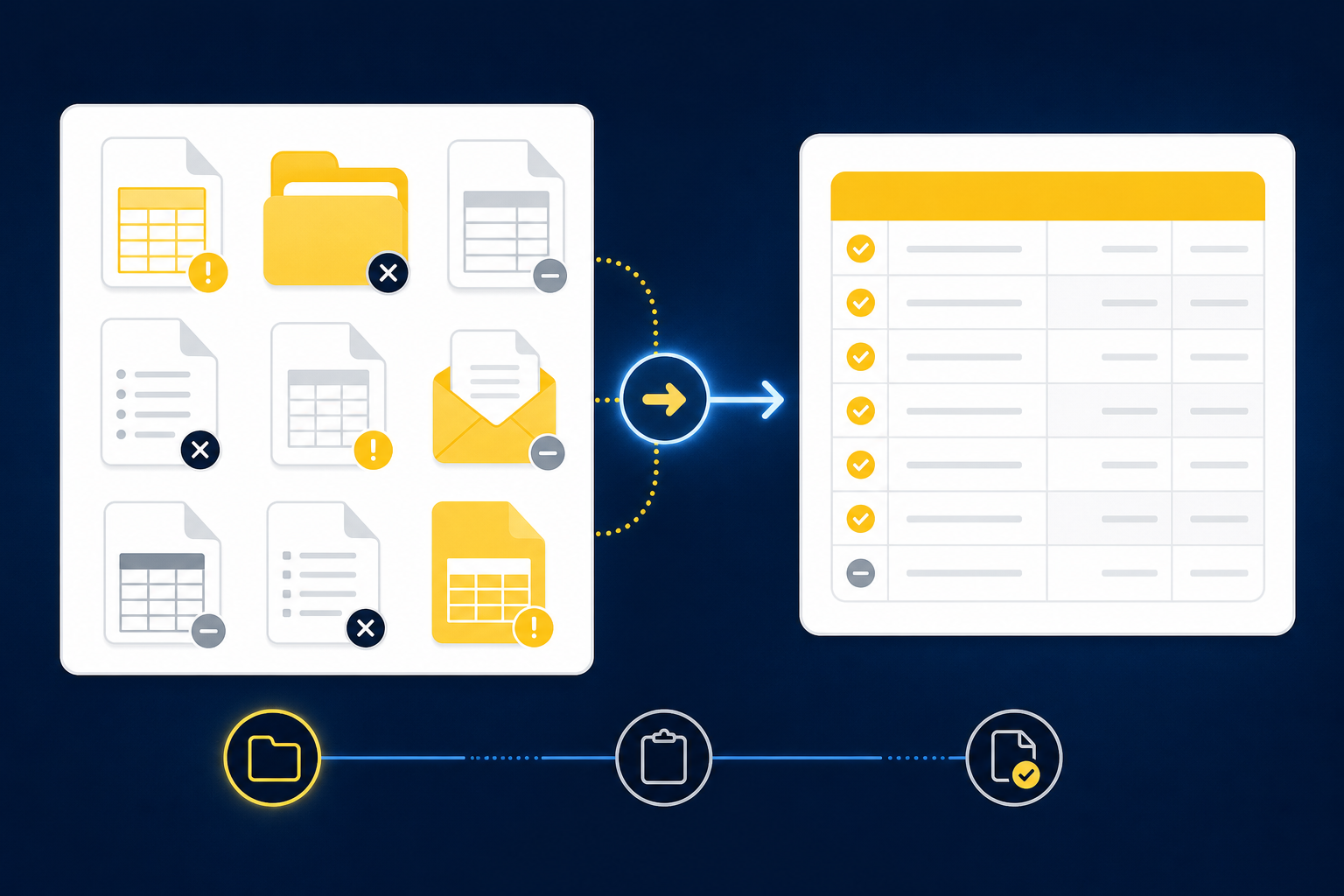
That work is more than extraction. A nonprofit deposit may need to be matched across a donor platform, a payment processor, and the bank while preserving fund or campaign dimensions. A family-office workpaper may combine custodian activity with an investment-vehicle statement and an ERP balance. The accountant still has to determine what the documents represent, whether the set is complete, and how timing differences should appear.
Truewind accepts recurring source materials including bank activity, processor and donor-platform exports, custodian statements, prior workpapers, and operational-system exports. It structures those inputs for coding, reconciliation, and workpaper preparation, with the original files retained against the workflow. If inconsistent intake is where preparation begins for your team, See Truewind in action to examine how that source material moves into review.
2. Recurring work still depends on one person’s memory
A recurring reconciliation may look standardized because the same workbook appears every month. In practice, the process often lives in the preparer’s memory. That person knows which tab to copy, which account mapping changed, which cutoff the reviewer expects, and why one entity receives different treatment from another. The workbook holds the numbers, but it may not hold the full process.
The dependency becomes visible when the usual preparer is unavailable. A manager inherits a folder of files and a prior workpaper, then has to reconstruct which steps are routine and which choices were specific to the last period. Review takes longer because the manager is validating both the accounting result and the undocumented path used to reach it.
Historical examples make that process teachable. Truewind can use prior workpapers, confirmed treatment, and reviewer corrections as operating context for the next period. It applies the team’s captured mappings and classification decisions, then presents the current output for review. Novel items remain with the accountant because historical treatment is context, not permission to invent policy.
3. Reviewers double-check work that already looks complete
A clean schedule does not tell a reviewer whether it is right. If the output does not show its source, calculation, treatment, and exceptions, the reviewer has to retrace the preparer’s work. That often means reopening documents, checking formulas, and comparing classifications against the prior period. The review becomes a second preparation pass.
The problem is not simply confidence in a model. It is the absence of a workpaper that lets the reviewer inspect how each line was produced and re-perform the important steps. A polished answer without visible support can create more work because the reviewer cannot tell where judgment was applied or whether an unexplained difference was ignored.
One lead-generation company described the result after using Truewind for recurring categorization: “Categorization is accurate, and we stopped having to double-check everything.” The same customer put it more bluntly: “It's essentially perfect.” Those statements describe one customer’s experience, not a result every team should assume. The useful lesson is that review changes only when the prepared work reflects the team’s established treatment and gives the reviewer a clear basis for confirmation.
Truewind’s human-in-the-loop review workflow places prepared workpapers, reconciliations, schedules, journal-entry drafts, source links, and exceptions in the review surface. Accountants can confirm an item, adjust it, or send it back to preparation. Nothing leaves review without accountant sign-off.
4. The same corrections return every period
Reviewer notes should improve the next period. When corrections live in email, spreadsheet comments, or a manager’s memory, they often do not. The preparer repeats an old classification, the reviewer makes the same adjustment, and the final answer becomes correct only after the same conversation happens again.
Recurring accounting work is not generic enough for a single template to solve that problem. Two teams can prepare the same accrual schedule and still use different cutoffs, dimensions, account mappings, and supporting evidence. Even within one organization, treatment may change by entity or source. Useful automation has to follow the team’s approved process without turning prior treatment into an unreviewed rule.
Truewind records confirmed treatment and reviewer corrections against the workflow, then uses that history when preparing the next period. Reviewers can still change a rule, correct an allocation, or decide that a new item needs different treatment. The system does not make that policy decision on its own.
A controlled test should make persistence visible. Use a prior approved workpaper, introduce current-period inputs, and see whether the prepared output carries forward the known treatment while surfacing what no longer fits. If repeated corrections are the issue you want to test against a known answer, Book a Truewind demo around that exact workflow.
5. Your ERP is working, but preparation around it is still manual
Replacing the GL will not fix a preparation problem. Sage Intacct and QuickBooks Online can remain the systems of record while reconciliations, rollforwards, support schedules, and journal-entry drafts still depend on spreadsheets. The gap sits upstream, between the files that describe economic activity and the approved entry that reaches the ledger.
That gap can remain manual even after a finance team has improved AP, payroll, expenses, billing, and its close checklist. The remaining work involves assembling source support, rolling balances forward, applying dimensions, checking completeness, and explaining exceptions. A mature stack can still leave experienced accountants doing repetitive preparation because the surrounding systems were built to record or manage transactions, not reproduce the team’s workpaper process.
Truewind sits in that preparation layer. Its workpaper generation and rollforward capability loads prior workpapers, current source documents, and ERP balances, then updates supporting schedules and prepares any required journal-entry draft with source-linked support. Exceptions go to the reviewer. After sign-off, approved structured output can move to Sage Intacct or QuickBooks Online, which remain the systems of record.
6. More entities or clients create more preparation paths
Growth does not only add transaction volume. It adds combinations. A family office may have the same account across several entities, with different custodians, investment vehicles, and treatment rules. A nonprofit may need to preserve fund, program, chapter, or purpose dimensions while reconciling donor activity to processor settlements and the bank.
CAS practices encounter the same issue across clients. A common operating process is useful, but a rigid accounting template can erase client-specific mappings and review conventions. Fully bespoke spreadsheets preserve those differences, but they also make the work harder to transfer between preparers and reviewers. The preparation layer has to preserve each client’s rules while producing an artifact the firm can review consistently.
Truewind’s dimensional and allocation preparation applies explicit, reviewable rules to structured transactions and surfaces edge cases rather than applying unreviewed changes. Multi-source reconciliation matches activity across connected sources, prepares the supporting schedule, and identifies timing differences or unreconciled items for accountant judgment. It does not force totals to agree.
An accounting firm using Truewind described the practical value in direct terms: “Truewind automates a huge chunk of that busywork.” The firm also said, “It's not just about making bookkeeping simpler; it's about freeing up teams, and helping them focus on higher-value projects.” That example points to capacity, not the removal of accountants. The staff still owns the client’s accounting treatment and the final review.
7. You can name one bounded workflow and its known answer
The strongest sign of readiness is specificity. Your team can identify one recurring workflow, list the expected source files, provide a prior approved workpaper, name the reviewer, and explain what a completed output should contain. A brokerage rollforward, donation reconciliation, processor settlement, prepaid schedule, or fixed-asset schedule can all qualify when the boundaries are clear.
Starting with a bounded workflow gives the team something credible to compare. The question is not whether AI can produce an impressive answer from a broad prompt. The question is whether it can reproduce the known process, preserve the necessary dimensions, show where each number came from, and separate routine preparation from exceptions that need judgment.
A suitable first workflow also has a reviewer who owns the result. That person can inspect differences between the prepared output and the prior approved answer, determine whether corrections reflect policy or an edge case, and confirm what should carry into the next period. Controlled iteration works because each review improves a defined workflow without granting the system authority to change accounting treatment.
Teams seeking unsupervised posting are evaluating a different approach. Truewind requires accountant review before prepared output moves to Sage Intacct or QuickBooks Online. Very small businesses without a recurring close, prior workpapers, or a dedicated reviewer may also lack the operating context needed for this model. The preparation layer is designed for established accounting teams, not personal finance or autonomous bookkeeping.
How to test readiness without handing over the close
Begin with the workflow your team already understands. Gather the prior workpaper, current-period source files, relevant ERP balance, documented rules, and reviewer notes. The prior approved result becomes the baseline, while the current files test whether the process can be repeated under real conditions. Avoid choosing the broadest workflow simply because it sounds more consequential.
Next, inspect the prepared artifact rather than judging only the ending balance. A reviewer should be able to trace lines back to source, understand how classifications and dimensions were applied, see calculation support, and identify every unresolved exception. A correct total without that evidence is not enough because the reviewer still has to reconstruct the process before approving it.
Then review the differences. Some will be preparation errors that should be corrected and retained as context for later periods. Others will be new accounting questions that belong with the reviewer and should not become an automatic rule. Missing statements, unusual balance changes, mixed activity, and inconsistent classifications are not failures of the workflow when they are surfaced with the source context needed for a decision.
Finally, run the workflow again. Trust grows when the next period reflects confirmed corrections, preserves the team’s conventions, and continues to route novel items to the accountant. One buyer described the experience in a single sentence: “If I had to describe Truewind in one word: Lifechanging” The evaluation standard, however, should remain concrete: known inputs, visible preparation, understandable exceptions, and accountant approval before anything reaches the GL.
If your team can supply that bounded workflow and review its output against a known result, Get a Truewind demo focused on the sources, workpaper, and sign-off path you already use.
AI readiness does not mean your close is generic or your accounting judgment can be automated away. It means the recurring preparation has enough structure to be learned, inspected, corrected, and repeated. The accountant continues to own the rules and the result. What changes is how much work has already been prepared by the time judgment begins.
Frequently Asked Questions
How do I ensure my accounting team is ready for automation?
To determine if your team is ready for automation, look for these signs: 1) Identify if you have recurring workflows that are well-defined and documented. 2) Check if your team consistently uses the same source files and understands the necessary classifications. 3) Ensure there's a reviewer who can validate the output and confirm adherence to accounting standards. If your team can clearly outline these elements, it indicates a strong foundation for implementing automation tools like Truewind.
What if my team relies on one person's knowledge for reconciliations?
If your team depends heavily on one person's memory for reconciliations, consider these steps: 1) Document the reconciliation process in detail to create a reference for others. 2) Use historical workpapers to capture decisions and mappings, making it easier for others to follow. 3) Implement a system like Truewind that can use prior examples to guide future work, ensuring that knowledge is shared and not siloed.
Can I reduce the time spent on preparing financial documents?
Yes, you can reduce preparation time by: 1) Organizing source documents before starting the close to minimize inconsistencies. 2) Using tools like Truewind to automate the structuring of these documents, which allows your team to focus on review rather than data entry. 3) Establishing a clear workflow that captures corrections and decisions, so each period builds on the last without starting from scratch.
When should I consider switching from spreadsheets to a structured workflow?
Consider switching from spreadsheets when: 1) Your team is handling increasing transaction volumes that lead to errors or delays. 2) You notice that reconciliations and journal entries require extensive manual checks. 3) You have established workflows that could benefit from automation, such as using Truewind to streamline the preparation of workpapers and reconciliations while maintaining control over the review process.
Turn this into a close-ready workpaper
Start with sample files or upload your own statements to see how Truewind prepares review-ready workpapers and journal entries.