

You can code every transaction before review and still hand your controller a workpaper they can’t approve. If the source and prior-period treatment are missing, the reviewer has to rebuild each decision from scratch. Good transaction coding begins by identifying what the file represents, then applying the team’s existing mapping and sending unusual items to review. The account code is useful only when the reviewer can see how the team reached it.
A code can be technically plausible and still be unusable. If the source is missing, the dimensions were dropped, or the treatment changed without explanation, your reviewer has to rebuild the decision before approving it. Coding transactions consistently means preserving the evidence and accounting logic around every proposed entry.
Key Takeaways:
- Start transaction coding from complete source files, not isolated bank-feed descriptions.
- Write coding rules in the same terms a reviewer uses to approve treatment.
- Preserve fund, program, department, location, purpose, or entity dimensions through preparation.
- Route missing support and inconsistent treatment to the accountant instead of forcing a code.
- Capture reviewer corrections so the next period starts from an approved decision.
- Treat the workpaper, not the coded export, as the finished preparation output.
Why Transaction Coding Breaks Before It Reaches Review
Transaction coding breaks when preparation strips away the context a reviewer needs. A vendor name and dollar amount rarely explain the source, business purpose, dimensions, allocation, or prior treatment on their own. Once those details separate from the coded line, review turns into reconstruction.
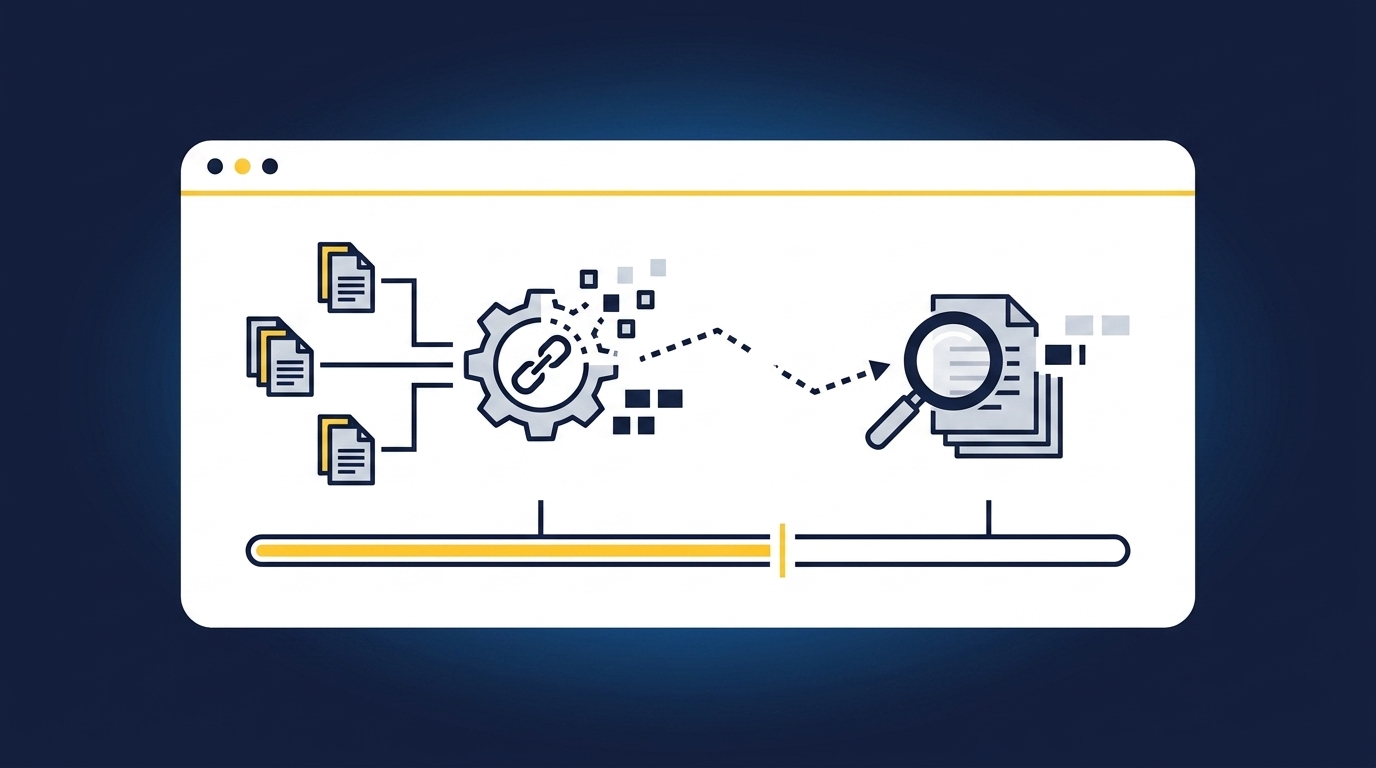
A coded line is only the end of the work
A controller reviewing card activity sees a familiar vendor assigned to software expense. The account looks reasonable, but the source invoice covers more than one department and part of the charge belongs to a prepaid schedule. The bank description doesn't show either fact. Before approval, the reviewer has to find the invoice, inspect the service period, and rebuild the split.
That review burden is easy to misread as a coding problem. The deeper problem is that the transaction coding workflow produced an answer without the work behind it. A coded line without support is like a journal entry with every workpaper tab removed. The number remains, but the path to approval is gone.
Manual preparation does have a real advantage here. An experienced accountant can interpret an unusual document and adjust the treatment immediately, which is why spreadsheets remain useful. The weakness appears when that decision stays in one workbook, one comment, or one person's memory and has to be found again next month.
If you want to inspect how source, treatment, and reviewer actions stay connected in one workflow, See Truewind in action.
Source-file work requires accounting judgment
Source-file work is not OCR with an account code attached. A processor export, custodian statement, or donor-platform file has to be identified, checked for completeness, mapped to the right entity, and compared with the period under review. Extraction can read fields. It can't decide which accounting question those fields need to answer without the team's process around them.
Consider a nonprofit deposit that combines donor activity, processor fees, refunds, and timing differences. The bank shows the net cash movement, while the donor platform carries fund and campaign detail that the bank never receives. Coding from the bank line alone loses the dimensions. Coding from the donor export alone misses the settlement and cash tie-out.
Better transaction coding starts by asking whether the full source set is present. Missing support is not an invitation to guess. It is an exception for the accountant, because completeness has to be established before classification can be trusted.
Generic rules hide team-specific treatment
Two accounting teams can code the same vendor differently for valid reasons. One may split the charge by department, another may allocate it by program, and a third may move part of it to prepaids based on the service period. A generic vendor rule can't see those differences unless the team's treatment is part of the workflow.
The same issue appears across entities. A family office may receive similar custodian statements for several vehicles, but account mappings and ownership boundaries still differ. A CAS practice may use a shared preparation process while preserving a separate chart of accounts and review convention for each client. Standardization has to preserve those rules, not flatten them.
Generic coding suggestions are useful for simple, recurring activity. That's a fair case for them. They fail when the suggestion becomes the final artifact and the reviewer can't see which historical treatment, source, or allocation rule produced it.
The practical question is not how to generate more codes. It is how to prepare each code so a reviewer can understand and approve it without rebuilding the work.
Five Transaction Coding Practices That Produce Reviewable Work
Reviewable transaction coding follows a sequence: confirm the inputs, apply explicit treatment, preserve dimensions, separate exceptions, and retain corrections. Each practice reduces a different kind of review failure. Together, they turn coding from an isolated classification task into prepared accounting work.
Diagnose where your coding process loses context
Start by finding the point where evidence separates from the coded transaction. The break may happen during intake, when support arrives through email and the transaction lands through a feed. It may happen during preparation, when a split allocation gets reduced to one account. Or it may happen in review, when a correction is made but never carried into the next period.
A useful diagnostic is to take one recurring transaction from source to sign-off. Don't choose the cleanest item. Pick a vendor, processor settlement, or custodian activity that normally requires a reviewer comment, then ask whether each decision remains visible after the work changes hands.
Check five questions:
- Can the reviewer open the exact source that supports the transaction?
- Can the reviewer see why the account and dimensions were selected?
- Does the amount tie to the relevant statement, export, or schedule?
- Are missing inputs and unusual treatment marked as exceptions?
- Will an approved correction inform the next period?
Three or more “no” answers point to a preparation problem, not a reviewer-effort problem. Fix the first missing link before adding more coding rules.
Establish completeness before assigning accounts
A coding process should begin with a source checklist for the workflow under review. For a processor reconciliation, that may include the processor report, bank activity, prior reconciliation, and current GL balance. For brokerage activity, the required set may include the custodian statement, prior rollforward, entity mapping, and ERP balance. The list should reflect the actual workpaper, not a generic intake template.
Completeness has to be tested at the period and entity level. One uploaded statement doesn't prove that all accounts are covered, and one export doesn't prove that a payout window is complete. Frankly, coding incomplete data faster only moves the problem downstream, where it becomes harder to identify.
Use a simple preparation order:
- Identify the workflow, entity, account, and period.
- List the sources required to prepare the known workpaper.
- Confirm that each required source is present and current.
- Compare totals and coverage with the prior approved period.
- Route missing or inconsistent inputs to the reviewer.
Only then should account and dimensional treatment be applied. Completeness is the first control in transaction coding review because every later decision depends on it.
Write coding rules in reviewer language
A useful transaction coding rule explains more than vendor equals account. It records the condition, treatment, dimensions, allocation method, required support, and exception path in terms the reviewer already recognizes. The rule should be readable beside the workpaper without a translation step.
Suppose a recurring software invoice covers an annual term. The useful rule doesn't merely assign software expense. It states when the item belongs on the prepaid schedule, which department owns the cost, how the current-period portion is calculated, and which source dates support that calculation. A reviewer can inspect the treatment because the rule mirrors the accounting decision.
Record each rule with:
- Source condition: Which document or transaction pattern activates the rule.
- Accounting treatment: Which account, schedule, or entry structure applies.
- Dimensional treatment: Which entity, fund, program, department, or purpose is required.
- Allocation basis: How a split is calculated and where the basis comes from.
- Exception condition: Which change requires reviewer judgment instead of automatic reuse.
Rules written at that level take longer to define than vendor mappings. The tradeoff is real. They also prevent the same treatment from being re-explained in reviewer notes every period.
Preserve dimensions and allocation logic
Account coding alone is incomplete when the ledger depends on dimensions. A nonprofit may need fund and program treatment. A multi-entity finance team may need entity and department boundaries. A family office may need purpose or vehicle context carried from the source through the workpaper and into the journal-entry draft.
Dimensions should travel with the transaction from intake through review. If a deposit represents activity from several chapters or campaigns, the preparation record should show the source-level detail, the split rule, and the resulting coded lines. Collapsing the activity into one bank deposit may make the file shorter, but it removes the information the reviewer needs.
Before approving a split, trace the allocation in order:
- Tie the gross activity to the operational source.
- Tie the net settlement to the bank.
- Identify fees, refunds, and timing items separately.
- Apply the approved dimensional or allocation rule.
- Present the split beside its calculation and source support.
If your team wants to compare that sequence with a prepared, source-linked review surface, Book a Truewind demo.
Separate recurring treatment from real exceptions
The goal of coding automation is not to remove exceptions. It is to keep routine treatment out of the exception queue so the accountant can spend time on what changed. Missing statements, unexpected balance movements, mixed personal and business activity, and inconsistent classifications all belong in front of a reviewer.
A sensible threshold is based on the approved process, not on whether a model can produce a likely answer. If the current item matches the source pattern, account treatment, dimensions, and prior-period rule, it can move forward as prepared work. If one of those conditions fails, the workflow should stop short of approval and explain why.
Route an item for review when:
- Required source support is missing or covers the wrong period.
- Current treatment conflicts with the last approved workpaper.
- The entity, fund, program, or department can't be determined from an approved rule.
- A split allocation lacks a documented basis.
- The item creates an unreconciled difference.
- A reviewer would need to make a policy or materiality judgment.
Some teams prefer broad exception queues because touching more items feels safer. The instinct is understandable. A queue filled with routine transactions can hide the few items that actually require judgment, which weakens review rather than strengthening it.
Turn reviewer corrections into next-period context
Reviewer corrections are part of the accounting process, not cleanup after the process. When a reviewer changes an account, adjusts a split, or requests different support, the reason should stay attached to that workflow. Otherwise, the next period begins with the same proposed treatment and the team pays for the correction again.
Prior workpapers provide the baseline. They show the approved balance, source set, calculation, treatment, exceptions, and sign-off from the previous period. Current preparation should start there, apply the new source material, and make changes visible rather than rebuilding the file from an empty template.
Not every correction should become a standing rule. A one-time exception may apply only to one entity or period, and accounting policy can't change because a pattern appeared once. The reviewer should decide whether a correction is recurring, conditional, or one-time, then record that status with the decision.
The strongest coding best practice is also the least glamorous: preserve why the reviewer changed the work. Once that context survives the close, each new period starts from an approved result instead of an old guess.
How Truewind Prepares Coding for Accountant Review
The platform turns recurring source files and prior workpapers into prepared transaction coding that remains tied to source, treatment, exceptions, and reviewer actions. Sage Intacct and QuickBooks Online remain the systems of record. Nothing moves downstream until the accountant reviews and confirms the prepared output.
Source-linked workpapers replace detached coding exports
Multi-source ingestion organizes bank activity, card statements, processor exports, donor-platform files, custodian statements, and prior workpapers into the workflow being prepared. AI-assisted transaction coding then applies user-defined rules and historical treatment to propose accounts and dimensions. The proposal is not the final accounting decision. It becomes part of a workpaper the reviewer can inspect.
Workpaper generation and rollforward bring the prior approved workpaper, current sources, and ERP balances into the same preparation flow. Multi-source reconciliation matches activity across systems and surfaces unreconciled items instead of forcing totals to agree. One accounting-firm customer described that shift plainly: “Truewind automates a huge chunk of that busywork.” The same customer added, “It's not just about making bookkeeping simpler; it's about freeing up teams, and helping them focus on higher-value projects.”
The prepared review surface includes:
- Source links for the underlying transaction or statement.
- Proposed account and dimensional treatment.
- Supporting calculations and reconciliation detail.
- Visible exceptions that require accountant judgment.
- Reviewer confirmation, correction, or return to preparation.
Reviewer sign-off remains the control point
Human review sits between preparation and the GL. Accountants can inspect the proposed coding, change treatment, review exceptions, and confirm the output before it is pushed to Sage Intacct or QuickBooks Online. The platform doesn't post on its own, change policy, or resolve judgment items without the reviewer.
Historical-example learning records confirmed treatment and reviewer corrections against the recurring workflow. Later periods can use that context while keeping rule changes visible. Another customer said, “Categorization is accurate, and we stopped having to double-check everything.” The same account included the phrase, “It's essentially perfect.” Those are customer statements, not a blanket accuracy promise, and the control still comes from inspectable preparation and accountant approval.
The product is built for accounting teams with a recurring close, prior examples, and an accountable reviewer. A solo operator without a defined close may not have enough repeatable process to support this approach. A buyer seeking autonomous posting without sign-off is looking for a different system altogether.
To examine the workpaper, exception queue, and sign-off path against one recurring workflow your team already owns, Get a Truewind demo.
The value is not an answer that appears faster. It is prepared work the accountant can trace, correct, and approve before the ledger changes.
Keep Transaction Coding Tied to Source and Review
Better transaction coding begins before an account is selected and ends after reviewer sign-off. The source set has to be complete, the treatment has to reflect your accounting rules, the dimensions have to survive preparation, and exceptions have to remain visible. Anything less leaves the reviewer rebuilding context.
Keep Sage Intacct or QuickBooks Online as your source of truth. Put repeatable preparation upstream, where source files become reviewable workpapers and accountants retain ownership of policy, judgment, and approval. The code matters, but the work behind the code is what makes it usable.
Frequently Asked Questions
How do I handle edge cases effectively?
To manage edge cases in transaction coding, start by documenting specific rules for unusual transactions. Use Truewind's AI-Powered Transaction Coding feature to propose categorizations based on your team's historical decisions. This helps maintain consistency. Additionally, ensure that any exceptions are flagged for review, allowing accountants to focus on judgment items rather than routine coding. Finally, capture reviewer corrections to inform future periods, ensuring that your coding process improves over time.
What if I miss a source document during preparation?
If you realize a source document is missing after starting the coding process, first stop and assess what information is necessary for accurate coding. Use Truewind's Multi-Source Reconciliation to ensure all required documents are accounted for before proceeding. If the document is essential for the current period, route the incomplete transaction to the reviewer for guidance. This way, you can maintain accuracy and prevent downstream errors.
Can I automate my transaction coding process?
Yes, you can automate your transaction coding process using Truewind's AI-Powered Transaction Coding feature. This tool applies your existing accounting rules to categorize transactions automatically. To get started, define your coding rules clearly and ensure they reflect your team's specific practices. As the system learns from past corrections, it will improve its accuracy over time, making your coding process more efficient.
When should I involve my accountant in the coding process?
You should involve your accountant whenever there are exceptions or unusual transactions that require judgment. Truewind's Proactive Anomaly Detection will help surface these items, allowing accountants to focus on what truly needs their attention. Additionally, ensure that all reviewer corrections are captured in the workflow, so the next period starts with an informed context. This collaboration helps maintain accuracy and accountability in your transaction coding.
Turn this into a close-ready workpaper
Start with sample files or upload your own statements to see how Truewind prepares review-ready workpapers and journal entries.